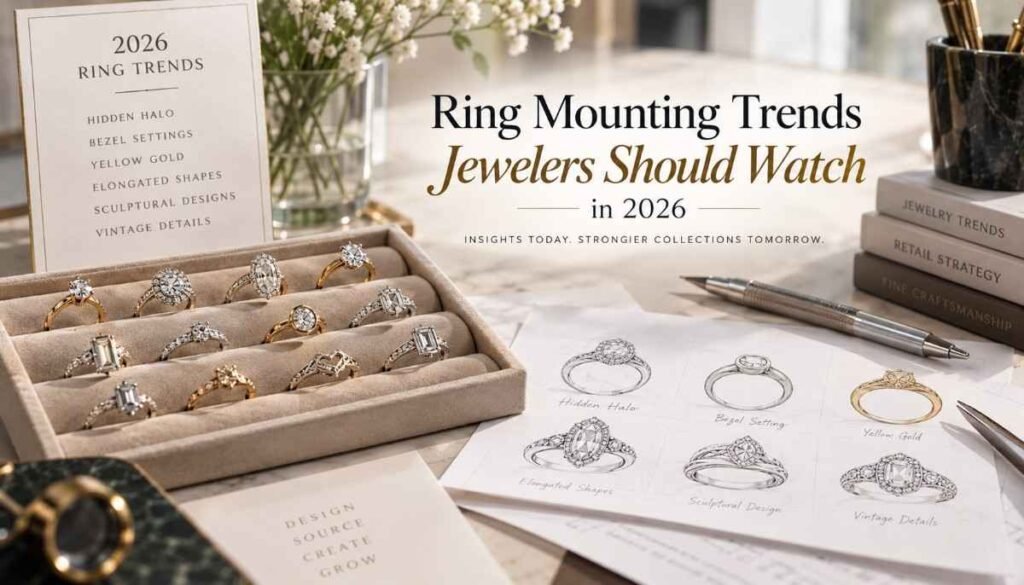
Ring mounting trends move fast, but reacting to every shift the moment it appears is a good way to overstock the wrong inventory. The smarter approach for jewelers is knowing which 2026 trends are backed by real, sustained demand versus which ones are just getting attention online. Here’s a practical look at what’s shifting this year, and what it means for how retailers should be buying and stocking.
Why This Matters More for Retailers Than Consumers
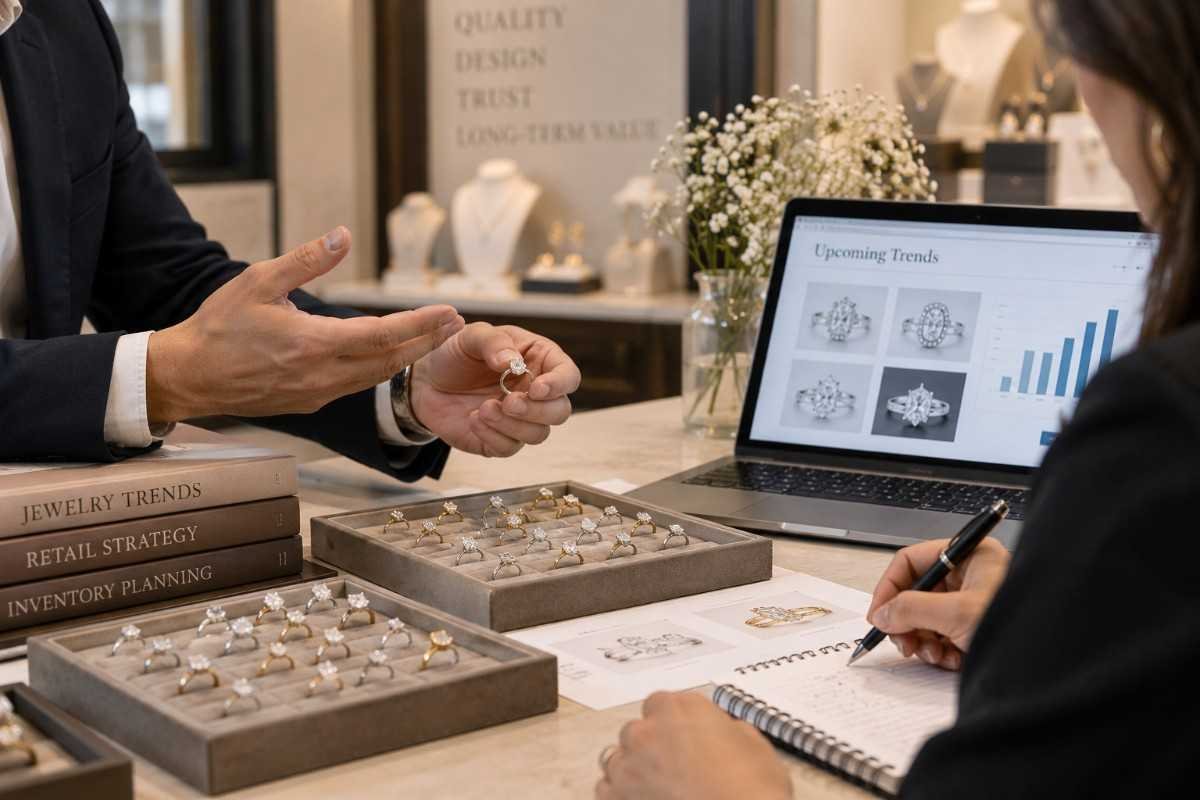
Consumers can afford to chase a trend they like. Retailers can’t, at least not without consequences. Every mounting style stocked in volume ties up capital, shelf space, and staff for attention. Getting ahead of a genuine shift means capturing sales early; misreading a passing fad means sitting on inventory nobody wants by the following season. That’s why watching these trends closely, rather than reacting to them after the fact, matters so much this year.
Ring Mounting Trends with Real Staying Power in 2026
-
Hidden Halo Designs
This is the trend with the clearest momentum right now. Hidden halo mountings place accent stones beneath or beside the Centre stone rather than fully framing it from above, giving a clean look from a direct angle while still adding brilliance and perceived size. Demand for this specific style has grown sharply this year, making it one of the safer bets for retailers looking to expand halo-adjacent inventory without overcommitting to bulkier, fully exposed halo designs.
What this means for stocking: Prioritize hidden halo mountings over traditional, fully visible halo designs when expanding this category.
-
Bezel Settings
Bezel mountings have moved well beyond their reputation as a purely practical choice. They’re now being chosen for their sleek, modern look just as often as their durability, appealing to buyers who want a ring that photographs cleanly and holds up to daily wear equally well.
What this means for stocking: Bezel settings are a low-risk addition across price points, since their appeal spans both style-focused and practicality-focused buyers.
-
Yellow Gold Over White Metals
Metal preference has shifted noticeably this year, with yellow gold pulling ahead after a long stretch of white gold and platinum dominance. Retailers who’ve leaned heavily on white metal inventory may find themselves under-stocked in yellow gold mounting options relative to current demand.
What this means for stocking: Reassess metal ratios across popular mounting styles rather than assuming previous years’ proportions still hold.
-
Oval and Elongated Shapes Gaining on Round
Round diamonds remain popular, but oval and other elongated shapes have been steadily closing the gap. Mountings designed specifically to complement elongated stones — thinner bands, tapered baguette accents, East-West orientations — are seeing increased interest as a result.
What this means for stocking: Ensure mounting designs on offer suit elongated shapes well, rather than assuming a round-optimized setting will automatically work for oval or marquise stones.
-
Sculptural and Architectural Mountings
A growing share of buyers wants a setting that reads a design statement on its own, not just a frame for the stone. Sculptural mountings — asymmetrical bands, negative-space detailing, mixed-metal combinations — are gaining traction, particularly among buyers who’ve already researched extensively online before visiting a store.
What this means for stocking: These pieces work well as a smaller, premium-positioned segment of a collection rather than a core, high-volume category.
-
Vintage and Art Deco Detailing
Heirloom-style detailing has seen a significant resurgence this year. Mil grain edging, filigree work, and Art Deco geometric patterns are appearing across a wider range of price points than in previous years, not just premium collections.
What this means for stocking: Vintage-inspired detailing is worth testing across mid-range inventory, not only high-end pieces, given how broad interest has spread.
Ring Mounting Trends Worth Watching Cautiously
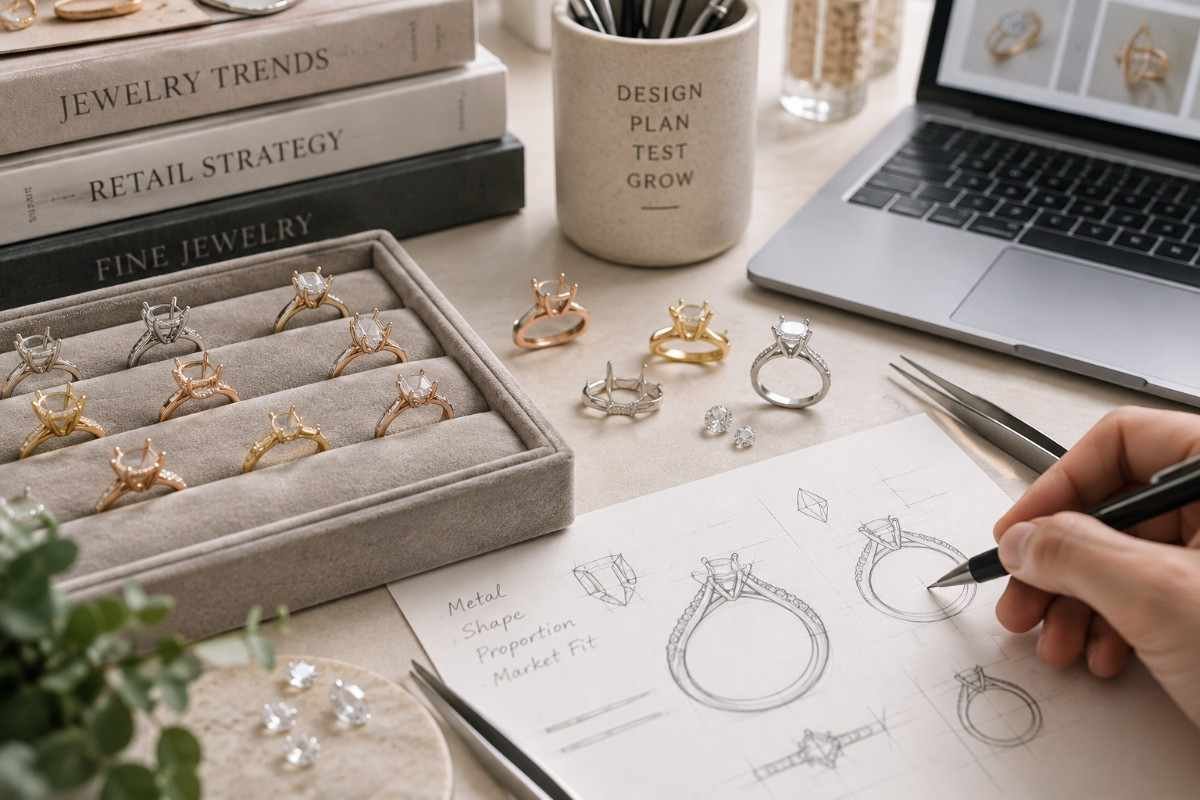
Not every visible trend deserves immediate inventory investment. A few styles are generating attention without yet showing the same sustained demand as the trends above:
- Highly experimental, one-off sculptural designs with limited broader appeal
- Extremely maximalist, fully detailed halo settings, which are losing ground to subtler alternatives
- Niche metal blends without established supply consistency
Testing these in small batches makes more sense than committing them on scale.
How Jewelers Should Act on These Trends
A practical approach to acting on 2026’s mounting trends:
- Start with mountings, not finished pieces. Testing a new trend through mounting inventory alone is far less risky than committing to fully finished rings in an unproven style.
- Track actual sell-through, not just customer questions. Interest and purchases aren’t the same signal — watch which trends convert to real sales.
- Reassess metal and shape ratios at least twice a year. Assumptions from last year’s inventory mix may no longer match current demand.
- Reserve higher-risk, trend-forward styles for a smaller test segment rather than a full collection to rebuild.
Why Supplier Flexibility Matters More When Trends Move Quickly
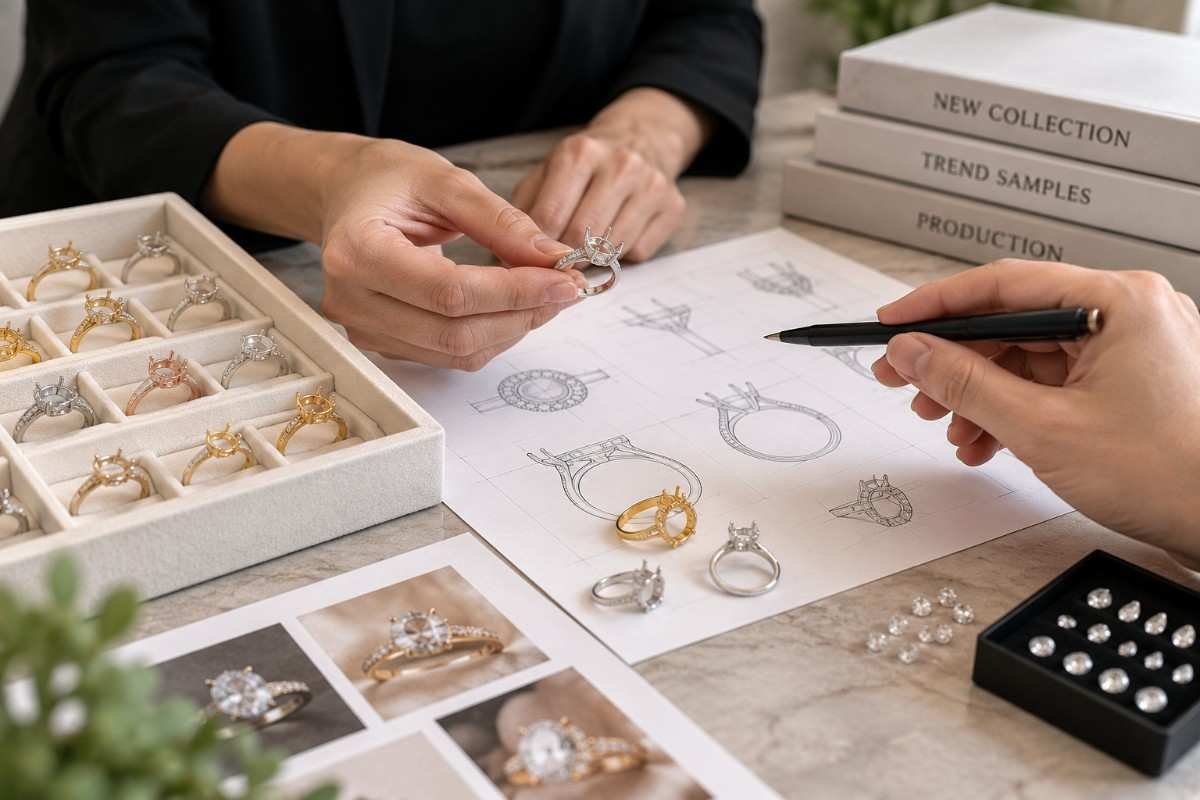
None of this works well without a mounting supplier that can actually keep pace. Testing a new trend in small batches, adjusting metal ratios quickly, or introducing a hidden halo line without a months-long lead time all depends on working with a manufacturer built for that kind of responsiveness.
Retailers sourcing mounting jewelry from a supplier equipped to handle both steady, standard inventory and faster, trend-responsive orders are far better positioned to act on shifts like these without overexposing themselves financially. Suppliers like MeruliyaJewels have built their production process specifically to support this kind of flexibility, giving retailers room to test new mounting trends without the same level of risk a slower, less adaptable supplier would carry.
FAQs: Ring Mounting Trends for Jewelers in 2026
1.Which ring mounting trend has the strongest momentum in 2026?
Ans. Hidden halo mountings currently show the clearest sustained growth, offering a subtle alternative to traditional, fully exposed halo settings while still boosting brilliance and perceived size.
2. Should jewelers commit heavily to sculptural mounting designs this year?
Ans. Not necessarily on full scale. Sculptural and architectural mountings are gaining interest, but they tend to work better as a smaller, premium segment of a collection than core, high-volume inventory.
3. How often should retailers reassess their mounting inventory mix?
Ans. Reviewing metal ratios, shape distribution, and setting styles at least twice a year helps retailers stay aligned with current demand rather than relying on outdated assumptions from previous seasons.
The Bottom Line
2026’s ring mounting trends reward jewelers who can tell the difference between genuine, sustained shifts and short-lived attention spikes. Hidden halos, bezel settings, and a swing back toward yellow gold all show real staying power this year, while more experimental sculptural styles are better tested in small batches than stocked at full scale. Acting on these trends confidently comes down to working with a mounting supplier flexible enough to move at the same pace as the market is.