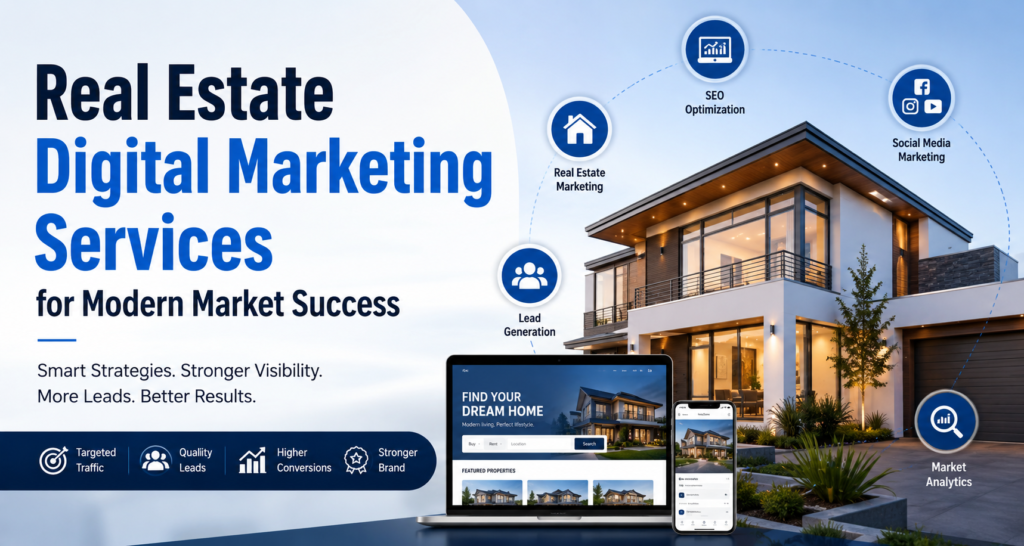
Real estate has always been a competitive industry, but the way people find and choose real estate professionals has changed significantly. Buyers and sellers now research properties, compare agents, read reviews, explore neighborhoods, and evaluate services online before starting a conversation. A strong digital presence can therefore influence whether a real estate business gets noticed or gets passed over.
Real Estate Digital Marketing Services help real estate businesses adapt to this changing journey by connecting search visibility, useful content, social media, websites, reputation, and conversion opportunities. Instead of relying on a single marketing channel, a well-planned strategy creates multiple opportunities for potential clients to discover a business and develop confidence in its expertise.
Modern Real Estate Marketing Starts With Understanding the Client
Every property journey begins with a different need.
A first-time buyer may search for information about financing and neighborhoods. An experienced investor may be comparing market opportunities. A homeowner preparing to sell may be researching property values and looking for a trustworthy agent. Someone relocating may begin with broad searches about an unfamiliar city before looking at specific listings.
These different intentions require more than promotional messaging.
Successful real estate marketing starts by understanding what people are trying to accomplish at each stage. Content, landing pages, social posts, and search strategies should provide useful information that matches those needs rather than simply pushing a sales message.
This client-first approach can make digital interactions feel more relevant while helping businesses build trust before the first consultation.
Search Visibility Helps Real Estate Brands Get Discovered
When someone searches for a real estate service, appearing prominently can create an important first opportunity.
Search engine optimization can help businesses improve their presence for relevant service, location, property, and informational searches. This may involve optimizing service pages, creating location-specific resources, strengthening internal linking, improving technical website elements, and publishing content that answers genuine audience questions.
Local search deserves particular attention because real estate decisions are closely connected to geography. People often search for agents, properties, neighborhoods, and services within specific areas.
A strong local presence can help a business become more visible to prospects who are already looking for relevant solutions.
However, sustainable search visibility requires more than inserting keywords into pages. Search engines increasingly reward useful, trustworthy, well-organized information. Real estate businesses should demonstrate genuine knowledge of their markets and provide content that helps visitors make informed decisions.
Helpful Content Can Turn Research Into Trust
Real estate prospects rarely know everything they need before beginning their journey.
They may wonder how much a home is worth, whether a particular neighborhood fits their lifestyle, what to expect during a transaction, or how current market conditions could affect their decision.
This creates opportunities for educational content.
Guides, market updates, neighborhood resources, FAQs, property insights, checklists, and explanatory articles can answer questions that prospects are already asking. Instead of treating content as a way to fill a blog, businesses can use it to demonstrate knowledge and reduce uncertainty.
This is where Real Estate Marketing Services can extend beyond traditional promotion. When marketing content is genuinely useful, it can help a business become a resource people return to during their decision-making process.
Consistent, accurate, experience-based content also supports topical authority by demonstrating depth across relevant real estate subjects.
Social Media Keeps the Brand Part of the Conversation
Social media gives real estate professionals a way to remain visible between major buying or selling decisions.
Property showcases are valuable, but they should not be the only type of content. Audiences can also benefit from neighborhood highlights, market observations, educational videos, buyer and seller tips, local events, client experiences, and behind-the-scenes perspectives.
This variety helps create a more recognizable brand.
For example, an agent who consistently explains local market changes may become associated with useful expertise. A real estate company that highlights communities and local businesses can demonstrate its understanding of the areas it serves.
The objective is not to turn every post into a sales pitch. It is to create meaningful reasons for potential clients to follow, remember, and eventually contact the business.
Your Website Should Make the Next Step Clear
A website often becomes the place where prospects decide whether to continue exploring or move toward contacting a business.
That makes usability and conversion experience important.
Visitors should be able to understand services quickly, navigate important pages without confusion, view relevant property information, and find contact options easily. Mobile responsiveness and page speed also matter because many property searches happen on smartphones.
A conversion-focused website does not necessarily need aggressive calls to action everywhere. Instead, it should offer logical next steps based on visitor intent.
Someone researching the market might prefer a downloadable guide or newsletter. A property buyer may want to schedule a consultation. A seller could be interested in a valuation discussion.
Matching the call to action with the visitor’s needs can create a smoother experience and reduce unnecessary friction.
Reputation Can Strengthen the Decision to Contact
Trust is particularly important in real estate because clients are often making significant financial decisions.
Online reviews, testimonials, business information, and public interactions can influence how a potential client evaluates a company or agent. A strong reputation strategy should therefore focus on consistency, responsiveness, and genuine customer experiences.
Businesses should monitor reviews, respond professionally, maintain accurate business information, and make positive client experiences visible where appropriate.
When a prospect sees useful content, professional branding, positive reviews, and clear service information across several digital touchpoints, those signals can reinforce one another.
AI Search Is Changing How Prospects Find Information
Real estate discovery is also expanding beyond traditional search engines.
People increasingly use AI-powered platforms to ask questions, compare options, understand markets, and research businesses. This creates another reason to build content around genuine expertise and clear answers.
AI-oriented visibility starts with strong fundamentals. Websites should contain well-structured information, clear service explanations, useful FAQs, relevant local knowledge, and content that demonstrates experience and authority.
Businesses should not create content simply to satisfy an algorithm. The better approach is to make information genuinely useful to people while organizing it in a way that search engines and AI systems can understand.
This supports a broader digital presence across different discovery environments.
Why an Integrated Strategy Matters
A real estate digital marketing agency can bring multiple digital channels together around a common growth objective.
SEO may help someone discover a business. Content can answer their questions. Social media can keep the brand familiar. A website can provide additional information and encourage an inquiry. Reviews can reinforce credibility.
These interactions do not always happen in a straight line.
A prospect might discover an agent through local search, visit the website, follow the brand on social media, read a market article weeks later, and finally schedule a consultation. Each interaction contributes to the overall customer experience.
That is the value of Digital Marketing for Real Estate. Rather than depending on one source of leads, businesses can create a connected digital journey that supports awareness, research, trust, and conversion.
Specialized Knowledge Makes Marketing More Relevant
Real estate marketing requires an understanding of both digital channels and the property market.
A Real Estate Marketing Specialist can help businesses identify audience segments, understand search behavior, develop relevant content topics, improve local visibility, and create campaigns around actual customer needs.
This specialization matters because a luxury property brand, residential brokerage, commercial real estate company, and property management business do not necessarily need the same marketing approach.
The strategy should reflect the audience, market, location, services, sales cycle, and competitive environment.
Measuring Progress Beyond Website Traffic
A modern strategy should be evaluated using meaningful business indicators rather than traffic alone.
Organic visibility, qualified inquiries, local search performance, engagement, conversion rates, lead quality, and customer acquisition trends can provide a clearer picture of performance.
For example, an increase in website traffic may sound positive, but it means little if visitors are not relevant to the business. Similarly, a page receiving fewer visitors may still be valuable if those visitors consistently become qualified inquiries.
Regular performance analysis allows businesses to identify what is working, where prospects are dropping off, and which areas deserve further investment.
Preparing for the Next Stage of Real Estate Competition
The modern real estate market rewards businesses that make themselves useful before asking prospects to become customers.
Being present in search results is important, but visibility alone does not create lasting growth. Potential clients also need relevant information, a professional website, credible reviews, consistent communication, and evidence that a business understands their market.
That is why Real Estate Digital Marketing Services should be approached as a connected growth strategy rather than a collection of isolated tasks.
When search optimization, content, social media, website experience, reputation management, and emerging AI visibility work toward the same objective, real estate businesses can create a stronger digital presence and a more reliable path from discovery to consultation.
In a market where prospects have more choices and more information than ever, the businesses that understand their audience and consistently provide value can earn attention, build trust, and remain competitive as the real estate landscape continues to evolve.