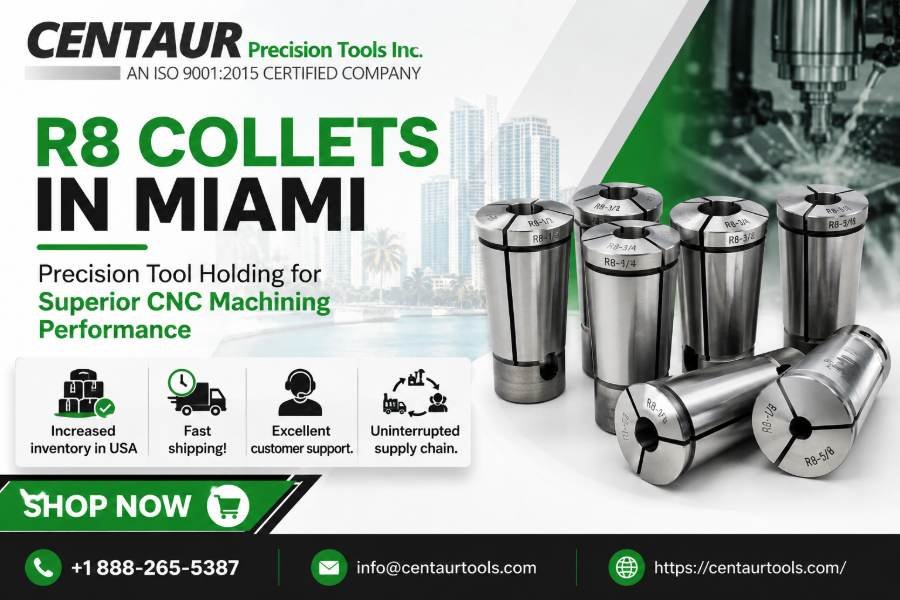
Precision is essential in milling operations. Even small variations in tool positioning can affect surface finish, dimensional accuracy, tool life, and overall machining efficiency. One component that plays an important role in achieving consistent results is the collet. For milling machines that use an R8 spindle system, selecting the appropriate collet can make a meaningful difference in machining performance.
For manufacturers, machinists, and machine shops looking for R8 Collets in Miami, understanding their design, benefits, and selection factors can help support accurate and repeatable milling operations.
What Are R8 Collets?
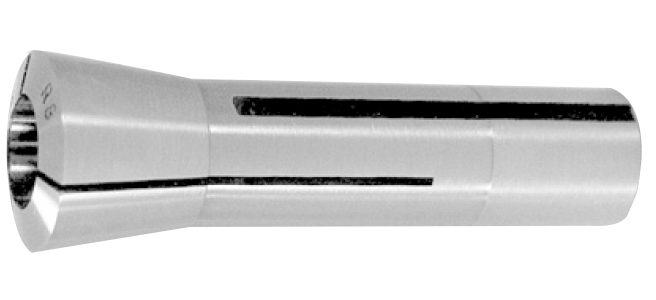
R8 collets are precision tool-holding components commonly used with milling machines equipped with R8 spindle tapers. The collet fits into the spindle and grips a compatible cutting tool or tool shank when tightened with a drawbar.
Unlike a general-purpose chuck, an R8 collet is designed around a specific range of tool diameters. Properly matched tooling allows the collet to provide secure gripping and consistent tool positioning.
R8 collets are available in different sizes to accommodate various shank diameters. Choosing the correct size for the tool being used is therefore an important part of maintaining machining accuracy.
How R8 Collets Support Milling Accuracy
Several factors contribute to the performance of R8 collets in milling applications.
1. Consistent Tool Positioning
A properly manufactured and correctly installed collet helps position the cutting tool consistently within the spindle. Consistent positioning is particularly important when machining components that require tight dimensional tolerances.
2. Improved Concentricity
Concentricity describes how closely the rotational center of the tool aligns with the spindle axis. Excessive runout can cause uneven cutting, poor surface finishes, vibration, and accelerated tool wear.
Quality R8 Collets in Miami can help machining operations maintain better tool alignment when the collet, tool, spindle, and drawbar are all properly matched and maintained.
3. Secure Tool Holding
During milling, cutting forces can place considerable stress on the tool. A properly sized R8 collet provides a firm grip around the tool shank, helping reduce unwanted movement during operation.
Correct tightening is also important. Both insufficient and excessive tightening can negatively affect tool-holding performance.
4. Repeatable Machining
Manufacturing environments often require multiple components to meet the same specifications. Consistent tool holding helps reduce variations between machining cycles and supports repeatable production.
Choosing the Right R8 Collets in Miami
Selecting an R8 collet involves more than simply choosing a size. Several factors should be considered before making a purchase.
Tool shank size: The collet should correspond correctly to the diameter of the tool shank. Using an unsuitable size can compromise gripping performance.
Accuracy requirements: For precision milling, examine the manufacturer’s stated tolerances and concentricity specifications.
Material and construction: The quality of the steel, heat treatment, machining, and finishing can influence durability and long-term performance.
Spindle compatibility: Confirm that the collet is designed for the specific R8 spindle system being used.
Application: Consider whether the collet will be used for general milling, production machining, finishing operations, or other specialized applications.
Maintaining R8 Collets for Reliable Performance
Even a high-quality collet can lose performance if it is not maintained properly. Dirt, chips, coolant residue, and damaged surfaces can affect tool seating and concentricity.
Before installation, inspect the collet and tool for contamination or visible damage. Keep contact surfaces clean and store collets where they will not be exposed to unnecessary moisture, impact, or debris.
It is also important to inspect collets periodically for signs of wear. Cracks, deformation, corrosion, or other damage can affect gripping performance and should not be ignored.
Proper drawbar tension and tightening procedures should follow the machine and tooling manufacturer’s recommendations.
Common Mistakes to Avoid
Some common practices can reduce the effectiveness of R8 collets:
- Using a collet that does not match the tool shank diameter
- Ignoring visible damage or excessive wear
- Allowing chips or debris to remain on contact surfaces
- Over-tightening the drawbar
- Using worn or damaged cutting tools
- Failing to inspect tool runout when accuracy problems occur
- Mixing components without checking spindle and tooling compatibility
Avoiding these issues can help maintain more consistent machining results and extend the usable life of tooling components.
Why Local Availability Matters
For machine shops and manufacturers in the Miami area, access to R8 Collets in Miami can be useful when replacement tooling or additional sizes are needed for ongoing machining work. Local availability can also simplify communication with tooling suppliers and make it easier to obtain technical information about product specifications and compatibility.
However, location should not be the only consideration. Product accuracy, dimensional specifications, manufacturing quality, inventory availability, and technical support are all important when evaluating a tooling supplier.
Conclusion
R8 collets are an important part of many milling setups, providing a practical method for securing compatible cutting tools in R8 spindle systems. When correctly selected, installed, and maintained, they can contribute to consistent tool positioning, improved concentricity, secure tool holding, and repeatable machining performance.
For businesses evaluating R8 Collets in Miami, comparing specifications and selecting collets suited to the machine and application can help support reliable milling operations and better overall machining results.