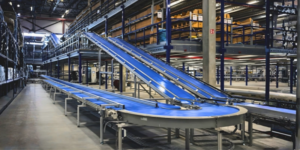
Precision Engineering by Belt Conveyor Manufacturers in India
In the fast-paced worlds of coal processing, cement production, mining, and glass manufacturing, efficiency is not a luxury—it is a necessity. The backbone of any high-throughput industrial operation is its material handling system. At the heart of this system lies the belt conveyor, a solution that relies on meticulous design and robust engineering to ensure zero downtime and maximum safety.
When industries look for reliability, they turn to expert belt conveyor manufacturers in India who understand local challenges—from abrasive materials to extreme temperatures. Among these industry leaders, companies are moving beyond standard solutions to offer precision-engineered systems that blend automation with structural integrity.
The Shift from Generic to Precision Engineering
For decades, conveyors were viewed as commodity items: a belt, a frame, and a motor. However, modern industrial demands have rewritten the rulebook. Today, precision engineering focuses on:
-
Load-specific design: Calculating exact tension and speed for fragile or abrasive goods.
-
Energy efficiency: Reducing friction with high-grade idlers and bearings.
-
Automation integration: Preparing conveyors for smart sensors and IoT-based monitoring.
-
Safety redundancy: Incorporating emergency brakes and dust suppression.
This shift explains why specialized belt conveyor manufacturers in India are gaining preference over general-purpose fabricators. They provide custom-curved systems, troughed conveyors for loose minerals, and reversible conveyors for stockpiling—each component manufactured to micron-level tolerances.
Why Industry Leaders Trust Specialized Manufacturers
A conveyor failure on a cement plant’s main line can cost millions in lost production. Therefore, leading manufacturers do not just sell equipment; they offer process expertise. As seen with top-tier suppliers like Samarth Engineerings, the approach combines three critical elements:
-
System Design Automation: Using CAD/FEA software to simulate stress and material flow before cutting metal.
-
Project Innovation: Adapting modular designs so conveyors can be expanded as plant capacity grows.
-
Particle Awareness: Designing chutes and skirts that prevent spillage and dust emission—a key regulatory requirement.
Such companies have successfully executed projects for coal, granite processing, sugar, salt, and even chemical plants. This diversity proves that precision engineering is not a niche; it is a universal requirement for modern material handling.
Key Features of High-Performance Belt Conveyors
If you are evaluating equipment for a new plant or upgrading an existing line, look for these engineering hallmarks:
-
Heavy-duty rubber belts: Resistant to oil, heat, and abrasion.
-
Self-aligning idlers: To prevent belt drift and edge damage.
-
Pulley lagging: Improves traction and extends belt life.
-
Automatic tensioning systems: Maintains optimal belt sag without manual intervention.
When you choose a manufacturer with decades of trust, you also gain access to screw conveyors and specialized feeders—ensuring a single-source solution for your entire bulk handling network.
Precision in Practice: Real-World Applications
Consider a granite processing unit: Sharp, heavy rocks tear through standard belts within weeks. However, precision-engineered conveyors from experienced belt conveyor manufacturers in India use carcass-reinforced belts with impact beds at loading zones. Similarly, in a chemical plant where corrosive dust is common, manufacturers seal the conveyor structure and use stainless-steel fasteners.
Another example is the coal industry. Here, precision means dust-proof skirting and belt scrapers that reduce carryback by 95%. Companies like Samarth Engineerings have demonstrated that engineering skill—combined with project innovation—directly translates to client satisfaction and loyalty. Their overall expertise in automation and particle behavior has generated long-term partnerships with OEMs across the country.
Quality Systems as a Foundation
Precision engineering is impossible without a certified quality management system. The most reliable manufacturers operate under ISO 9001:2015 standards, which mandate:
-
Documented process control from raw material inspection to final assembly.
-
Regular internal audits and corrective action systems.
-
Continuous improvement in customer satisfaction metrics.
A manufacturer that holds this certification (covering the manufacture and supply of material handling equipment) provides verifiable proof that their conveyors meet international standards for safety and durability.
Conclusion: The Future of Material Handling is Custom and Precise
As Indian industries scale up to meet global demand, the need for reliable, efficient, and safe conveyors will only increase. The era of “one-size-fits-all” is over. The future belongs to manufacturers who engineer each conveyor based on your material, your environment, and your throughput goals.
By partnering with established belt conveyor manufacturers in India who hold ISO certifications and offer complete customization, you protect your production line from unexpected failures. Whether it is a simple rubber belt conveyor for a sugar mill or a complex reversible system for a mining project, choose precision. Choose expertise.
Frequently Asked Questions (FAQs)
1. What industries benefit most from custom belt conveyors?
Coal, cement, mining, salt, sugar, glass, granite processing, and chemical plants. Any industry that moves bulk solids or heavy components can reduce costs with a precision-engineered conveyor.
2. How do I know if I need a screw conveyor or a belt conveyor?
Use belt conveyors for longer distances, higher capacities, and a wide range of materials. Use screw conveyors for short distances, enclosed dust-tight transport, and when you need to meter material flow precisely.
3. What certifications should a reliable conveyor manufacturer have?
Look for ISO 9001:2015 certification for quality management. This ensures consistent processes, traceability, and continuous improvement in manufacturing and supply.
4. Can belt conveyors be automated for smart factories?
Yes. Leading manufacturers provide motor control centers (MCCs), VFDs for speed control, and sensor mounting points for belt sway, temperature, and bearing vibration monitoring.
5. How often should a belt conveyor be serviced?
Critical components (bearings, pulleys, belt tension) should be inspected monthly. A full alignment and wear audit is recommended every six months. The belt itself may last 3–8 years depending on material abrasiveness.