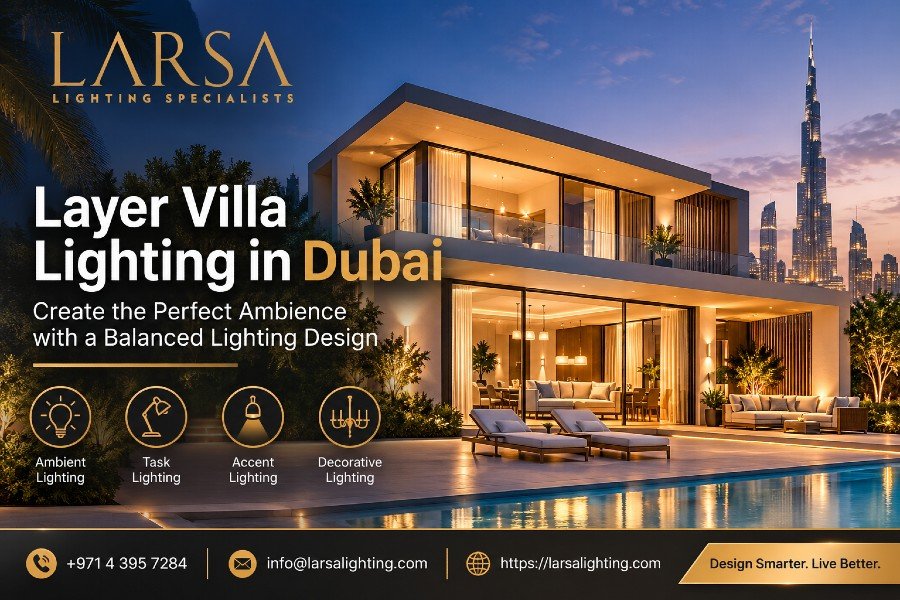
A beautifully designed villa is defined not only by its architecture, furniture, and finishes but also by how it looks and feels after sunset. Lighting plays an important role in creating comfortable, functional, and visually appealing interiors. A single lighting source rarely meets every requirement of a modern home. Instead, combining different lighting techniques creates depth, improves visibility, and highlights architectural details. This approach, known as layered lighting, has become an important part of contemporary residential design.
Layer Villa Lighting in Dubai focuses on combining ambient, task, accent, and decorative lighting to create balanced environments. From spacious living rooms and elegant bedrooms to landscaped gardens and outdoor terraces, each area benefits from a lighting arrangement suited to its purpose. With thoughtful planning, homeowners can create stylish living spaces that remain practical throughout the day and evening.
Understanding the Four Layers of Villa Lighting
Layered lighting involves using different types of illumination together rather than depending on one central fixture. Each layer serves a specific purpose while contributing to the overall atmosphere.
-
Ambient lighting: Provides general illumination throughout a room. Recessed downlights, ceiling-mounted fixtures, indirect coves, and linear lighting are commonly used.
-
Task lighting: Supports specific activities such as cooking, reading, grooming, and working. Under-cabinet lights, desk lamps, and bedside reading fixtures are useful examples.
-
Accent lighting: Highlights architectural features, artwork, decorative walls, shelving, and landscape elements.
-
Decorative lighting: Adds visual interest through chandeliers, pendant lights, sculptural fixtures, and designer wall lamps.
When these layers work together, they create a comfortable lighting environment without making the space appear excessively bright or visually crowded.
Plan Lighting Around the Villa’s Architecture
Every villa has different architectural characteristics that influence lighting requirements. Ceiling heights, room dimensions, natural daylight, wall finishes, and furniture arrangements should all be considered before selecting fixtures.
For example, a double-height entrance may benefit from a decorative chandelier supported by discreet wall lights or adjustable spotlights. This combination creates an inviting entrance while drawing attention to architectural details.
Living rooms require flexibility because they accommodate different activities, including family gatherings, entertainment, and relaxation. Cove lighting can provide soft background illumination, while adjustable spotlights highlight artwork or textured surfaces. Floor and table lamps can introduce additional warmth around seating areas.
In modern villas, lighting should complement the interior materials. Natural stone, timber, glass, and textured finishes respond differently to illumination. Understanding their reflective properties helps designers select suitable light sources and positions.
Create Comfortable Lighting in Every Room
A successful lighting plan considers the individual requirements of each room. The right combination of fixtures improves everyday convenience while maintaining a consistent design theme.
Living Rooms and Entertainment Areas
Living rooms benefit from multiple lighting options that can be adjusted according to the occasion. Recessed downlights provide general visibility, while indirect ceiling lighting creates a relaxed atmosphere. Decorative pendants and accent spotlights can introduce visual interest.
Separate lighting circuits allow homeowners to switch between brighter settings for gatherings and softer illumination for evening relaxation.
Kitchens and Dining Spaces
Kitchen lighting should prioritise visibility and functionality. General ceiling lights provide overall illumination, while under-cabinet LED strips reduce shadows across countertops. Pendant lights above kitchen islands can define the workspace and add a decorative element.
Dining areas benefit from warm, controlled lighting that creates an inviting atmosphere. Dimmable pendants above the dining table, combined with subtle perimeter lighting, help transition the space from everyday meals to formal occasions.
Bedrooms and Bathrooms
Bedrooms require a softer lighting arrangement that supports rest and personal activities. Bedside reading lights, concealed headboard illumination, and wardrobe lighting improve functionality without introducing unnecessary brightness.
Bathrooms need carefully positioned lighting around mirrors. Vertical fixtures on either side of the mirror help reduce facial shadows, making grooming easier. Appropriate moisture-resistant fittings and electrical protection are also essential in bathroom environments.
Choose the Right Colour Temperature and Light Quality
Colour temperature influences how a room feels and how interior materials appear. Warm white lighting, generally between 2700K and 3000K, is suitable for bedrooms, living rooms, and dining areas where a comfortable atmosphere is preferred.
Neutral white lighting can be considered for kitchens, dressing areas, and selected functional spaces where clear visibility is important.
Colour rendering is another important consideration. High-quality LED lighting with good colour rendering helps maintain the natural appearance of furniture, fabrics, artwork, and decorative finishes. This is particularly valuable in luxury villas where interior materials contribute significantly to the overall design.
Extend Layered Lighting to Outdoor Spaces
Outdoor areas are an important extension of modern villa living. Gardens, swimming pools, pathways, balconies, and terraces can become more inviting with carefully planned illumination.
Wall washers and narrow-beam spotlights can highlight exterior textures and architectural columns. Pathway lights improve navigation, while subtle landscape lighting draws attention to trees, plants, and garden features. Poolside lighting adds visual appeal while supporting safe movement around the area.
For Dubai’s climate, outdoor fixtures should be selected with attention to heat resistance, dust protection, humidity, and corrosion. Appropriate IP ratings, durable materials, and reliable LED drivers help maintain performance in demanding outdoor conditions.
The objective is to create a balanced exterior environment rather than illuminating every surface equally. Controlled lighting also helps minimise glare and unnecessary light spill.
Use Smart Controls for Greater Flexibility
Lighting controls make layered illumination more convenient. Dimming systems allow homeowners to adjust brightness according to different activities and times of day. Zoning provides additional flexibility by allowing specific areas to operate independently.
Modern villas can also incorporate programmable lighting scenes such as:
-
Welcome: Comfortable illumination for entrances and main living areas.
-
Relax: Softer lighting for quiet evenings.
-
Dinner: Focused illumination around dining spaces.
-
Night: Low-level lighting for corridors and circulation areas.
-
Away: Selected lighting schedules when the property is unoccupied.
Smart controls can integrate with wider home automation systems. However, the level of automation should reflect the homeowner’s requirements, budget, and preferred way of using the property.
Why Early Lighting Planning Matters
Lighting should be considered during the architectural and interior design stages rather than after construction is nearly complete. Fixture positions can affect ceiling layouts, air-conditioning diffusers, curtain pockets, electrical connections, and decorative joinery.
Early coordination helps prevent installation conflicts and supports a cleaner overall appearance. Technical specifications should include brightness, beam angles, colour temperature, dimming compatibility, fixture dimensions, driver accessibility, and mounting requirements.
Mockups are also useful for important areas such as double-height entrances, feature walls, staircases, and exterior façades. They allow designers and homeowners to assess light distribution, glare, and material appearance before final installation.
Conclusion
Modern villa lighting is about creating a thoughtful relationship between architecture, functionality, and atmosphere. Combining ambient, task, accent, and decorative illumination allows each space to serve its purpose while maintaining a consistent interior design language.
With carefully planned Layer Villa Lighting in Dubai, homeowners can improve everyday comfort, highlight architectural details, and create adaptable environments for different occasions. Working with experienced lighting specialists such as Larsa Lighting can help coordinate fixture selection, technical requirements, and lighting controls to achieve a balanced result. Ultimately, the right lighting scheme enhances how a villa looks, feels, and functions throughout the day.