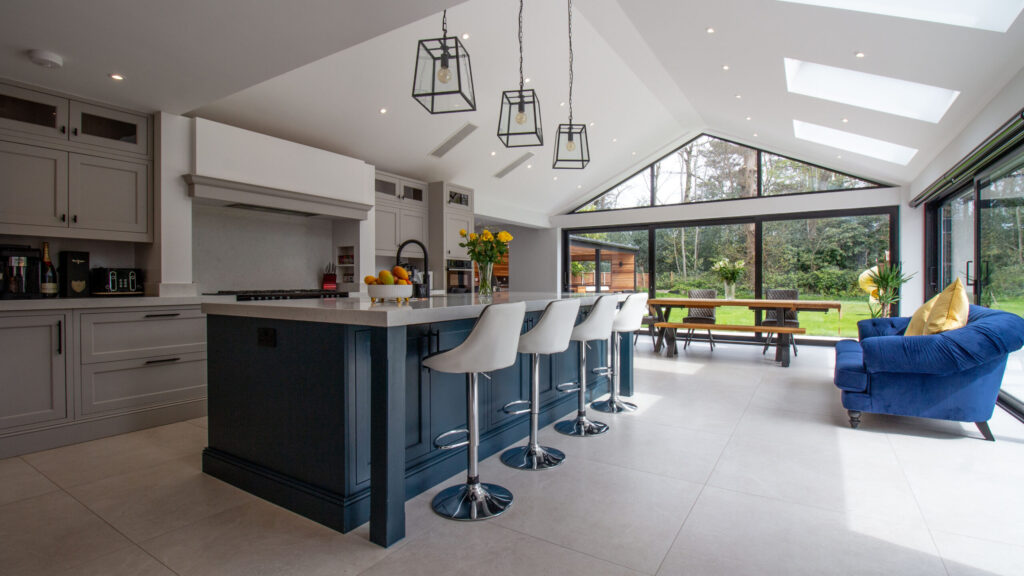
London is changing. Walk through any neighbourhood in the capital right now and you will notice it. Rear gardens disappearing behind sleek glass extensions. Victorian terraces with rooflines pushed upward into light-filled loft rooms. Ground floors opened up into flowing, flexible living spaces that bear almost no resemblance to the cramped, compartmentalised layouts they replaced. The city’s housing stock is being quietly reimagined, street by street, postcode by postcode.
And driving much of that reimagining is a growing appetite for smart, design-led construction. Not just building for the sake of space, but building intelligently. Homes that work harder, feel better, and adapt to the way people actually live today. If you are thinking about a project in London and want to understand where the market is heading, here is what is worth paying attention to right now.
Smart Technology is No Longer an Add-On
A few years ago, integrating smart technology into a home renovation was considered a luxury reserved for high-end developments. That perception has shifted dramatically. Today, clients working with quality design and build services are routinely incorporating smart systems into projects at every budget level, and the reason is straightforward: doing it during construction costs a fraction of what retrofitting costs later.
What does this look like in practice? Underfloor heating controlled by room-by-room smart thermostats. Lighting scenes programmed to shift automatically between morning, working, and evening modes. Multiroom audio wired invisibly into the fabric of the walls. EV charging points integrated into rear extensions before a car is even purchased. The homes being built and renovated intelligently today are being designed for a life that is still arriving.
Biophilic Design Has Moved From Trend to Standard
There was a point where bringing natural materials and greenery into an interior felt like a design statement. Now it feels like a basic expectation. Biophilic design, the principle of connecting interior spaces meaningfully to the natural world, has become one of the defining characteristics of well-executed London renovations.
This plays out in multiple ways. Full width glazing that does not just frame the garden but dissolves the boundary between inside and outside. Internal courtyards and light wells that bring daylight into the heart of a terraced property. Exposed timber, natural stone, and textured plaster finishes that give a space warmth and materiality that painted plasterboard simply cannot replicate. Living walls and integrated planters moving from boutique hotels into residential projects. It is not decoration. It is a fundamentally different way of thinking about what a home should feel like.
The Open Plan Conversation Is Evolving
For the better part of two decades, open plan living was the unquestioned goal of almost every ground floor extension. Knock through, open up, connect kitchen to garden. The formula became so familiar it almost became automatic.
What is emerging now is more nuanced. Clients are asking for open plan spaces that can also close. Sliding pocket doors that allow a home office to disappear into the living room when not needed. Kitchen layouts designed to contain cooking smells and noise without sacrificing the feeling of connection to the rest of the house. Dining spaces with their own defined character rather than simply occupying a corner of the kitchen. The trend is toward flexibility, toward homes that can genuinely adapt throughout the day and across different stages of life.
Energy Performance is Shaping Design Decisions
This is perhaps the most significant shift in how London construction projects are being approached right now. Energy performance has moved from a compliance checkbox to a genuine design driver, and the best firms are treating it that way from the very first conversation with a client.
Fabric-first thinking means prioritising the performance of walls, floors, roofs, and glazing before reaching for mechanical solutions. Triple glazing is appearing in projects where double glazing would once have been the default. External wall insulation is being integrated into extension designs rather than applied as an afterthought. Heat pumps are replacing gas boilers in renovated properties, changing the requirements for radiator sizing and hot water cylinder placement in ways that need to be understood at the design stage, not discovered during the build.
The homes being renovated well today are being designed to perform well for decades, not just to look good on completion day.
Basements Are Getting a Design Rethink
London’s basement conversion market went through a period of excess, with deep digs and elaborate subterranean extensions becoming almost a status symbol in certain postcodes. The market has matured since then, and what is emerging is more considered.
Basements are increasingly being designed as genuine living spaces with character rather than simply additional square footage. Dramatic ceiling heights where structural constraints allow. Light wells that do far more than meet building regulations. Direct connections to rear gardens that make the lower ground floor feel integrated with the rest of the house rather than buried beneath it. When the design is right, a basement conversion does not feel like a basement at all.
What All of These Trends Have in Common
Look at any of the shifts happening in London construction design right now and a common thread runs through all of them. They require decisions to be made early. Smart technology needs to be specified before walls are closed. Biophilic elements need to be considered when the structural strategy is being developed. Energy performance requires a fabric-first approach that shapes the design from the ground up. Flexible layouts demand careful planning of structural and service routes before a single wall comes down.
This is precisely why the design and build model is so well suited to the current moment. When the people designing your project are the same people building it, these decisions happen at the right time, in the right sequence, with the right expertise. Nothing is retrofitted. Nothing is compromised by a late discovery on site.
London Design and Build works exactly this way, bringing design intelligence and construction rigour together from day one. For homeowners who want their project to reflect where London living is genuinely heading, rather than where it has been, that kind of integrated thinking is not a luxury. It is the whole point.