The modern warehouse is undergoing a profound transformation. With the ongoing pressures of labour shortages, soaring real estate costs, and the ever-increasing demand for faster fulfilment, businesses are re-evaluating their operational strategies. At the heart of this evolution lies a critical question: how can we do more with less? The answer is increasingly found in the strategic adoption of advanced automation. For Australian businesses, in particular, navigating these challenges requires a keen understanding of the latest innovations in material lift equipment and integrated storage solutions.
The Rise of Intelligent Storage Solutions
One of the most significant shifts is the move away from static, sprawling shelving towards dynamic, high-density systems. Traditional warehouses, reliant on manual searching and forklift traffic, are being replaced by automated environments where goods come to the operator. Vertical Lift Machines (VLMs), which are enclosed systems that automatically retrieve trays of inventory and present them at an ergonomic access point, are a prime example .
These systems are no longer a niche investment but are becoming a cornerstone of modern intralogistics strategies . They offer a practical answer to the modern warehouse dilemma: businesses must process more stock-keeping units (SKUs) and more orders while operating within a fixed physical footprint. By compressing storage vertically and delivering items to a workstation, these machines dramatically reduce the time spent walking, searching, and bending, creating predictable and measurable efficiency gains .
Why Vertical Lift Machines Are Gaining Traction
The demand for Vertical Lift Machines is being fueled by several key factors. According to market analysis, the global market for automated vertical lift machines is projected to grow significantly, with a compound annual growth rate exceeding 9% through the next decade . This growth is driven by:
-
Maximising Cubic Space: VLMs can reclaim up to 85% of the floor space used by static shelving, unlocking vertical capacity in facilities where expansion is impossible or prohibitively expensive .
-
Enhanced Productivity and Accuracy: By bringing the item to the worker, VLMs eliminate wasted motion. This “goods-to-person” technology can reduce picking errors by over 90% and cut picking labour requirements by up to 66% .
-
Software-Centric Automation: Modern Vertical Lift Machines are not just hardware; they are software-driven nodes within a facility’s ecosystem. Buyers are increasingly expecting native integration with warehouse management systems (WMS) and sophisticated analytics to quantify performance improvements .
Beyond the Lift: The Shift to System Integration
Industry experts note that the trend is moving away from single-purpose equipment towards holistic, integrated systems. In the past, companies might have purchased a material lift equipment solution in isolation. Today, decision-makers view these machines as essential components in a seamless material flow that encompasses receiving, storage, picking, and dispatch .
This shift is creating a demand for “one-stop-shop” providers who can combine racking, shuttle systems, conveyor technology, and control software into a unified operational framework . The goal is to eliminate data silos and ensure that every piece of material lift equipment operates in concert with the others, driven by a central software brain.
“The integration of the software, the warehouse management system and warehouse control system, is huge,” explains an industry expert, “The only way that it will become efficient and provide the level of return on investment that you need is if you’ve got a good, functioning software package” .
Key Trends Shaping the Future of Material Handling
To stay competitive, businesses must be aware of the broader trends reshaping the material handling landscape:
-
The Four-Way Shuttle: This technology represents the next evolution in automated storage and retrieval. Unlike traditional two-way systems, four-way shuttles can move in multiple directions, enabling more dynamic layouts and denser storage configurations. They are being deployed in demanding environments like cold storage and food manufacturing .
-
Flexible Automation for Existing Warehouses: Not every business can afford a brand-new, purpose-built facility. Many operators are now assessing how to make their current sites more efficient. This is driving demand for flexible automation that can be installed in existing warehouses with minimal disruption, avoiding costly rebuilds .
-
The Impact of “Middle-Tech” Solutions: The global material lift equipment market is being influenced by a wave of “middle-tech” solutions from manufacturers. These products offer a compelling balance of technology and cost, challenging traditional premium brands and making automation more accessible to a wider range of businesses .
-
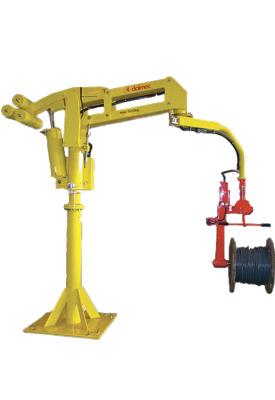
The Role of Compliance and Safety: Safety regulations and a focus on worker ergonomics are increasingly important. Automation helps by removing workers from dangerous tasks and reducing the physical strain of manual lifting, making material lift equipment a vital tool for creating a safer workplace .
Conclusion: Building a Future-Ready Operation
For the Australian market, where labour costs are rising and industrial real estate is at a premium, these trends are particularly relevant. A successful automation strategy is no longer just about buying a machine; it’s about transforming processes to build a smarter, more scalable operation .
Businesses that leverage material lift equipment and integrated systems can achieve operational excellence. They move smarter, store tighter, and access faster, all while creating a more predictable and efficient workflow. In an environment where the pressure to do more with less is constant, investing in the right material lift equipment is no longer just an option—it’s a necessary step towards ensuring long-term growth and competitiveness. Ultimately, the companies that succeed will be those that view automation not as a cost, but as a strategic accelerant for their entire business.