Introduction
Education is changing fast, and honestly schools seem to be embracing digital tools more and more, to make teaching feel a bit better, or at least more tailored. Classrooms are not really stuck with just textbooks, notebooks, and the old style way of teaching anymore. Instead, tech has become kind of a necessity in modern schooling, supporting schools that want more engaging, interactive, and student oriented learning spaces.
One of the big innovations in all of this is Learning Management System Software. It gives a sort of central workspace where teachers, learners, and school administrators can work together, talk back and forth, and coordinate educational tasks without too much confusion. It helps with organizing lessons, watching how students are doing, and yes even running online evaluations. In general, these platforms are supporting schools as they try to keep up with what learners need these days in a digital setting.
And as educational institutions keep adjusting to new technological developments, it becomes more important to understand what Learning Management System Software actually does. That understanding can shape learning environments that are more effective, and future ready, rather than just “new for the sake of new”.
Understanding Learning Management System Software
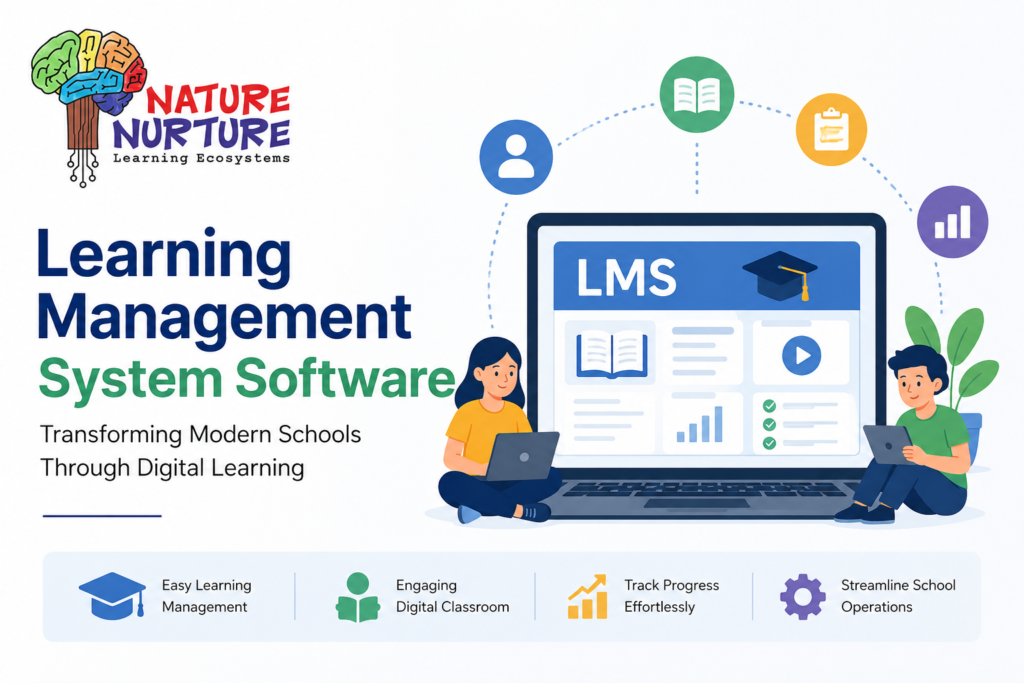
At its core, Learning Management System Software is basically a digital platform meant to help manage, deliver, and keep an eye on educational content plus activities. It works like a sort of virtual learning hub, where teachers can toss up study materials, give out assignments, run assessments, and talk back-and-forth with students.
On the student side, it really helps to have learning resources available anytime anywhere. They can revisit lessons , hand in work, join in discussions, and also monitor their own academic progress which is kinda nice. For school administrators the same platform offers useful perspectives on attendance, learning performance, and whether the whole education effort is actually working in practice.
So the main reason for Learning Management System Software is to make the education process simpler, while also improving learning results. When all those learning related tasks end up in one place , schools can lower the administrative load and spend more time on those more meaningful learning moments.
The Shift Toward Digital Learning in Schools
The growing demand for digital education has kinda speed up the adoption of technology in classrooms worldwide. Modern students are used to using digital devices in their daily lives, so technology enabled learning feels like just a natural extension of what they already do.
Digital learning lets educational institutions give more flexible and personalized learning opportunities. Students can go at their own pace, revisit topics whenever it makes sense, and pull up educational content beyond regular classroom hours. Teachers too, can use digital tools to make more engaging lessons that match different learning preferences , and not just one style or ability level.
A few things have really pushed this rise in digital learning, like
– More access to internet-enabled devices
– A growing need for personalized education
– Better back-and-forth communication between teachers and students
– Easier availability of online educational resources
– Stronger data-driven decision making in schools
Because of these changes, Learning Management System Software has ended up being a key part of modern educational infrastructure, rather than just something optional.
Enhancing Teaching Efficiency with Software For Teaching
Technology has improved a lot how educators plan, deliver, and evaluate instruction. With modern Software for Teaching, teachers can kind of smooth out everyday chores, so they can spend more time on actual student interaction and academic guidance.
Teachers can build organized lesson plans, line up assignments, run short quizzes, and share quick feedback using digital tools. Then the automated grading features cut down on paperwork, which lets educators stay more focused on instructional quality, not just the admin side,
Also, there’s these detailed analytics, they help teachers spot where students are struggling and then tweak their teaching approach as needed. This evidence-led method backs ongoing refinement and makes classroom instruction more effective.
When it gets used thoughtfully in schools, Software for Teaching helps educators offer learning experiences that feel more customized and meaningful, while still keeping things efficient and consistent.
Supporting Smart Classroom Management
Today educational settings, they more or less demand more than simply sending digital content over. Real Smart Classroom Management is about setting up those ordered , cooperative and tech enabled spaces where the learning can actually breathe and grow.
Learning Management System Software plays a big role here because it gathers communication, assignments, attendance details, and performance tracking in one place. In practice teachers can keep an eye on student involvement, handle upcoming deadlines, and spot learning problems early , before they turn into bigger obstacles.
Students also gain a lot, mostly because the expectations feel clearer, the learning routes are more structured, and the feedback shows up on time. Even parents can remain updated on academic progress thanks to integrated communication features, so the partnership between home and school gets stronger in a more consistent way.
Some of the main advantages of Smart Classroom Management include:
- Better organization inside the room
- Higher student accountability
- More collaboration across stakeholders
- Ongoing , real-time visibility into progress
- Communication pathways that work more smoothly
All these pieces help build learning environments that feel both efficient and genuinely supportive for student success.
Building Engaging Digital Classroom Experiences
A successful Digital Classroom doesn’t really stop at swapping paper for screens. It kind of builds learning experiences that feel real, and that push for involvement, originality, and more careful, critical thinking.
Learning Management System Software basically backs these Digital Classroom plans by giving learners access to multimedia content, hands on quizzes and interactive checks, plus discussion spaces and teamwork work. Students can dive into the material using things like videos, slide decks, brief quizzes, and group tasks, so the whole process becomes more active, and honestly more fun to stay with.
Young learners in particular seem to get a big boost from interactive educational experiences. When lessons mix visual material with gamified activities, and also use lively digital tools, students are more likely to stay interested and remember details more effectively, even without being forced all the time.
Digital Classroom settings also tend to promote self directed learning. Learners get chances to explore themes on their own timeline, while also strengthening digital literacy skills. Those skills then carry over into later academic goals, and also into professional life, which is kinda the point.
Personalizing Learning for Every Student
Every student learns differently. Some kind of prefer visual materials, while others seem to learn best through reading , discussion, or even hands-on activities. Traditional classroom models often feel like they cant really keep up with these different learning preferences , not as much as they should.
A Learning Management System Software can help with that problem, by letting educators build personalized learning pathways. Teachers may hand out different resources, activities, and assessments based on what each student needs, and also how they’re performing at that moment.
Personalized learning comes with a handful of benefits. Students end up with more ownership over their education, they get focused help right where it’s needed most, and they can move forward at a pace that actually matches their abilities. When this works well , it can raise confidence, improve motivation, and support stronger overall academic achievement.
If schools lean on data and technology, they can shape more inclusive learning environments too, ones that support every student’s unique educational needs , even when those needs look a little different.
The Future of Education Through Technology
As educational technology keeps evolving, Learning Management System Software will probably end up playing a bigger role in how learning gets shaped later on. New kinds of stuff, like artificial intelligence , predictive analytics, adaptive teaching systems , and more immersive educational experiences are expected to boost digital learning even more.
Schools that really lean into these changes will be in a stronger spot to get students ready for a world that shifts quickly. Technology is no longer just “nice to have” as an optional extra, it is now basically a required piece of effective education.
What comes next for learning will likely land on flexibility, easier access, teamwork and, personalized instruction. Learning Management System software gives the base structure that supports those aims, while also making it easier for educational institutions to stay nimble, and to respond fast to what schools need as education demands keep changing.
Conclusion
So, the whole transformation in modern education is basically being pushed forward by newer tech tools that make learning way more accessible, a lot more interesting, and honestly more efficient too. In this context, Learning Management System Software has kinda shown up as a strong piece of the puzzle, it helps teachers, it gives students real power to participate, and it also helps educational institutions stay aligned with what’s happening.
And when these platforms start improving how lessons get delivered, plus supporting Software for Teaching, enabling smart classroom administration, and building more immersive Digital Classroom moments, schools can finally match the needs of today’s learners. Then, as education keeps changing, adopting solid digital learning solutions is going to stay important, for shaping future-ready schools that encourage academic performance but also support lifelong learning.
Empowering Digital Learning for Tomorrow
Educational institutions that want a more engaging, organized, and future minded learning atmosphere can really gain a lot from looking into fresh teaching approaches , and digital strategies. You can see how NatureNurture helps modern learning change , mostly through educational excellence and careful technology integration. Take a closer look at what it means to build future-ready schools with NatureNurture and how to create real, valuable learning experiences for every student.
Source Url: https://1xbet-asia.vip/learning-management-system-software-modern-schools/