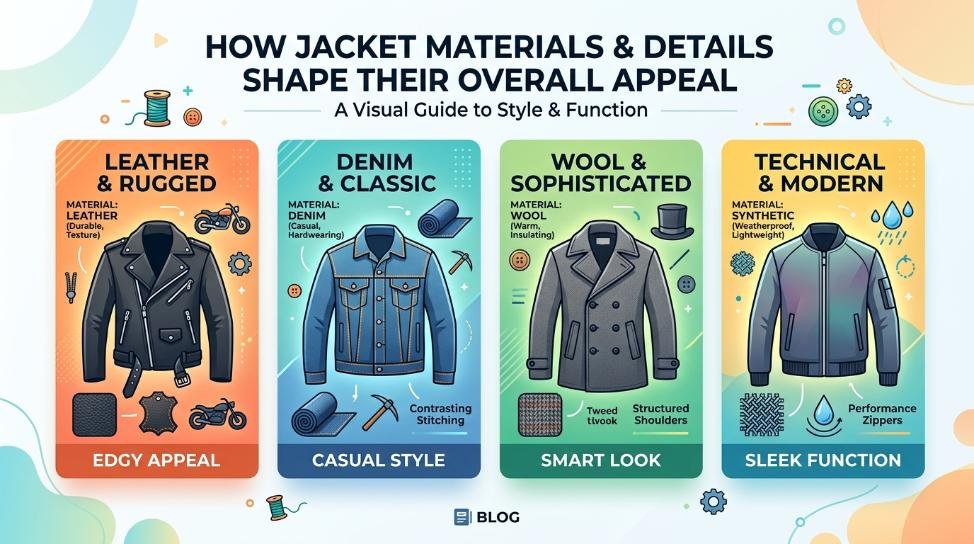
How Jacket Materials and Details Shape Their Overall Appeal
A jacket is rarely defined by its silhouette alone. The fabric, finish, stitching, hardware, color, lining, pockets, closures, and small design choices all contribute to how the finished garment looks and feels. Two jackets can share a similar cut yet create completely different impressions because their materials and construction details communicate different qualities.
Material selection can make a jacket appear rugged, refined, sporty, vintage-inspired, or contemporary. Details then reinforce that identity. A substantial zipper may suggest durability, while a soft lining can make a structured outer layer feel considerably more comfortable. Even the placement of seams and pockets can influence whether a jacket feels practical or primarily fashion-focused.
Understanding these elements makes it easier to evaluate outerwear beyond its appearance on a product page. Instead of looking only at color or overall shape, shoppers can consider how individual components work together to determine durability, comfort, versatility, and visual character.
Why Jacket Materials Matter So Much
The outer fabric is one of the first things people notice, but its importance extends far beyond aesthetics. Different materials have distinct textures, weights, levels of flexibility, and resistance to environmental conditions. These characteristics directly affect how a jacket performs in everyday use.
Canvas, for example, is associated with workwear because of its sturdy construction and ability to develop character through wear. Denim brings a familiar casual quality, while leather tends to create a more polished and assertive appearance. Synthetic technical fabrics can offer lightweight protection and weather resistance without the substantial feel of heavier natural textiles.
Material weight also changes the personality of a jacket. A lightweight fabric may create a relaxed layer that works well during transitional weather. Heavier materials can provide structure and warmth while producing a more substantial silhouette. Neither approach is inherently better; the ideal choice depends on the intended use and desired visual effect.
Texture Creates Visual Personality
Texture is particularly important because it influences how light interacts with the surface. Matte fabrics often appear understated and utilitarian, whereas coated or slightly glossy materials can feel more contemporary. Brushed surfaces may create softness, while tightly woven fabrics can communicate durability.
Texture also affects how a jacket pairs with other garments. A rugged outer shell can add contrast to softer casual clothing, while a smooth material may complement tailored pieces. This makes material selection a major part of styling rather than merely a technical manufacturing decision.
Color Can Transform the Character of a Jacket
Color is one of the most immediate ways a jacket communicates its identity. Neutral shades such as black, navy, brown, olive, and beige generally offer versatility, while brighter colors can turn outerwear into the focal point of an outfit.
Pink, for instance, can soften the traditionally rugged image associated with utility-inspired outerwear. A carhartt jacket pink womens style can combine a practical workwear-inspired structure with a distinctly expressive color palette. That contrast can make the garment feel both functional and fashion-conscious.
Color also changes how construction details are perceived. On a dark jacket, contrast stitching or metal hardware may become highly noticeable. On a brighter garment, matching components can create a more cohesive appearance. Designers can therefore use color to either emphasize or minimize specific details.
| Jacket Element | Primary Influence | Typical Visual Effect |
|---|---|---|
| Outer Material | Durability, texture, structure | Determines much of the jacket’s overall character |
| Color | Style and emotional impression | Can make a design subtle, bold, classic, or expressive |
| Hardware | Function and visual contrast | Adds definition and can reinforce a rugged or refined aesthetic |
| Stitching | Construction and detailing | Highlights seams and contributes to perceived craftsmanship |
| Lining | Comfort and insulation | Influences warmth, movement, and interior finish |
| Pockets | Utility and proportion | Balances practicality with the jacket’s silhouette |
Construction Details Influence Perceived Quality
Once the material and color establish the basic identity of a jacket, construction details determine how convincingly that identity comes through. High-quality details should not simply look attractive; they should make sense for the jacket’s intended purpose.
Stitching is a good example. Clean, consistent seams create an impression of careful manufacturing. Reinforced stitching around stress points is especially important on jackets designed for active use. Areas around pockets, cuffs, shoulder seams, and closures experience repeated movement, so construction techniques in these locations can have a meaningful effect on longevity.
Seam placement can also shape the silhouette. Strategic paneling can make a jacket look more structured, while simpler construction may produce a relaxed appearance. Curved seams can follow the body more closely, whereas straight panels often support a traditional workwear or utility aesthetic.
Hardware Adds Both Function and Style
Zippers, snaps, buttons, buckles, and adjusters are small components, but they can have an outsized impact on the finished garment. Hardware should complement the fabric rather than appear disconnected from it.
Heavy-duty metal hardware can reinforce the impression of a rugged jacket. Sleek zippers and minimal fasteners may support a cleaner modern design. Matte finishes tend to appear understated, while polished metal can introduce a stronger visual accent.
Function matters just as much. A zipper should operate smoothly, snaps should hold securely, and adjustable cuffs should be practical rather than decorative. When functional hardware is well integrated into the design, it improves both usability and aesthetic credibility.
Pockets Are More Than Storage Features
Pockets demonstrate particularly well how practical details can influence style. Their size, position, shape, and closure method all contribute to a jacket’s appearance. Large patch pockets can emphasize utility, while discreet welt pockets often create a more streamlined effect.
Multiple pockets can give a jacket a technical or workwear-inspired personality. Conversely, reducing pocket details can make the same basic silhouette feel more minimal. Designers must therefore consider proportion carefully because an oversized pocket can visually dominate an otherwise simple garment.
Functionality is equally important. A pocket intended for everyday use needs enough depth to secure its contents without disrupting the jacket’s shape. Interior pockets can provide discreet storage while preserving a clean exterior, making them particularly useful for modern lifestyle jackets.
How Lining and Interior Construction Affect Comfort
The inside of a jacket often receives less attention than the exterior, yet lining can significantly affect the wearing experience. A smooth lining can make layering easier, particularly when the jacket is worn over knitwear or other textured garments.
Insulated interiors can provide warmth, while lighter linings are often preferable when breathability and mobility are priorities. The relationship between outer shell and interior construction should reflect the jacket’s purpose. A fashion-oriented lightweight jacket may prioritize drape and ease of movement, while cold-weather outerwear needs a more deliberate approach to insulation.
Interior finishing also contributes to perceived quality. Cleanly finished seams, securely attached labels, and carefully constructed lining demonstrate attention to the areas that are not immediately visible. These details may not attract attention from across a room, but they become obvious through repeated wear.
The Appeal of Rugged Workwear-Inspired Details
Workwear has influenced contemporary fashion because its design language is rooted in practical construction. Reinforced seams, durable fabrics, generous pockets, sturdy closures, and functional silhouettes all originated from real-world requirements.
When these characteristics are incorporated into modern fashion, they create an interesting combination of utility and style. A pink carhartt jacket illustrates how a recognizable workwear-inspired construction can take on a different personality through color. The underlying visual language remains practical, but the brighter palette gives it a more contemporary and expressive direction.
This balance is one reason utility-inspired jackets remain relevant. They provide visual substance without requiring elaborate decoration. The design itself supplies the character through fabric weight, pocket construction, seam work, and hardware.
Why Vintage Details Continue to Resonate
Vintage-inspired jackets often appeal because their details suggest history and authenticity. Slightly weathered finishes, classic silhouettes, contrast panels, traditional hardware, and heritage color combinations can create a sense of familiarity.
Red is especially effective when paired with heritage-inspired construction. A red carhartt jacket, for example, can use a bold color to emphasize the visual impact of a traditionally rugged outerwear aesthetic.
Vintage appeal does not necessarily require an exact reproduction of an older garment. Contemporary designers can borrow recognizable details while updating proportions, materials, comfort features, or finishing techniques. The result can feel nostalgic without looking outdated.
Balancing Functionality With Fashion
The most appealing jackets usually achieve a balance between practical performance and visual design. Excessive decoration can undermine a functional garment, while an overly utilitarian design may not provide enough personality for fashion-conscious consumers.
A useful way to evaluate that balance is to consider the following factors:
- Purpose: Determine whether the jacket is intended for work, casual wear, outdoor activity, travel, or fashion styling.
- Material performance: Consider weight, flexibility, durability, breathability, and resistance to everyday wear.
- Construction: Look at seams, reinforcement points, closures, cuffs, collars, and hem finishing.
- Storage: Evaluate whether pockets are genuinely useful and proportionally integrated.
- Color: Consider whether the shade supports versatility or intentionally creates a statement.
- Layering: Check whether the fit and interior construction allow comfortable movement over other garments.
When these elements support one another, a jacket tends to feel cohesive. The fabric makes sense for the construction, the hardware suits the garment’s weight, and the color reinforces the intended personality. That consistency is often what separates an ordinary jacket from one that becomes a reliable wardrobe favorite.
A Practical Process for Evaluating Jacket Appeal
Shoppers do not need to be textile specialists to assess these qualities. A simple evaluation process can reveal whether a jacket’s appearance is supported by thoughtful construction.
- Start with the intended use. Identify when and where the jacket is likely to be worn. This establishes the right priorities for weight, durability, warmth, and storage.
- Examine the outer material. Look at texture, thickness, flexibility, and finish. Consider how the fabric may age with repeated use.
- Inspect construction details. Check seams, stitching, cuffs, collars, hems, and reinforcement points for consistency.
- Evaluate the hardware. Test zippers, snaps, and buttons where possible. Functional components should feel appropriate to the garment’s overall weight and purpose.
- Assess pocket placement. Consider both storage capacity and visual proportion. Practical pockets should not make the silhouette unnecessarily bulky.
- Consider the color and styling potential. Decide whether the jacket can integrate with existing clothing or is intended to serve as a statement piece.
- Check the interior. Examine the lining and interior seams because comfort and durability depend on more than the exterior surface.
Why Small Details Create a Big Difference
Jackets demonstrate an important principle in fashion design: visual appeal is often cumulative. No single zipper, pocket, seam, or fabric characteristic necessarily makes a garment exceptional. Instead, numerous decisions combine to create the final impression.
A structured silhouette paired with heavyweight fabric can create authority. Add reinforced pockets and durable hardware, and the garment begins to communicate utility. Change the color, and the same construction can move toward a completely different fashion category. Introduce a softer lining and carefully adjusted proportions, and practicality becomes easier to incorporate into everyday styling.
This is why material and detail selection should be considered together. A design that looks compelling in isolation may feel less successful if its components contradict one another. Successful outerwear creates a visual and functional conversation between its fabric, construction, color, and purpose.
Frequently Asked Questions (FAQs)
What jacket material is best for durability?
Durability depends on the specific fabric construction and intended use rather than one universally superior material. Heavy canvas, denim, leather, and certain technical textiles can all provide excellent durability when properly constructed.
Why does stitching affect a jacket’s appeal?
Stitching contributes to both appearance and structural integrity. Consistent seams and reinforced stress points can make a jacket look more carefully made while helping it withstand repeated movement and wear.
Do pockets affect the style of a jacket?
Yes. Pocket size, shape, placement, and closure can significantly change a jacket’s visual character. Large external pockets tend to emphasize utility, while discreet pockets generally create a cleaner silhouette.
Can a colorful jacket still have a rugged appearance?
Absolutely. Ruggedness is influenced by fabric weight, construction, hardware, stitching, and silhouette as well as color. A bold color can provide a fashion-forward contrast while the underlying construction retains a utilitarian character.
What makes vintage-inspired jackets appealing?
Vintage-inspired jackets often combine familiar silhouettes, heritage materials, traditional hardware, and distinctive color palettes. These details can evoke authenticity and nostalgia while remaining adaptable to contemporary wardrobes.
Choose Outerwear Where Design and Function Work Together
The appeal of a jacket comes from the relationship between its materials and its details. Fabric establishes the foundation, color shapes the first impression, and construction elements such as stitching, hardware, pockets, and lining determine how convincingly the design performs in everyday life.
Whether the goal is rugged utility, vintage character, contemporary styling, or everyday versatility, paying attention to these components makes it easier to choose outerwear with lasting appeal. Rather than judging a jacket solely by its silhouette, look closely at what it is made from and how every detail contributes to the final design.