ISO certification: ISO Certification Courses, Requirements and Pathways in Ethiopia
ISO certification has become an important benchmark for organizations that want to demonstrate consistency, quality, and compliance with internationally recognized standards. In Ethiopia, interest in structured quality management systems has grown steadily across manufacturing, construction, healthcare, logistics, and service-based industries. As businesses expand and engage with global markets, understanding how iso certification works and how professionals can learn it through structured training has become increasingly relevant.
ISO certification is not limited to large corporations. Small and medium enterprises, government-linked projects, and even startups are now exploring ISO frameworks to improve internal processes and meet regulatory expectations. This growing demand has also led to increased interest in formal learning pathways, especially ISO Certification Courses designed for professionals who want to understand auditing systems, documentation practices, and compliance standards in a practical way.
Understanding ISO Certification Courses
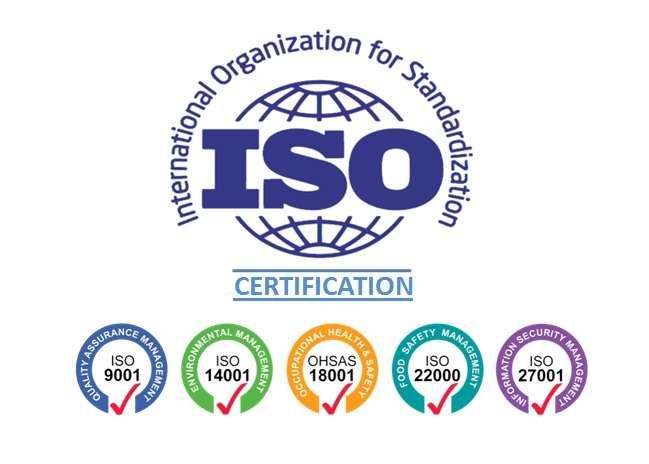
ISO certification in Ethiopia refers to a structured process where an organization aligns its operations with internationally recognized standards issued by the International Organization for Standardization. These standards cover areas like quality management (ISO 9001), environmental systems (ISO 14001), information security (ISO 27001), and occupational health and safety (ISO 45001).
ISO Certification Courses are designed to help individuals understand how these systems function in real organizational environments. They typically cover the principles behind documentation control, internal audits, risk management, and continuous improvement frameworks.
In Ethiopia, professionals working in industries such as manufacturing and export-oriented businesses often pursue these courses to better understand compliance expectations when dealing with international partners. For example, a textile manufacturer in Addis Ababa exporting products to Europe may need ISO-aligned quality processes to meet buyer requirements. Similarly, a logistics company may use ISO standards to improve delivery consistency and reduce operational errors.
These courses are not purely theoretical. They often include case-based learning where learners analyze real operational scenarios, such as identifying gaps in quality control systems or designing audit checklists for internal review processes.
Rising Demand for iso certification in ethiopia
The demand for iso certification in ethiopia has increased due to several economic and industrial factors. As the country continues to develop its manufacturing base and expand export-driven sectors like agriculture and textiles, businesses are under pressure to meet international quality expectations.
Government institutions and private organizations are also adopting ISO frameworks to improve efficiency and transparency. In sectors like healthcare, ISO standards help ensure patient safety protocols and consistent service delivery. In construction, they contribute to better project management and safety compliance.
One practical example is seen in Ethiopian coffee exporters. Since coffee is a major export product, many cooperatives and processing plants adopt ISO 9001 systems to standardize processing, packaging, and quality control. This helps them maintain consistency when exporting to international buyers who require strict compliance documentation.
Another example is in the education and training sector, where institutions are increasingly aligning administrative processes with ISO guidelines to improve service delivery and accreditation readiness.
This growing demand has created a need for professionals who understand ISO systems not just at a surface level but with applied knowledge of implementation and auditing.
Types of iso courses and learning pathways
There are multiple iso courses available depending on career goals and industry requirements. Some courses focus on foundational knowledge, while others are designed for auditors and compliance professionals.
Common ISO-related training areas include:
- ISO 9001 Quality Management Systems
- ISO 14001 Environmental Management Systems
- ISO 27001 Information Security Management
- ISO 45001 Occupational Health and Safety Management
Entry-level courses typically introduce the structure of ISO standards, terminology, and documentation practices. Intermediate and advanced programs often focus on internal auditing techniques, compliance evaluation, and system implementation strategies.
Professionals in Ethiopia often choose courses based on their industry. For instance, IT professionals may prioritize ISO 27001 due to increasing cybersecurity concerns, while manufacturing supervisors may focus on ISO 9001 to improve production quality systems.
A key aspect of these courses is understanding the “process approach,” which is central to ISO frameworks. Instead of focusing on isolated tasks, ISO systems encourage organizations to view operations as interconnected processes that can be continuously improved.
Access to iso courses online and flexible learning
The availability of iso courses online has made ISO education more accessible to learners across Ethiopia, especially those outside major urban centers. Online learning formats allow professionals to study without interrupting their work schedules, which is particularly useful in industries with shift-based or field-based roles.
Online ISO training typically includes video lectures, reading materials, quizzes, and practical case studies. Some programs also simulate audit scenarios, helping learners understand how compliance checks are conducted in real organizations.
For example, a quality officer working in a regional manufacturing plant can complete an online ISO 9001 course while continuing their daily responsibilities. They can immediately apply concepts like corrective action reports or process mapping within their workplace.
The flexibility of online learning has also supported young professionals who are entering the job market. Many use ISO courses as a way to strengthen their CVs and improve employability in competitive sectors such as logistics, construction, and healthcare administration.
CounselTrain is one of the platforms that provides structured learning pathways in this area, particularly for learners seeking internationally aligned training content. However, the value of ISO education is not tied to a single provider but rather to the global applicability of the standards themselves.
Practical use of ISO knowledge in organizations
Understanding ISO systems is not only about certification but also about practical application in day-to-day operations. Organizations that implement ISO standards often experience more structured workflows, improved documentation, and better risk management practices.
In real-world settings, ISO-trained professionals may be responsible for tasks such as conducting internal audits, preparing compliance reports, or identifying process inefficiencies. For instance, in a hospital setting, ISO 45001 principles can help staff improve workplace safety procedures and reduce operational risks.
In manufacturing environments, ISO 9001 knowledge helps supervisors identify production bottlenecks and implement corrective actions. In service industries, it ensures that customer feedback is systematically collected and used for continuous improvement.
These applications show that ISO training is not limited to certification goals but contributes directly to organizational performance and reliability.
Challenges and considerations in ISO learning
While interest in ISO standards is growing, learners in Ethiopia may face several challenges. One common issue is the lack of practical exposure, especially for those studying only theoretical materials without access to real audit environments.
Another challenge is understanding the complexity of different ISO frameworks. Since each standard focuses on a specific area, learners sometimes struggle to connect them to real business operations without guided examples.
There is also the issue of consistency in training quality across different providers. This makes it important for learners to choose structured programs that emphasize both theory and practical application rather than memorization of standards.
Despite these challenges, ISO education continues to expand due to its relevance across industries and its alignment with global business expectations.
Conclusion
In summary, iso certification continues to play an important role in shaping how organizations in Ethiopia align with international standards. As industries expand and global trade becomes more interconnected, ISO knowledge is increasingly viewed as a practical skill rather than just a formal requirement. Through structured learning, professionals gain a clearer understanding of how systems, processes, and compliance frameworks work together in real operational environments, making ISO training a valuable part of modern professional development.