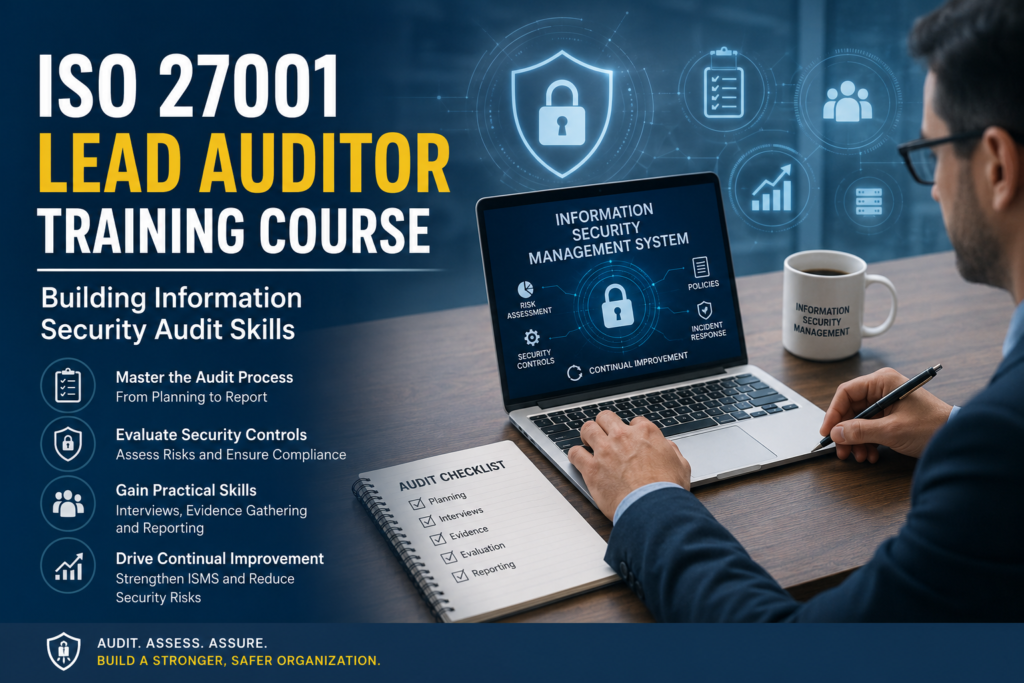
Information security audits require a different level of scrutiny than many other management system reviews. Auditors must understand security controls, assess risks, and evaluate whether policies work in practice. These skills do not develop overnight. They require focused and structured training.
An ISO 27001 lead auditor training course helps professionals develop these capabilities. It covers the audit process from planning to report. It also explains how an Information Security Management System (ISMS) is structured, implemented, and assessed.
What Makes Information Security Audits Different?
Information security audits often involve both technical and management controls. Auditors may review access controls, risk assessments, incident response procedures, and security policies. They must also determine whether these controls are working as intended.
This requires more than technical knowledge. Auditors need strong communication and evidence-gathering skills. They must ask clear questions and remain objective throughout the audit.
This combination makes ISO 27001 lead auditor training course especially valuable. Participants learn how to examine security controls while following a structured audit methodology.
Core Elements of the Course
Understanding the Structure of an ISMS
Participants begin by learning how an ISMS operates. They explore risk assessment, risk treatment, control selection, and continual improvement.
The course also explains how organizations monitor their security controls. This helps auditors understand whether the ISMS remains suitable as risks and business needs change.
A strong understanding of the ISMS gives auditors the foundation they need. It allows them to assess processes rather than simply check documents.
Planning and Conducting the Audit
Audit planning is a major part of lead auditor training. Participants learn how to define audit objectives, scope, criteria, and schedules.
They also learn how to prepare audit checklists and gather relevant information. During practical exercises, participants may conduct interviews with technical teams and other employees.
Effective interviewing is an important audit skill. Auditors must ask questions that encourage useful responses. They also need to identify inconsistencies and follow up when evidence is unclear.
Reporting Findings Clearly
An audit finding should be accurate, specific, and supported by evidence. Vague statements can make it difficult for an organization to understand what needs attention.
Training helps participants convert audit observations into clear findings. They learn how to distinguish between evidence, conclusions, and recommendations.
Clear reporting also helps management understand security weaknesses. It can support better decisions and encourage corrective action.
Why Organizations Value Trained Auditors
Reducing Security Blind Spots
Security risks can exist outside obvious problem areas. A policy may look complete while its related control is poorly implemented.
Trained auditors know how to look beyond documentation. They examine evidence and compare actual practices with defined requirements.
This approach can reveal weaknesses that routine reviews may overlook. It can also help organizations strengthen controls before problems become serious.
Supporting Continual Improvement
Auditors can contribute to more than compliance. Their findings can reveal recurring weaknesses and process gaps.
Organizations can use this information to improve their ISMS. They can identify patterns, prioritize actions, and strengthen security processes over time.
An ISO 27001 lead auditor training course provides a structured way to develop these skills. Practical exercises can also help participants understand how audit situations work in real organizations.
Who Should Consider This Course?
IT professionals and security analysts are natural candidates for ISO 27001 auditor training. Their existing security knowledge can help them understand technical controls more easily.
Compliance officers and internal auditors can also benefit. The course can help them expand their audit capabilities into information security.
Quality managers may find the training useful as well. Many already understand management system principles and audit practices. ISO 27001 training allows them to apply those skills to information security.
Professionals interested in security governance and risk management may also benefit. Audit skills can complement broader responsibilities in these areas.
Skills Developed Through the Course
Risk-Focused Thinking
Risk assessment plays an important role in ISO 27001. Auditors need to understand how risks influence control selection and treatment.
This helps them evaluate whether security measures are appropriate. It also helps them identify controls that may not adequately address important risks.
Technical and Non-Technical Interviewing
Auditors interact with different groups during an audit. These may include IT specialists, managers, and general employees.
Each group may require a different questioning approach. Good auditors adapt their communication style without losing objectivity.
Practical training helps participants develop this flexibility. It also improves their ability to collect useful and reliable evidence.
Objective Evidence Evaluation
A documented policy does not always prove effective implementation. Auditors need evidence that demonstrates how a control operates.
They may review records, interview employees, observe processes, or examine relevant information. The goal is to reach conclusions based on facts rather than assumptions.
Repeated practice helps participants become more confident in evaluating evidence.
Common Misconceptions about This Training
“You Need a Deep Technical Background to Succeed”
Technical knowledge can certainly help. However, auditors do not need to be experts in every area of information technology.
The course focuses on audit methods and information security management principles. Participants from compliance, quality, and management backgrounds can also develop the required knowledge.
“It Is Only Useful for External Audits”
Lead auditor skills have applications beyond certification audits. Organizations can use these skills for internal audits and supplier assessments.
They can also support security reviews and governance activities. The ability to assess controls objectively is useful in many professional settings.
How This Course Supports a Security Career
Complementing Existing Security Knowledge
Security professionals often focus on implementing and managing controls. Audit training introduces another perspective.
It teaches professionals to examine whether controls are suitable and effective. This evidence-based approach can strengthen existing security knowledge.
Supporting Governance and Risk Roles
Audit experience can also support careers in governance, risk, and compliance. These roles require professionals to assess processes and identify weaknesses.
Lead auditor training demonstrates an ability to work systematically. It also shows that a professional understands evidence-based assessment.
What to Look for in a Strong Course
Course quality can vary significantly. Programs with practical exercises often provide stronger preparation than lecture-only courses.
Look for training that includes case studies and mock audits. Exercises should allow participants to practice interviewing and evidence evaluation.
Instructor feedback is also important. Direct feedback can help participants recognize weak audit techniques and improve their judgment.
Class size may also affect the learning experience. Smaller groups can provide more opportunities for questions and practical participation.
Preparing for the Course
Basic information security knowledge can make the course easier to follow. Reviewing common security terms can also help participants understand technical discussions.
It is useful to consider how security is managed within your organization. Thinking about existing policies and controls can make course examples more relatable.
Participants can then connect classroom concepts with real workplace situations.
Applying What You Have Learned
The benefits of training become clearer when audit skills are applied. Professionals may use their knowledge to review access controls or evaluate incident response processes.
They may also assess supplier security practices. Each situation requires careful planning, evidence collection, and objective evaluation.
Information security practices also continue to evolve. Auditors should therefore keep learning after completing their training.
Bringing It All Together
Effective information security audits require more than technical knowledge. Auditors need structured methods, strong communication, and disciplined evidence evaluation.
A well-designed ISO 27001 lead auditor training course can develop these capabilities. It helps professionals understand the ISMS and assess its effectiveness with confidence.
With the right training and continued practice, auditors can provide valuable insights. Their work can help organizations identify weaknesses, strengthen controls, and support continual improvement.