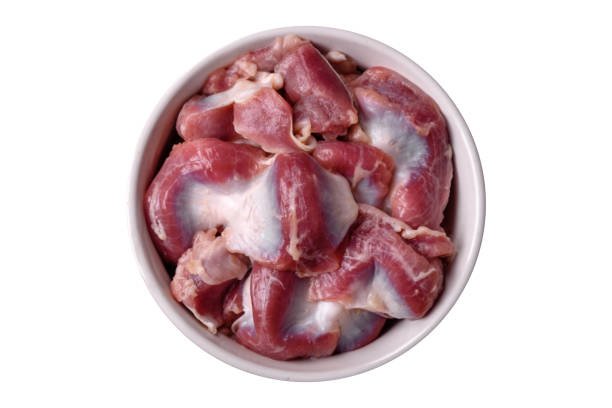
Raw chicken or turkey gizzards with salt, spices and herbs on a white background
A lot of people ask me whether chicken gizzard for dogs is okay, usually while holding a plastic tray from the meat counter and looking slightly suspicious of it. It is okay. Better than okay, really. Vets and raw feeders have been recommending gizzards for ages, mostly in whispers, because they’re cheap and kind of ugly and nobody’s making glossy ads about them. They’re also a muscle. Not an organ, even though people file them under organs all the time. That difference matters later when we get to portions, so keep it in the back of your head.
What a Gizzard Actually Is
Birds have no teeth. Think about that for a second. A chicken pecks up little stones and grit, swallows them, and the gizzard grinds the food down using those stones. So it’s a muscle that works all day, every day, which explains why it feels like a rubber eraser when you squeeze it. Tough, dense, chewy. In a raw diet it behaves more like regular meat than like liver or kidney, though plenty of feeders bundle it with hearts anyway. Don’t stress over the label. Just picture a lean, chewy meat that’s a little more interesting than a plain chicken breast.
What’s in It for Your Dog
Protein, first of all, and plenty. Fat is low. You also get zinc, iron, and a good dose of B vitamins, B12 especially, plus a bit of selenium. There’s some natural glucosamine and cartilage-type stuff in there too, which is why people say gizzards help joints. I wouldn’t call it a miracle. A twelve-year-old lab with stiff hips isn’t going to bounce around like a pup because of a few pieces of gizzard. But small things stack up over months, and that’s worth something. Calories stay fairly modest, which helps if your dog has gotten a bit round around the middle. Compare it with a bag of kibble that’s mostly filler and starch, and you can see why raw feeders get a little smug about it.

Raw or Cooked? Pick What Works for Your Household
Both are fine. Some dogs do great eating gizzards straight from the fridge. Others, especially ones with touchy stomachs, handle them better cooked, and some owners just aren’t ready for raw poultry yet, which is totally fair. If you cook them, simmer them in plain water. That’s it. No onion, no garlic, no seasoning blend. Onion and garlic are toxic to dogs, and people forget because they’ve got a kitchen smelling amazing and want to share. Skip butter and oil too. Let the pieces cool, chop them, serve. And whichever route you take, wash your hands, the board, the knife, the counter. Poultry bacteria doesn’t care whether your dog is the one eating it, it’ll happily end up on your sponge.
How Much Is Too Much
This is where folks slip up. Gizzards are good, but they shouldn’t be dinner by themselves. A rough rule, and I do mean rough, is to keep them around 10 to 15 percent of the total diet. Go over that and you’ll probably get loose stool, usually at 6 in the morning when you’re barefoot in the yard. Not fun. So start with a couple of pieces for a medium dog and watch what comes out the other end. Gross, yes. Also the most honest feedback you’ll ever get. Tiny dogs, puppies, and giant breeds all need different amounts, so scale it up or down. If your dog has had pancreatitis or has any kidney trouble, call your vet before adding something new. Don’t guess on that one.
Safety Stuff Worth Taking Seriously
Size is the big one. A gizzard is chewy, and a small dog or a fast eater might try to gulp a whole chunk down. Cut it up smaller than you think you need to. Stay in the room while they eat. Don’t toss cooked bones in alongside it either, since cooked bones splinter. Raw meat has to stay cold until feeding, and it shouldn’t sit on the porch while you answer a phone call. Buying at the store? Check the date, then smell it. Your nose is better than most labels. And ease in slowly. A dog who’s eaten dry food for six years doesn’t need a gizzard feast on day one, because the gut will complain loudly. Give it a week, maybe two, to adjust.
Where to Get Good Gizzards, and Raw Dog Food Delivery Near Jupiter
You’ve got choices. Grocery stores carry them, butchers do, a few local farms too. The quality swings a lot though, and plenty of South Florida people would rather have one dependable source than roll the dice at the supermarket every week. If you’re hunting for raw dog food delivery near Jupiter, ask the supplier where the poultry comes from and how they keep it frozen on the way to your door. A decent company answers without getting weird about it. And honestly, hauling twenty pounds of frozen meat through a Florida parking lot in July is a bad time. Delivery keeps the cold chain intact and gives you your Saturday back.

Before You Start, Some Last Thoughts
Feeding your dog doesn’t need to be a science project. Gizzards are affordable, loaded with protein, and they sit nicely next to other proteins, organ meats, and a balanced raw or home-prepared plan. Go slow. Keep portions sensible. Pay attention to the dog, because they’ll tell you pretty quickly what works and what doesn’t. If something looks off, phone the vet.
Conclusion
Chicken gizzard for dogs isn’t hype, just plain good food. It’s lean, chewy, and packed with nutrients, and it’s easy to prepare whether you go raw or cooked. Chop it small, keep it to a sensible slice of the diet, and buy from somewhere you trust. If you’re local and want fresh meals without the grocery run, a reliable raw dog food delivery near Jupiter option makes the whole routine easier. Start small, stay consistent, and enjoy watching your dog light up at dinnertime.