Piles, medically known as hemorrhoids, are swollen and inflamed veins located in the anus or lower rectum. They are common, but the symptoms can vary considerably depending on whether the piles are internal or external. Understanding these differences can help people recognize symptoms early and seek appropriate care.
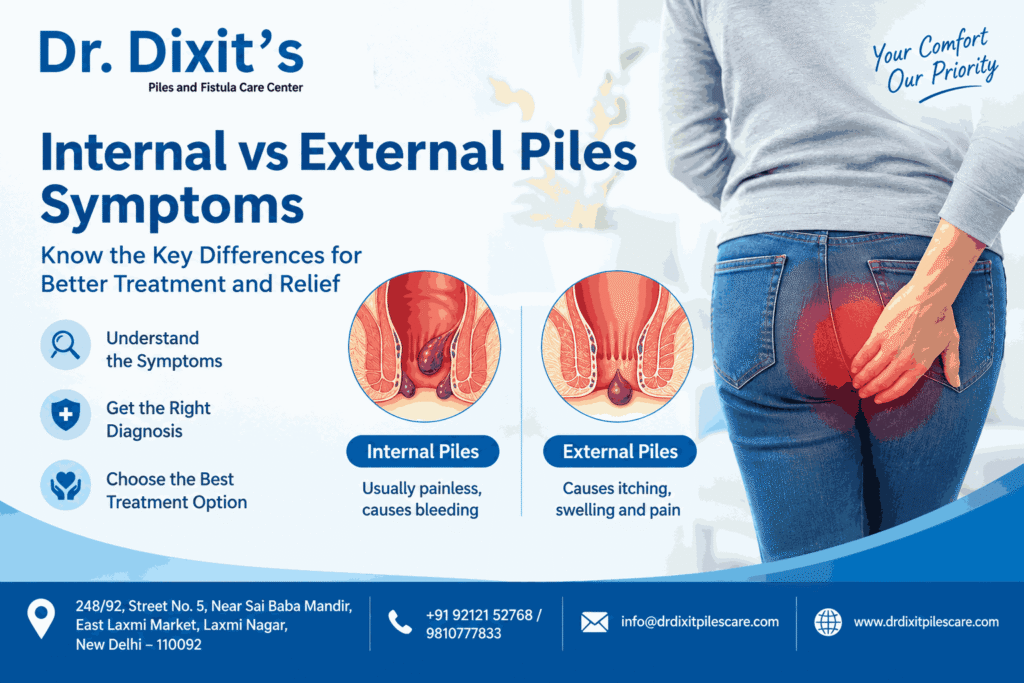
When comparing Internal vs External Piles Symptoms, the most noticeable distinction is often the location and type of discomfort. Internal piles develop inside the anus or lower rectum and commonly cause painless bright-red bleeding, while external piles develop under the skin around the anus and are more likely to cause itching, swelling, tenderness, or pain.
However, symptoms can overlap, and rectal bleeding or persistent anal pain should not automatically be assumed to be caused by piles. Other digestive conditions can produce similar symptoms, making professional evaluation important when symptoms persist or recur.
The exact symptoms and severity vary from person to person, so this comparison should not be used as a substitute for a medical examination.
What Are Internal and External Piles?
Hemorrhoids are swollen veins around the anus or in the lower rectum. Based on their location, they are broadly classified as internal or external piles. Internal piles form within the lining of the anus and lower rectum. They are often not visible and may not cause pain unless they prolapse or become irritated. External piles form underneath the skin surrounding the anus. Because this area contains pain-sensitive nerves, external piles can cause noticeable tenderness and discomfort, particularly when swollen or affected by a blood clot. Both types can develop or worsen because of factors such as constipation, straining during bowel movements, prolonged toilet sitting, low dietary fiber intake, chronic diarrhea, pregnancy, aging, or frequent heavy lifting.Internal vs External Piles Symptoms: What Is the Difference?
Recognizing the pattern of symptoms is one of the first steps toward understanding which type of hemorrhoid may be involved.Common Symptoms of Internal Piles
Internal piles are located inside the rectum, so they may not produce an obvious lump or external swelling. Common symptoms include:- Bright-red rectal bleeding during or after bowel movements
- Blood noticed on toilet paper, stool, or in the toilet bowl
- A feeling that something is protruding from the anus
- Mucus or irritation in some cases
- Discomfort associated with prolapsed internal hemorrhoids
Common Symptoms of External Piles
External piles develop beneath the skin around the anus and may be easier to notice. Typical symptoms include:- A lump or swelling near the anus
- Anal itching or irritation
- Tenderness or soreness
- Pain, particularly while sitting
- Bleeding in some cases
- A hard or discolored lump when a blood clot develops
Internal vs External Piles: Quick Comparison
| Feature | Internal Piles | External Piles |
|---|---|---|
| Location | Inside the anus/lower rectum | Under the skin around the anus |
| Bleeding | Common symptom | May occur |
| Pain | Usually absent unless prolapsed or complicated | More commonly present |
| Visible lump | Usually not visible unless prolapsed | May be visible or felt |
| Itching/irritation | May occur | Common |
| Swelling | May occur with prolapse | Common |
| Blood clot | Less typical | Can cause thrombosed hemorrhoid |
| Diagnosis | May require internal examination | Often visible during examination |
What Causes Internal or External Piles?
Although internal and external piles differ by location, many of their contributing factors are similar. Common risk factors include:- Repeated straining during bowel movements
- Chronic constipation
- Persistent diarrhea
- A diet low in fiber
- Sitting on the toilet for long periods
- Pregnancy
- Aging-related weakening of supporting tissues
- Regular heavy lifting
How Are Internal and External Piles Diagnosed?
Symptoms can provide clues, but a healthcare professional may need to examine the area to determine the cause. External piles can often be identified through examination of the skin around the anus. Internal piles may require a digital rectal examination and, when appropriate, an examination using an anoscope or another instrument to view the anal canal and rectum. Diagnosis is particularly important when bleeding is present because several digestive conditions can cause rectal bleeding. If symptoms are persistent, recurrent, unusually severe, or associated with changes in bowel habits, professional evaluation should not be delayed.Treatment for Internal vs External Piles
Treatment depends on the type of hemorrhoid, symptom severity, whether complications are present, and the individual’s overall health.Lifestyle and Home Measures
For mild symptoms, conservative measures may provide relief and help prevent worsening. Useful steps include:- Increase fiber through fruits, vegetables, whole grains, and other fiber-rich foods.
- Drink adequate fluids according to your healthcare professional’s advice.
- Avoid straining during bowel movements.
- Avoid spending unnecessary time sitting on the toilet.
- Consider a fiber supplement or stool-softening approach when medically appropriate.
- Warm-water sitz baths may help relieve discomfort.
- Maintain regular bowel habits and address constipation.
Medical Treatment
When lifestyle measures do not adequately control symptoms, a doctor may recommend medication or a procedure. For certain internal hemorrhoids, office-based treatments may include rubber band ligation, sclerotherapy, infrared photocoagulation, or electrocoagulation. More advanced or persistent cases may require other procedures or surgery. Large external hemorrhoids or thrombosed hemorrhoids may require specific medical treatment. In selected cases of a painful thrombosed external hemorrhoid, a healthcare professional may remove the clot or hemorrhoid after evaluating the timing and severity of the condition. For readers seeking condition-specific information, an internal link can naturally point to a detailed guide on piles treatment in Delhi.When Should You See a Doctor?
Not every anal symptom is caused by piles. You should consider professional evaluation if:- You have rectal bleeding.
- Symptoms continue after about a week of appropriate home care.
- Pain is severe or worsening.
- A painful lump develops suddenly.
- You experience repeated episodes of bleeding.
- Your bowel habits change unexpectedly.
- You develop significant abdominal symptoms, fever, or other concerning symptoms.
Can Internal and External Piles Be Prevented?
There is no guaranteed way to prevent every hemorrhoid, but healthy bowel habits can reduce contributing factors. Try to:- Eat enough fiber every day.
- Drink sufficient fluids.
- Stay physically active.
- Avoid prolonged sitting on the toilet.
- Respond to the urge to have a bowel movement rather than repeatedly delaying it.
- Avoid unnecessary straining.
- Address ongoing constipation or diarrhea with appropriate medical guidance.