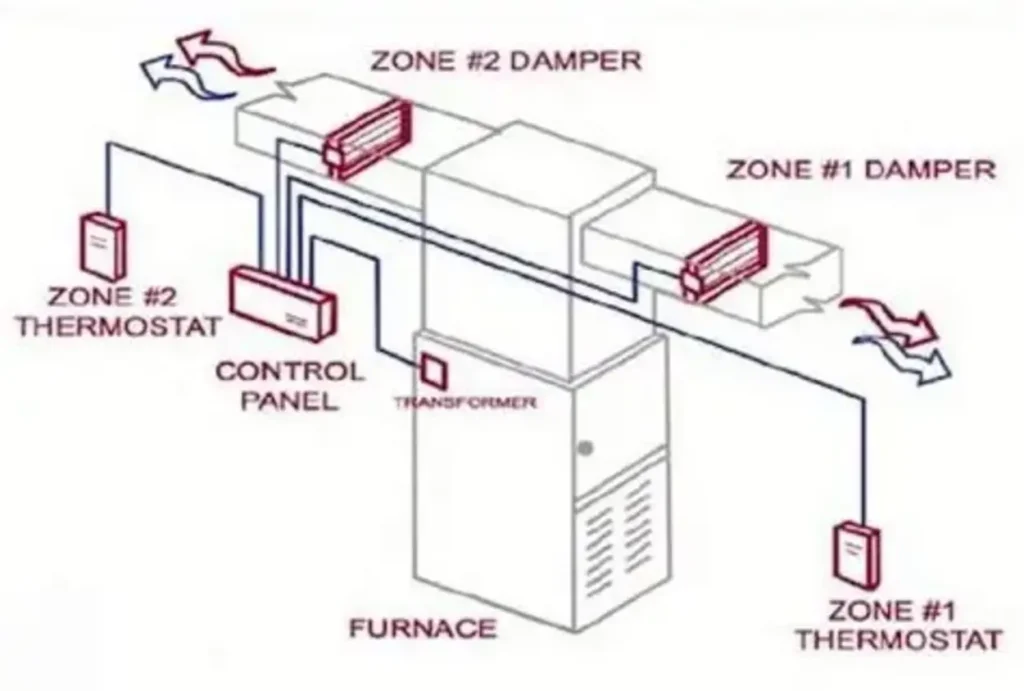
Heating, ventilation, and air conditioning (HVAC) systems are designed to maintain comfortable indoor temperatures, but a traditional system may not provide the same level of comfort in every room. Different areas of a building can have different heating and cooling requirements depending on their size, orientation, occupancy, windows, and daily usage. HVAC zone control addresses this challenge by dividing a building into separate areas, or zones, that can be controlled independently.
acjakarta.com: Two essential components in an effective zoning system are dampers and thermostats. When these components work together properly, they can improve temperature control, reduce energy waste, and create a more comfortable indoor environment.
What Is HVAC Zone Control?
HVAC zone control is a system that allows different areas of a building to receive heating or cooling according to their individual requirements. Instead of treating the entire building as one temperature zone, the HVAC system divides it into multiple zones.
For example, a two-story home could have one zone for the first floor and another for the second floor. A commercial building might have separate zones for offices, meeting rooms, reception areas, and storage spaces.
Each zone typically has its own thermostat, while motorized dampers regulate the amount of conditioned air entering that area. The zoning control panel coordinates these components and communicates with the HVAC equipment.
This approach is particularly useful in buildings where temperature requirements vary significantly throughout the day.
The Role of Thermostats in HVAC Zoning
The thermostat acts as the primary temperature sensor and control point for each zone. A zoned HVAC system usually includes one thermostat for every controlled area.
When the temperature in a zone moves above or below the desired setpoint, the thermostat sends a signal to the zoning control system. The controller then determines whether additional heating or cooling is required.
For instance, if the upstairs temperature becomes too warm while the downstairs area remains comfortable, the upstairs thermostat can request cooling without necessarily conditioning the downstairs zone.
Modern thermostats can provide additional features, including programmable schedules, remote monitoring, Wi-Fi connectivity, and integration with smart home systems. These functions can make zoning systems easier to manage while helping occupants adjust comfort settings based on their routines.
Understanding HVAC Dampers
Dampers are another critical component of zone control. Installed inside ductwork, these devices regulate or restrict airflow to individual zones.
In a conventional HVAC system, dampers may remain fixed in position. In a zoned system, however, motorized dampers can open or close automatically based on signals from the zoning controller.
When a thermostat calls for cooling, the corresponding damper opens to allow conditioned air into that zone. If the zone does not require conditioning, its damper can partially close or remain closed.
Proper damper positioning is important because it determines how much conditioned air reaches each area. Incorrectly adjusted dampers can create airflow problems, uneven temperatures, excessive duct pressure, or unnecessary strain on HVAC equipment.
How Dampers and Thermostats Work Together
The relationship between thermostats and dampers is at the heart of HVAC zone control. The thermostat identifies the temperature requirement, while the damper helps deliver the appropriate amount of conditioned air.
A typical sequence begins when the thermostat detects that a zone needs heating or cooling. It communicates the demand to the central zoning controller. The controller then opens the appropriate damper and determines whether the HVAC equipment should operate.
If multiple zones require conditioning at the same time, the system can respond by opening several dampers. Once a zone reaches its target temperature, its thermostat stops calling for conditioning, and the associated damper adjusts accordingly.
This coordination allows the HVAC system to respond to changing indoor conditions rather than continuously conditioning every part of the building equally.
Benefits of Coordinated Zone Control
One of the biggest advantages of HVAC zoning is improved comfort. Rooms that receive more sunlight, have larger windows, or experience higher occupancy can require different amounts of heating or cooling. Zoning allows these differences to be managed more effectively.
Energy efficiency is another major benefit. Conditioning unused areas can result in unnecessary energy consumption. With zoning, conditioned air can be directed toward occupied spaces when appropriate.
Zoning can also reduce temperature complaints in homes and commercial buildings. Instead of relying on a single thermostat that represents the entire building, each zone can respond to its own conditions.
Additionally, zoning can support more flexible scheduling. Bedrooms, offices, living spaces, and other areas can follow different temperature schedules based on their usage.
Common HVAC Zoning Challenges
Although zoning offers significant advantages, installation and configuration must be handled carefully. Poorly designed systems may experience excessive static pressure when too many dampers close simultaneously.
Airflow must therefore be considered during system design. The HVAC equipment, ductwork, dampers, control panel, and thermostats need to be properly matched.
Another potential issue is thermostat placement. A thermostat installed near a window, heat-producing appliance, supply register, or direct sunlight may detect an inaccurate temperature. This can cause the zone to receive too much or too little conditioning.
Regular maintenance is also important. Motorized dampers should be inspected to ensure they move correctly, while thermostats should be checked for accurate temperature readings.
Improving HVAC Zone Control Performance
For optimal performance, begin with a proper zoning assessment. Consider the building layout, occupancy patterns, insulation, solar exposure, and existing ductwork before dividing the system into zones.
Use appropriately sized dampers and make sure ductwork can support the required airflow. Thermostats should be installed in representative locations away from direct heat sources.
It is also beneficial to use a professional control strategy that prevents excessive pressure and coordinates equipment operation. Advanced systems may incorporate variable-speed blowers, communicating HVAC equipment, and intelligent controls to improve system response.
Conclusion
HVAC zone control provides a practical way to improve comfort and manage energy consumption in buildings with varying temperature requirements. Thermostats identify the needs of individual zones, while motorized dampers regulate airflow to deliver conditioned air where it is needed.
When these components are properly coordinated, a zoned HVAC system can provide more precise temperature management than a conventional single-zone arrangement. However, successful performance depends on proper design, installation, airflow management, and regular maintenance.
For homeowners, building managers, and HVAC professionals, understanding the relationship between dampers and thermostats is an important step toward creating a more responsive, efficient, and comfortable indoor environment.