Buying a classic car is about more than finding a vehicle that looks great. For many enthusiasts, it is about owning a piece of automotive history, enjoying a rewarding driving experience, or choosing a vehicle that can become a long-term project. With so many Classic Cars For Sale In South Florida, however, finding the right one requires more than simply choosing the first car that catches your attention.
From condition and authenticity to maintenance needs and intended use, several factors should be considered before making a purchase. Here is what South Florida buyers should know when searching for a classic car.
Start With Your Reason for Buying
Before looking at specific vehicles, decide what you want from your classic car. Are you searching for something to drive regularly, a weekend cruiser, a restoration project, or a collectible vehicle?
A car that will be driven frequently may need to be mechanically dependable and comfortable enough for regular use. On the other hand, someone interested in restoration may specifically look for an original vehicle that needs significant work.
Having a clear goal makes it easier to narrow your options and avoid buying a car that does not fit your expectations.
Research the Make, Model, and Year
Once you have identified the type of classic car you want, research the specific make and model. Learn about common mechanical problems, available replacement parts, production numbers, factory specifications, and known differences between model years.
It is also important to understand whether a vehicle is genuinely original or has been modified. Upgrades are not necessarily negative, but they can affect the car’s value and may change how it should be maintained.
Research can also help you recognize unrealistic asking prices and identify questions you should ask the seller.
Look Beyond the Exterior
A polished classic car can be impressive, but appearance does not tell the whole story. Fresh paint can sometimes hide rust, previous accident damage, or body repairs.
Inspect areas such as the frame, floorboards, wheel wells, trunk, door gaps, and underside of the vehicle. Look for signs of corrosion, poorly repaired panels, inconsistent paintwork, and moisture damage.
South Florida’s warm, humid, coastal environment makes corrosion something buyers should take seriously, particularly when evaluating older vehicles that may have spent years exposed to moisture or salt air.
Have the Car Professionally Inspected
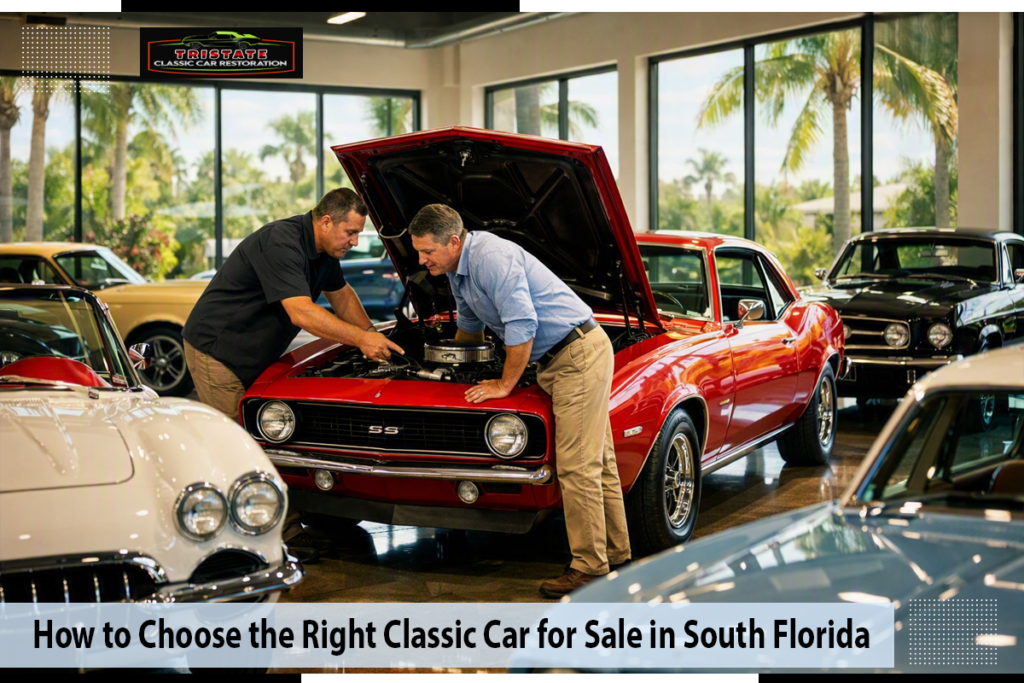
One of the smartest steps before purchasing a classic car is arranging an independent inspection. A qualified classic-car professional can identify mechanical or structural problems that may not be obvious during a casual test drive.
The inspection should cover the engine, transmission, suspension, brakes, steering, electrical systems, cooling system, body, frame, and signs of previous restoration work.
For restoration projects, professional input is particularly valuable. A car that appears inexpensive initially can require substantial additional investment once hidden problems are discovered.
Verify Documentation and Authenticity
Documentation can provide important insight into a classic car’s history. Ask whether the seller has maintenance records, restoration invoices, ownership documents, photographs, or other records showing how the vehicle has been cared for.
If originality matters to you, investigate whether the engine, transmission, interior, trim, and other major components match the vehicle’s original specifications.
A well-documented vehicle can also make future maintenance, valuation, and resale easier.
Consider Parts and Maintenance
Before buying a classic car, think about what it will take to keep it running. Some models have strong enthusiast communities and readily available parts, while others may require harder-to-find components.
You should also consider where you will take the vehicle for maintenance or restoration. Working with a shop familiar with classic automobiles can make ownership significantly easier, particularly when specialized knowledge is required.
For South Florida owners, choosing experienced professionals who understand older vehicles can be especially useful when addressing mechanical, body, electrical, or restoration-related issues.
Set a Realistic Budget
The purchase price is only one part of classic-car ownership. Your budget should also account for insurance, storage, routine maintenance, unexpected repairs, replacement parts, and potential restoration work.
If you are purchasing a project car, leave room for unforeseen expenses. Restoration often reveals additional work once components are removed and inspected.
A slightly more expensive vehicle in excellent condition may ultimately cost less than a cheaper car requiring extensive repairs.
Take Your Time Before Buying
There is nothing wrong with being excited when you find a classic car you love. However, emotional decisions can lead to expensive mistakes.
Compare several vehicles, inspect them carefully, ask questions, review documentation, and get professional advice before committing. If a seller discourages an independent inspection or refuses to provide reasonable information about the vehicle’s history, consider that a warning sign.
Find the Right Classic Car With Confidence
Finding the right classic car in South Florida takes patience, research, and a realistic understanding of your goals. Whether you want a weekend cruiser, a collectible, or a restoration project, evaluating the vehicle’s condition, history, authenticity, and long-term costs can help you make a more informed decision.
At Tristate Car Restoration, experience with classic automobiles can provide valuable perspective when evaluating restoration needs and planning future work. The right classic car is not simply the one that looks best in a listing it is the one that fits your goals, budget, and vision for ownership.