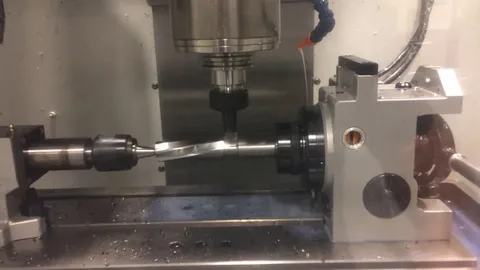
Selecting the right CNC milling machine is a critical decision that can significantly impact your business’s productivity, precision, and profitability. With a wide range of machines available in the market, each offering unique features and capabilities, making the right choice requires careful planning and understanding of your operational needs. Whether you’re a small workshop owner or managing a large-scale manufacturing unit, investing in the right machine can streamline production and improve output quality.
A CNC milling machine is designed to automate complex cutting processes, enabling businesses to produce consistent and accurate parts. However, not all machines are built the same, and choosing one without proper evaluation can lead to inefficiencies and unnecessary expenses. This guide will help you understand the key factors to consider when selecting the best CNC milling machine for your business.
Understand Your Business Requirements
Before purchasing a CNC milling machine, it is essential to evaluate your specific business needs. Different industries require different machining capabilities, and selecting a machine that aligns with your production goals will ensure long-term efficiency. Consider the type of materials you work with, such as metal, plastic, or composites, as this will influence the machine’s power and configuration.
Additionally, think about the complexity and size of the parts you intend to produce. A small workshop may not need a high-end industrial machine, while a large manufacturing unit might require advanced multi-axis capabilities. Understanding these requirements will help narrow down your options and prevent overspending.
Key considerations:
- Type of materials you will machine
- Size and complexity of parts
- Production volume and speed requirements
- Available workspace in your facility
- Future scalability needs
Evaluate Machine Size and Capacity
The size and capacity of a CNC milling machine play a vital role in determining its suitability for your business. Machines come in various sizes, from compact desktop models to large industrial systems. Choosing the right size ensures that your machine can handle your projects without occupying unnecessary space.
Capacity is equally important, as it determines the maximum workpiece size and weight the machine can handle. Investing in a machine with insufficient capacity can limit your production capabilities, while an oversized machine may lead to wasted resources and higher operational costs.
Factors to assess:
- Table size and travel range
- Maximum load capacity
- Machine footprint and space requirements
- Power and spindle speed
- Compatibility with your production scale
Consider the Number of Axes
CNC milling machines are available in different axis configurations, including 3-axis, 4-axis, and 5-axis machines. The number of axes determines the complexity of operations the machine can perform. A 3-axis CNC milling machine is suitable for basic tasks, while 4-axis and 5-axis machines offer greater flexibility for intricate designs.
Choosing the right axis configuration depends on your production needs and budget. While advanced machines provide more capabilities, they also come with higher costs and require skilled operators. It is important to strike a balance between functionality and affordability.
Axis options explained:
- 3-axis: Ideal for simple and standard machining tasks
- 4-axis: Allows rotation for more complex designs
- 5-axis: Enables high-precision and multi-directional cutting
- Cost vs. capability considerations
- Skill level required for operation
Analyze Software and Automation Features
Modern CNC milling machines are equipped with advanced software and automation features that enhance productivity and precision. The software controls the machine’s movements and ensures accurate execution of designs. Choosing a machine with user-friendly and compatible software can significantly reduce training time and errors.
Automation features such as tool changers, automatic calibration, and remote monitoring can improve efficiency and reduce manual intervention. These features are especially beneficial for businesses aiming to scale operations and maintain consistent output quality.
Important features to look for:
- User-friendly control interface
- Compatibility with CAD/CAM software
- Automatic tool changers
- Real-time monitoring and diagnostics
- Integration with existing systems
Compare Cost and Return on Investment
Cost is one of the most important factors when choosing a CNC milling machine, but it should not be the only consideration. While it may be tempting to opt for a cheaper option, investing in a high-quality machine can provide better long-term value. A reliable CNC milling machine reduces maintenance costs, downtime, and production errors.
Return on investment (ROI) should be carefully evaluated by considering factors such as productivity gains, operational efficiency, and product quality. A slightly higher upfront cost can result in significant savings and increased profits over time.
Financial considerations:
- Initial purchase cost
- Maintenance and operating expenses
- Energy consumption
- Expected lifespan of the machine
- Potential productivity improvements
Conclusion
Choosing the best CNC milling machine for your business requires a thorough understanding of your production needs, budget, and long-term goals. From evaluating machine size and axis configuration to analyzing software features and cost, every factor plays a crucial role in making the right decision. A well-chosen CNC milling machine can enhance efficiency, improve product quality, and provide a competitive edge in the market.
By carefully assessing your requirements and comparing available options, you can invest in a CNC milling machine that aligns with your business objectives and supports future growth. Taking the time to make an informed choice will ensure that your investment delivers maximum value and drives success for years to come.