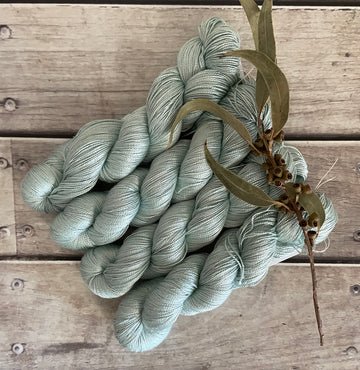
Okay so let’s start basic, because I get asked this a lot at markets. Silk merino yarn is just what it sounds like, merino wool blended with silk fibers, usually somewhere between 20 and 80 percent silk depending on the mill. The wool adds a springy, warm, forgiving quality that only wool can provide, while the silk adds shine, drape and smoothness that wool alone cannot provide. Together, they create a yarn with improved properties over either fiber alone, and is generally a superior yarn. The blend itself is not a gimmick in this case, as similar types of blended fibers have been used in many high-end textiles, and have been used in hand knitting in recent decades, but they have become increasingly popular in the past few years. You may have felt a skein of yarn and thought, why is this much lovelier than my normal wool, and that is most likely due to the silk. The silk also reflects light differently, so you may have noticed it when the garment is wearing, especially in the sunlight or a lamp. However, there are not many silk merino yarns out there, and this is what the review is all about.
The Real Difference Between Cheap Wool And Luxury Hand Dyed Yarn
Here’s the thing nobody tells you when you’re new to yarn shopping. Price isn’t just about brand name or packaging, it’s about process. Luxury hand dyed yarn takes time, real time, not machine time. A dyer is mixing small batches, often by eye, adjusting for how the fiber absorbs color, and no two skeins come out identical even in the same dye lot. That’s actually a feature not a flaw, it means your sweater has a little bit of one-of-one built into it. Mass dyed commercial yarn is dipped in huge vats, consistent, sure, but flat. There’s no depth to the color the way there is with hand painted or kettle dyed silk merino yarn. I’ve had customers hold up two skeins that are technically “the same colorway” and go, wait these look different, and yeah, that’s hand dyeing for you. You’re paying for the labor and the imperfection both, and most people who try it once don’t go back to the flat stuff.
Why Silk Merino Yarn Feels So Different In Your Hands
Texture matters more than people admit before they’ve actually knit with something nice. Silk merino yarn has this cool, slightly slippery hand feel, but it’s not slick like acrylic, it’s soft in a heavier, denser way. When you’re swatching it, you’ll notice the stitches sit a little differently, silk doesn’t have the same memory as wool so your fabric drapes instead of bounces. That’s great for shawls, wraps, anything you want flowing rather than structured. Less great, honestly, if you’re making ribbed cuffs expecting bounce back, so know your project before you buy. A lot of new knitters assume luxury yarn is just “softer” and stop there, but the drape and the sheen change how the whole finished piece moves on a body. It’s genuinely a different knitting experience, not just a nicer version of the same thing.
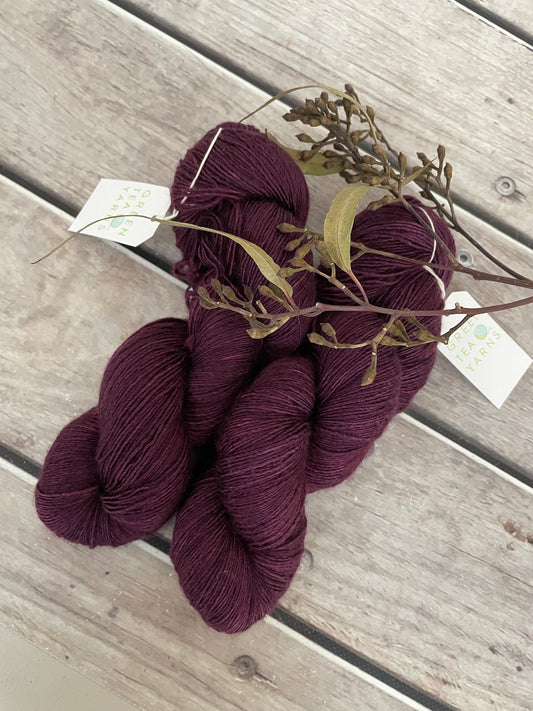
How Luxury Hand Dyed Yarn Is Actually Made
I think people picture a factory when they hear “yarn” but a lot of luxury hand dyed yarn starts with a dyer standing over pots, sometimes literally on a stovetop, sometimes in bigger steamer setups for larger runs. The fiber is pre-soaked, then color is applied, painted on, poured, or the skein is dipped section by section for gradient effects. Heat sets the dye, then it’s rinsed, and rinsed again, until the water runs clear-ish (it never fully runs clear with silk blends, that’s normal, don’t panic if your first rinse water looks a little tinted). Drying takes a day or two depending on humidity where you are. Then it gets skeined or wound, labeled, and shipped. Small dye studios might only produce a few dozen skeins a week. That’s part of why good silk merino yarn sells out fast, there’s a real ceiling on how much one person can physically dye by hand.
Caring For Silk Merino Yarn Without Ruining It
This is where I see people mess up the most, not in the knitting, in the washing. Silk merino yarn is not machine wash and dry, full stop, unless the label specifically says superwash treated. Hand wash in cool water, a wool specific wash if you’ve got one, and just let it soak, don’t agitate it like you’re scrubbing a pan. Squeeze the water out gently, roll it in a towel, press don’t wring. Lay flat to dry, always flat, hanging stretches the silk fibers and you’ll end up with a saggy garment that never looks right again. Also keep it out of direct sun while drying, the hand dyed colors can fade if you bake them in a window for hours. Store finished pieces folded, not hung, moths love silk and wool both so a cedar block in the drawer isn’t a bad idea either.
Best Projects To Knit With Silk Merino Yarn
Not every pattern suits this fiber, and that’s fine, you just pick smart. Shawls are the obvious one, the drape and shine really shows off in an open lace pattern, all that light catching silk does its best work draping over shoulders. Cowls and light wraps too, anything that sits near the face benefits from that soft glow near your skin. I’d steer people away from heavy structured sweaters as a first project though, silk merino yarn can grow a bit over time (stretch slightly under its own weight), so a big cabled cardigan might end up longer than you planned after a few wears. Socks work surprisingly well if the blend has enough wool content for durability. Fingering weight silk merino yarn in a simple stockinette shawl is honestly the easiest way to fall in love with this fiber if you’ve never tried it.
What Makes Hand Dyed Colorways Worth The Price Tag
People balk at luxury hand dyed yarn pricing sometimes, and look, I get it, it’s not cheap. But you’re not just buying color, you’re buying an artist’s time and a small batch process that can’t really be scaled without losing the thing that makes it special. A dyer might test a colorway a dozen times before it’s “right,” tweaking ratios, testing on different fiber bases because silk takes dye differently than pure wool does. Then there’s the naming, the branding, the actual creative work of building a colorway people want to buy. Compare that to synthetic dye lots pumped out by the thousands with zero variation, there’s just no comparison in labor. When you buy from an independent dyer you’re also usually buying direct, cutting out the middleman markup you’d pay at a big craft chain, so the price gap isn’t as wild as it looks on paper.
Silk Merino Yarn And Sustainability, The Honest Version
I won’t pretend all silk merino yarn is some perfect eco choice, because sourcing varies a ton dyer to dyer. Merino wool itself is renewable, sheep get shorn yearly, that part’s solid. Silk is trickier, traditional silk production isn’t vegan friendly since it typically involves the silkworm not surviving the process, though peace silk (sometimes called ahimsa silk) exists as an alternative where the moth is allowed to emerge first. If that matters to you, ask your dyer or supplier directly what silk source they use, most small businesses are happy to tell you, they’re proud of their sourcing usually. Dye itself matters too, acid dyes used in most hand dyeing are considered low impact compared to industrial textile dyeing, but water usage in rinsing is still a real thing to think about. Buying from small batch dyers, generally, means less overproduction sitting in landfill compared to fast fashion yarn runs nobody asks for.
How To Spot Quality Luxury Hand Dyed Yarn Before You Buy
A few tells I always check before buying, especially online where you can’t touch the skein first. Look at close up photos, real quality luxury hand dyed yarn photographed in natural light will show slight color variation within the skein, that’s normal and good actually, totally flat uniform color in every photo can sometimes mean it’s a photo filter doing the work not the dye. Read the fiber content, if it just says “wool blend” without percentages, ask, reputable dyers list exact ratios. Check reviews for pilling complaints, silk merino yarn shouldn’t pill badly if the wool percentage is reasonable and it’s spun well. Smaller dye studios usually post process photos or behind the scenes content, that transparency is usually a decent signal of quality control too. And honestly, price that seems too low for “hand dyed silk merino” is a red flag, this fiber combo just costs more to produce, there’s no way around that.

Final Thoughts On Choosing Silk Merino Yarn
So where does that leave you. If you want a fiber that knits up soft, drapes beautifully, and holds color like nothing else, silk merino yarn is worth trying at least once, even if it’s just a small skein for a cowl. Pair it with a dyer doing genuine luxury hand dyed yarn work, not just a big-batch operation slapping “hand dyed” on the label for marketing, and you’ll feel the difference the second you wind the skein. It’s an investment fiber, sure, you’re not buying this for a quick weeknight project you’ll never wear. But that’s kind of the point, it’s meant to be the special skein, the one you save for the pattern you’ve been eyeing for months. Treat it right, wash it gently, store it properly, and a piece knit from good silk merino yarn will outlast a lot of the fast, cheap stuff sitting in big box store bins. Give it a shot. Your hands will notice the difference before your eyes even do.
Frequently Asked Questions
Is silk merino yarn good for beginners?
It can be, especially in a simple stockinette or garter project. Just avoid anything with heavy cables at first since drape can make gauge tricky to judge.
How is luxury hand dyed yarn different from regular dyed yarn?
Hand dyed yarn is done in small batches, often by hand, with natural color variation between skeins. Regular dyed yarn is machine processed in large uniform vat lots.
Does silk merino yarn shrink if washed wrong?
Yes, hot water and agitation can felt the wool fibers. Always hand wash cool and lay flat to dry.
Why is luxury hand dyed yarn so expensive?
You’re paying for labor, small batch dye work, and often direct-from-artist pricing without big retail markup layered on top.
Can you machine wash silk merino yarn?
Only if it’s specifically labeled superwash treated. Otherwise stick to gentle hand washing to protect both the wool and silk fibers.