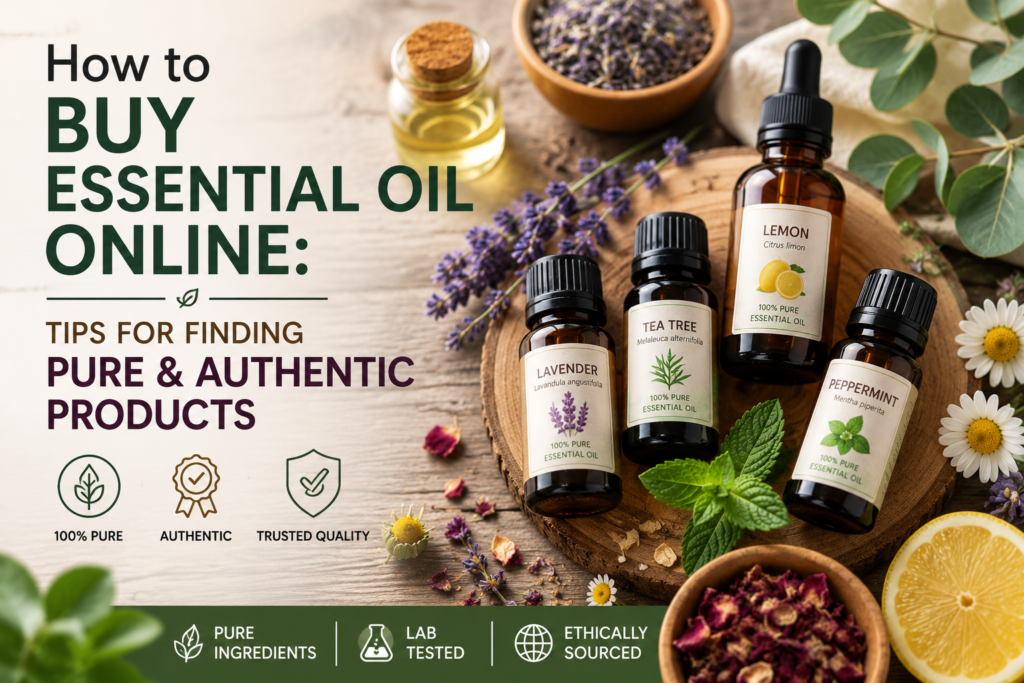
The demand for essential oils has grown rapidly as more people embrace natural wellness, aromatherapy, skincare, and holistic living. With countless online stores offering hundreds of varieties, shopping for essential oils has never been more convenient. However, convenience also comes with challenges. Not every product sold online is genuine, and some oils may be diluted, synthetic, or poorly sourced.
Learning how to buy essential oil online requires more than simply choosing the lowest price. It involves understanding quality indicators, reading product information carefully, and purchasing from reputable suppliers that prioritize purity and transparency.
This guide explains the most important factors to consider before purchasing essential oils online so buyers can make informed decisions and enjoy products that deliver their intended benefits.
Understand What Makes an Essential Oil Pure
Pure essential oils are highly concentrated plant extracts obtained through methods such as steam distillation or cold pressing. Their quality depends on several factors, including the plant species, harvesting methods, growing conditions, and extraction techniques.
Authentic essential oils contain only the natural aromatic compounds extracted from plants. They should not include artificial fragrances, synthetic chemicals, mineral oils, or unnecessary fillers. High-quality oils typically provide consistent aroma, therapeutic potential, and overall performance.
Consumers should remember that purity directly affects both effectiveness and safety.
Look for Complete Botanical Information
One of the easiest ways to identify a trustworthy seller is by reviewing the product description. Reliable companies usually provide detailed botanical information rather than generic names.
Useful product details include:
- Botanical (Latin) name
- Country of origin
- Extraction method
- Plant part used
- Batch information
- Storage recommendations
This level of transparency demonstrates that the company understands its products and values customer education.
Check for Third-Party Testing
Independent laboratory testing has become an important quality standard in the essential oil industry.
Many reputable suppliers perform testing such as:
- GC/MS (Gas Chromatography-Mass Spectrometry)
- Purity verification
- Identity confirmation
- Contaminant screening
Although not every retailer publishes complete laboratory reports, companies that openly discuss their quality control processes generally inspire greater confidence.
Read the Ingredient List Carefully
The ingredient list should be simple and straightforward.
For a single essential oil product, the label should ideally contain only one ingredient—the pure essential oil itself.
Be cautious if you notice terms such as:
- Fragrance oil
- Perfume oil
- Synthetic aroma
- Carrier oil (unless clearly labeled as a blend)
- Artificial additives
A clean ingredient list usually reflects a more authentic product.
Research the Brand’s Reputation
Customer reviews provide valuable insight into product quality and company reliability.
Instead of focusing only on star ratings, read detailed customer experiences that discuss:
- Aroma consistency
- Packaging quality
- Shipping experience
- Customer service
- Overall satisfaction
Established companies that have earned long-term customer trust often maintain higher quality standards.
For example, brands such as Miracle Botanicals Essential Oils are recognized by many natural wellness enthusiasts for emphasizing sourcing transparency and product quality, making them a reference point when evaluating online suppliers.
Avoid Prices That Seem Too Good to Be True
Producing genuine essential oils is both labor-intensive and resource-intensive.
Some plants require hundreds of pounds of botanical material to produce a small amount of oil. Because of this, authentic essential oils naturally vary in price depending on rarity and production costs.
Extremely cheap products may indicate:
- Diluted formulations
- Synthetic ingredients
- Inferior plant material
- Poor manufacturing practices
Rather than choosing the least expensive option, buyers should consider overall value and product authenticity.
Evaluate Packaging Quality
Packaging plays an important role in preserving essential oil quality.
High-quality essential oils are usually packaged in:
- Dark amber bottles
- Cobalt blue bottles
- UV-protective glass containers
These materials help reduce exposure to sunlight, which can gradually degrade the oil’s chemical composition.
Proper packaging should also include secure caps and clear labeling.
Learn About Sourcing Practices
Responsible sourcing contributes to both product quality and environmental sustainability.
Many premium suppliers share information regarding:
- Ethical farming partnerships
- Sustainable harvesting
- Organic cultivation when applicable
- Fair trade practices
Companies that openly discuss their sourcing methods often demonstrate greater commitment to long-term quality.
Read Product Descriptions Thoroughly
Before completing a purchase, take time to examine every detail listed on the product page.
Helpful descriptions often include:
- Aroma profile
- Traditional uses
- Safety recommendations
- Suggested storage
- Shelf life
- Blending compatibility
Detailed information reflects professionalism and helps customers choose oils that match their intended purpose.
Compare Multiple Sellers
Shopping online makes comparing products easier than ever.
Before making a final decision, compare several suppliers based on:
- Product transparency
- Testing standards
- Customer reviews
- Return policies
- Shipping options
- Educational resources
Taking a few extra minutes to research multiple stores can significantly improve purchasing confidence.
Be Careful with Marketing Claims
Some online listings use exaggerated language to attract buyers.
Be cautious of statements promising:
- Instant cures
- Guaranteed medical results
- Miracle treatments
- Universal effectiveness
Responsible companies present realistic information while encouraging safe and informed use.
Educational content is generally a better indicator of credibility than overly aggressive marketing.
Understand Return and Customer Support Policies
Reliable online retailers typically provide clear information regarding:
- Shipping policies
- Refund procedures
- Product guarantees
- Customer service availability
Accessible customer support indicates that a company values customer satisfaction beyond the initial sale.
Why Education Matters
Knowledge remains one of the best tools for purchasing authentic essential oils.
Understanding extraction methods, botanical names, purity standards, and testing procedures allows consumers to confidently evaluate products without relying solely on advertising.
Brands like Miracle Botanicals Essential Oils also provide educational resources that help customers better understand different oils, their origins, and responsible usage, allowing shoppers to make informed decisions.
Conclusion
As online shopping continues to expand, consumers have more choices than ever before. While this creates excellent opportunities, it also requires careful evaluation of each product before purchasing.
Anyone planning to buy essential oil online should focus on transparency, purity testing, ethical sourcing, accurate labeling, and reputable customer reviews instead of price alone. These factors greatly improve the likelihood of receiving authentic, high-quality products that meet expectations.
With a little research and attention to detail, shoppers can confidently buy essential oil online while avoiding diluted or misleading products and enjoying the true benefits that genuine essential oils have to offer.
Frequently Asked Questions
1. How can I tell if an essential oil is pure?
Look for complete botanical information, transparent ingredient lists, third-party testing, and detailed product descriptions from reputable sellers.
2. Why are some essential oils much more expensive than others?
Price depends on factors such as plant rarity, cultivation methods, extraction process, and the amount of raw material required to produce the oil.
3. Is dark glass packaging important?
Yes. Amber or cobalt blue glass bottles help protect essential oils from sunlight, preserving their quality and extending shelf life.
4. Should I trust online customer reviews?
Customer reviews are helpful when they provide detailed experiences regarding quality, packaging, and service, but they should be considered alongside other quality indicators.
5. What should I avoid when purchasing essential oils online?
Avoid products with vague ingredient lists, unrealistic health claims, extremely low prices, or limited information about sourcing and testing.