When planning security for a home, office, shop, or other property, the number of cameras matters. CCTV installation in Dubai should be planned around the areas that need monitoring rather than simply adding as many cameras as possible. A good setup gives clear views of important areas while avoiding unnecessary coverage.
Start With the Property Layout
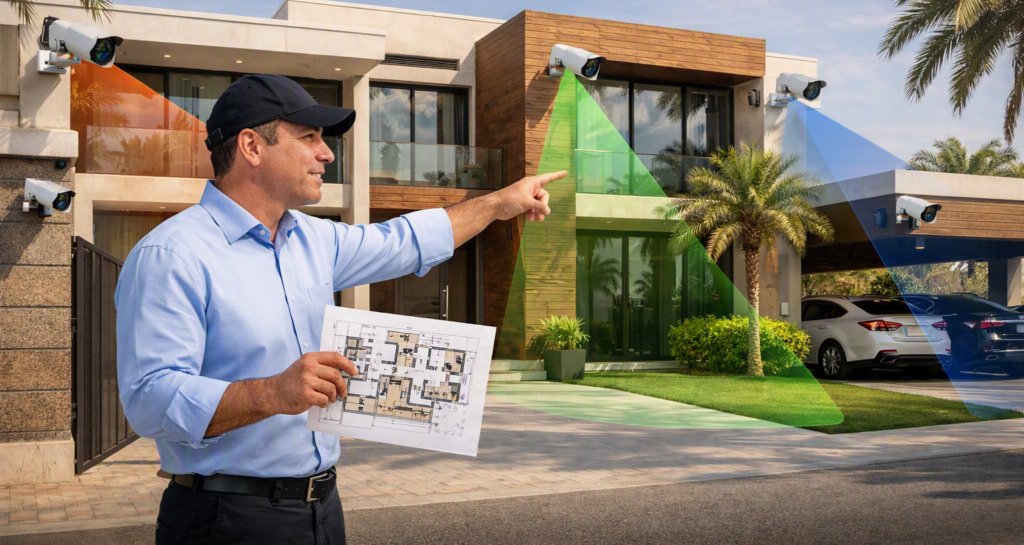
The first step is to look at the complete property layout. Draw or review a simple floor plan and mark the main entrances, exits, parking areas, walkways, storage rooms, reception areas, and other important spaces.
A small apartment may need only a few cameras, while a large villa, warehouse, office, or commercial building may need many more. The shape of the property also matters. Long corridors, multiple floors, large outdoor spaces, and separate buildings can increase the number of cameras required.
Focus on Entry and Exit Points
Doors and gates are usually some of the most important areas to monitor. Cameras can help record people entering and leaving a property.
Consider the following locations:
- Main entrance doors
- Back and side doors
- Vehicle gates
- Garage entrances
- Emergency exits
- Loading and delivery areas
Each entrance may need a camera depending on its position and the surrounding view. A camera should be positioned so that faces, vehicles, or other useful details can be seen clearly.
Check for Blind Spots
One camera cannot always cover a large area effectively. Walls, pillars, furniture, trees, vehicles, and other objects can block the view.
Walk around the property and identify places where a person could move without being visible. These areas are known as blind spots.
For example, a large garden may require more than one camera because a single camera could leave parts of the area outside its useful viewing range. The same applies to warehouses, parking areas, and large commercial spaces.
Consider the Size of Each Area
The size of the area helps determine the number and type of cameras needed. A small room may be covered by one camera, while a large open area may require several cameras.
However, coverage should not be based only on distance. A camera may technically see a large area but provide very little useful detail at a greater distance.
It is better to think about what needs to be visible. If the purpose is to identify a person or read a vehicle number, the camera needs a suitable position and image quality.
Think About Lighting Conditions
Lighting can change how well a CCTV camera records an area. A location that looks bright during the day may become very dark at night.
Outdoor areas, parking lots, entrances, and building sides should be checked during both daytime and nighttime conditions. Cameras with suitable low-light or night-vision features can help in darker locations.
Strong lights can also affect image quality. For example, a camera facing directly toward bright sunlight or vehicle headlights may produce a less useful image. Camera placement should therefore take natural and artificial lighting into account.
Indoor and Outdoor Coverage
Indoor and outdoor areas often have different monitoring requirements.
Inside a property, cameras may be useful in reception areas, hallways, entrances, storage rooms, staircases, and other shared spaces. Privacy should always be considered when deciding where cameras are placed.
Outside, cameras may be used around gates, parking areas, gardens, building entrances, and boundary points. Outdoor cameras should be suitable for the local weather and environmental conditions.
Common Camera Numbers for Different Properties
There is no fixed number of cameras that works for every property. As a simple starting point:
- Small apartment: 2–4 cameras
- Small villa: 4–8 cameras
- Medium villa: 6–12 cameras
- Small office or shop: 4–10 cameras
- Medium commercial property: 8–20 cameras
- Large warehouse or facility: 15 or more cameras
These numbers are only general examples. The actual requirement depends on the property layout, important areas, camera viewing angles, lighting, and security objectives.
Avoid Adding Too Many Cameras
More cameras do not always mean better coverage. Installing too many cameras can create unnecessary costs, increase maintenance work, and make video monitoring harder.
A better approach is to place cameras where they provide useful coverage. Each camera should have a clear purpose, such as watching an entrance, monitoring a parking area, covering a hallway, or reducing a known blind spot.
Plan for Future Changes
Property layouts can change over time. New doors, walls, storage areas, equipment, or landscaping can affect camera views.
It can be useful to leave some room for future expansion when planning the CCTV system. This does not mean installing extra cameras without a reason. Instead, the recording system, network, and mounting locations can be planned with possible future additions in mind.
The right number of cameras depends on the property’s size, layout, entrances, blind spots, lighting, and areas that require attention. Careful planning helps ensure CCTV installation in Dubai provides practical coverage without using more cameras than the property actually needs.