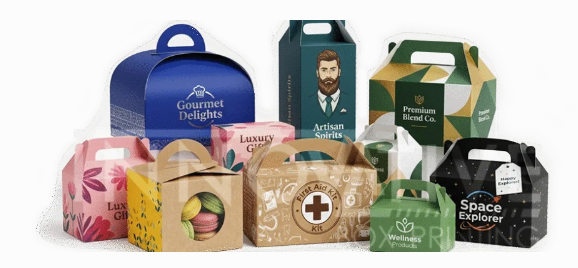
Packaging serves two primary functions in commerce: protecting the product inside and presenting it cleanly to the buyer. Gable boxes accomplish both tasks through a distinctive design that merges a square or rectangular base with a triangular, peaked roof. The top panels interlock to form an integrated carry handle, eliminating the need for separate plastic bags or ribbon handles.
Retailers, bakeries, event coordinators, and corporate gifting departments rely on this structure to reduce material waste and speed up packaging routines. The combined benefits of structural durability, easy assembly, and visual appeal make gable packaging a practical solution across multiple retail sectors.
What Is a Gable Box?
A gable box is a paperboard or corrugated container characterized by a flat bottom, vertical side walls, and a peaked, triangular roofline. The two sloping roof panels meet at the apex, where die-cut tabs secure the closure and form a centered carrying handle.
Packaging manufacturers produce these boxes using three primary materials:
- Solid Bleached Sulfate (SBS) Paperboard: A premium, smooth white board ranging from 16pt to 24pt thickness, ideal for high-resolution graphics, vibrant retail designs, and cosmetic packaging.
- Natural Kraft Paperboard: An unbleached, brown board with visible wood fibers. It offers a rustic look favored by organic food brands and artisan gift shops.
- Corrugated Board (E-flute and F-flute): A layered cardboard structure featuring a fluted medium between two linerboards. This material provides crush resistance for heavier retail products, wine bottles, and ceramic goods.
Most gable designs ship flat to save warehouse space. Workers assemble them on demand by squaring the base, inserting the product, and locking the top handles together.
Practical Advantages for Retail Environments
Retail stores face daily operational challenges involving counter space, assembly time, and transaction speed. Gable boxes solve several of these issues simultaneously.
Eliminating Secondary Shopping Bags
Standard folding cartons require a separate paper or plastic shopping bag so customers can carry their purchases. A gable box serves as both container and carrier. The built-in handle holds the weight of the contents securely. Eliminating shopping bags reduces total packaging spend per customer and lowers the store’s overall plastic footprint.
Reducing Backroom Storage Requirements
Rigid set-up boxes take up substantial storage space because they ship fully assembled. Gable boxes ship flat in bundles of 50 or 100 units. A retailer can store hundreds of flat gable boxes under a checkout counter or on backroom racking, keeping aisles clear and inventory accessible.
Quick Checkout Assembly
Many gable box styles use an auto-lock bottom (crash-lock base). When a cashier pushes the opposite corners of the flat box inward, the bottom flaps snap into place automatically without tape or glue. Loading the item and locking the handle takes less than five seconds, keeping checkout lines moving during peak hours.
Visual Impact on Retail Shelves
Standard rectangular boxes blend together when stacked on retail display shelves. The triangular roofline of a gable box draws the eye upward and breaks the visual monotony of straight horizontal lines. Specialty food producers, confectioners, and bath product brands use this height advantage to gain attention in competitive retail aisles.
Improving Gift Presentation and Unboxing
Gift packaging requires extra attention to presentation. Traditional gift wrapping demands wrapping paper, scissors, tape, decorative ribbons, and gift tags. Gable boxes provide a complete gift package directly out of the box.
Clean Presentation Without Extra Wrapping
The distinct silhouette of a gable container creates an immediate gift appearance. Brands often add custom finishing elements to the outer surface to suit seasonal campaigns:
- Die-Cut Windows: Clear polyethylene terephthalate (PET) film windows allow recipients to view gourmet foods, hand-poured candles, or branded merchandise inside.
- Spot UV and Foil Stamping: Metallic accents along the handle or logo areas add contrast against a matte paper background.
- Custom Hang Tags: Retailers loop product information or gift message tags directly through the handle aperture without adhesive.
Secure Handling for Event Giveaways
At corporate conferences, trade shows, weddings, and charity galas, attendees carry multiple items simultaneously. A gift box without a handle often gets dropped or tucked away clumsily. The balanced top handle on a gable box makes it easy for guests to hold while walking, networking, or commuting.
Gable Boxes Compared to Standard Packaging Styles
Choosing the right package format depends on product weight, stacking requirements, and presentation goals. The table below outlines how gable boxes perform against traditional packaging formats.
| Feature | Gable Box | Standard Folding Carton | Rigid Set-Up Box |
|---|---|---|---|
| Integrated Handle | Yes | No | No |
| Secondary Carrier Needed | No | Yes | Yes |
| Flat-Pack Shipping | Yes | Yes | No |
| Vertical Stacking on Shelves | Side-by-side only | High vertical stack | High vertical stack |
| Average Assembly Time | 3 to 5 seconds | 2 to 4 seconds | Instant (pre-built) |
| Primary Use Case | Gifts, carryout, bakery | Dry goods, pharmaceuticals | Luxury goods, electronics |
While standard folding cartons stack more efficiently in tall vertical columns, gable boxes outperform them whenever portability and gift presentation take priority.
Material Selection and Sustainability Factors
Modern consumers evaluate brands based on their packaging waste. Gable boxes align well with sustainable packaging initiatives because most designs avoid mixed-material assemblies.
Uncoated Kraft Options
Uncoated kraft paperboard is 100% biodegradable and recyclable in standard municipal curbside collections. It requires fewer chemical bleaching processes during pulp production, making it a low-impact choice for eco-conscious retail lines.
Water-Based Inks and Coatings
Brands can replace petroleum-based inks with water-based or soy-based inks for exterior printing. Water-based aqueous coatings protect the printed board from scuffs during transit while keeping the entire container fully repulpable at paper recycling mills.