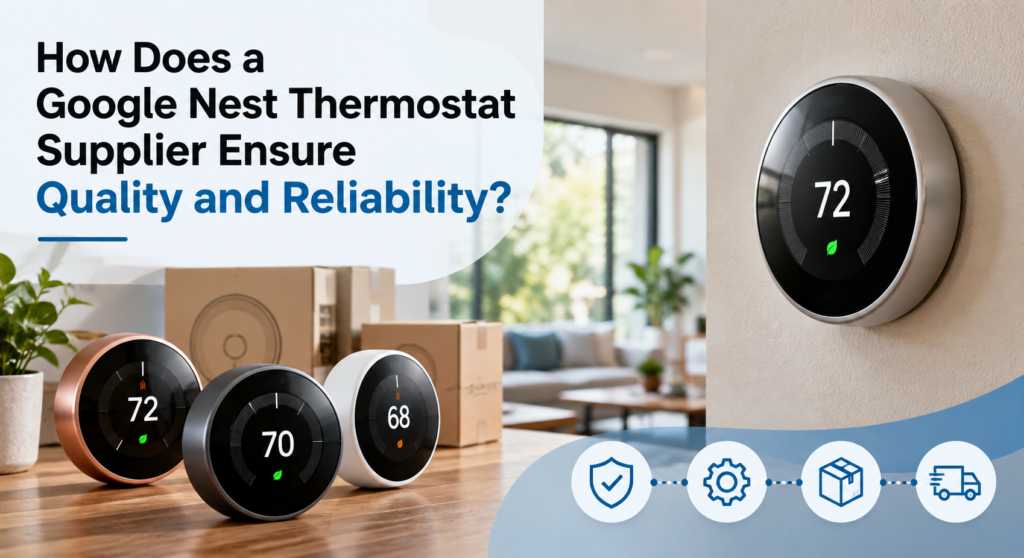
Choosing the right supplier is essential when purchasing smart home devices such as Google Nest thermostats. These thermostats combine temperature control, connectivity, automation, and energy management, so product quality and reliability directly affect customer satisfaction. A professional Google Nest Thermostat Supplier in UAE follows careful sourcing, inspection, storage, and distribution practices to ensure that customers receive genuine and dependable products.
Sourcing Genuine Products
Quality assurance begins with sourcing. A reliable supplier obtains Google Nest thermostats through authorized distribution channels or established business networks. Proper sourcing helps reduce the risk of counterfeit, refurbished, damaged, or incorrectly labelled products entering the supply chain.
Suppliers should maintain clear records of product origins, model numbers, quantities, and purchase documentation. This traceability makes it easier to verify products and resolve issues if customers encounter problems after purchase.
Verifying Product Authenticity
Product authenticity is another important part of supplier quality control. Smart thermostats contain sophisticated hardware and software, making counterfeit products particularly problematic. A professional supplier checks packaging, model information, serial numbers, labels, and other relevant product identifiers.
Authenticity checks can also help ensure that customers receive the correct regional model and compatible version. This is particularly important because smart home products may have different specifications, compatibility requirements, or regional variations.
Inspecting Products Before Delivery
A dependable supplier does not simply receive products and immediately ship them to customers. Incoming inventory can be inspected for visible damage, packaging condition, model accuracy, and other quality indicators.
The supplier may also check whether boxes have been opened, whether accessories are included, and whether the product matches the order specifications. These checks help identify problems before products reach customers.
For business buyers purchasing multiple units, consistent inspection procedures are especially valuable. They reduce the possibility of receiving mixed models, missing accessories, or damaged inventory within a larger shipment.
Maintaining Proper Storage Conditions
Storage can have a significant impact on electronic products. A responsible supplier stores thermostats in a clean, dry, and secure environment. Products should be protected from excessive moisture, heat, dust, physical impact, and other conditions that could damage electronic components or packaging.
Inventory should also be organized so that older stock can be managed appropriately and orders can be fulfilled accurately. Good warehouse practices reduce handling errors and help maintain product condition throughout the supply process.
Providing Accurate Product Information
Reliability is not limited to the physical condition of a thermostat. Customers also need accurate information before making a purchase. A professional supplier provides clear details about the model, features, compatibility, included accessories, warranty information, and installation requirements.
Accurate product descriptions help customers choose the appropriate device for their requirements. They also reduce misunderstandings and returns caused by purchasing an incompatible or incorrect model.
Following Careful Packaging and Shipping Procedures
Smart thermostats are electronic devices and should be handled carefully during transportation. Reliable suppliers use appropriate packaging methods to reduce the risk of damage caused by impact, vibration, or improper handling.
Before shipping, the supplier should verify the product model, quantity, delivery details, and package condition. Proper documentation and shipment tracking can further improve supply-chain reliability.
For commercial customers, consistent packaging standards are particularly important because damaged or delayed shipments can affect installation schedules and business operations.
Supporting Warranty and After-Sales Requirements
A quality-focused supplier understands that customer service continues after delivery. Clear warranty information and a defined process for handling defective or damaged products can significantly improve the buying experience.
When an issue occurs, customers should know how to report it and what information may be required. A professional supplier can help customers understand the appropriate warranty or support process without making unsupported claims about manufacturer coverage.
Good after-sales communication also helps suppliers identify recurring product or logistics issues and improve their internal quality-control procedures.
Maintaining Reliable Inventory Management
Inventory management plays an important role in supplier reliability. Accurate stock records help prevent customers from ordering products that are unavailable. They also allow suppliers to monitor different models and product variations more effectively.
A supplier with organized inventory systems can provide more accurate delivery estimates and reduce order-processing errors. For businesses purchasing thermostats in larger quantities, dependable inventory management can make procurement more predictable.
Building Trust Through Consistent Quality
Long-term supplier reliability comes from consistency rather than a single successful transaction. A trustworthy Google Nest Thermostat Supplier focuses on maintaining the same standards across sourcing, inspection, storage, packaging, delivery, and customer support.
Suppliers can strengthen their reputation by communicating honestly about availability, product condition, warranties, and delivery timelines. Transparent communication gives customers realistic expectations and helps establish lasting business relationships.
Choosing a Reliable Supplier
When evaluating a supplier, buyers should consider more than just the product price. They should examine the supplier’s sourcing practices, product authenticity procedures, inventory management, shipping process, warranty information, and customer support.
A supplier that demonstrates strong quality-control practices is better positioned to provide a consistent purchasing experience. Buyers should also verify product specifications and compatibility before placing an order, especially when purchasing for multiple properties or commercial installations.
Conclusion
A reliable Google Nest Thermostat Supplier ensures quality through a combination of genuine sourcing, product verification, careful inspection, appropriate storage, accurate information, secure packaging, and dependable after-sales support. These practices help protect customers from counterfeit products, damaged inventory, incorrect models, and avoidable supply problems.
For buyers, selecting a supplier should therefore involve evaluating the complete supply process rather than focusing only on price. A supplier that prioritizes transparency, product authenticity, careful handling, and consistent service can provide greater confidence when purchasing smart thermostats for residential or commercial applications.
For More Insightful Articles Related To This Topic, Feel Free To Visit: https://xuzpost.com/