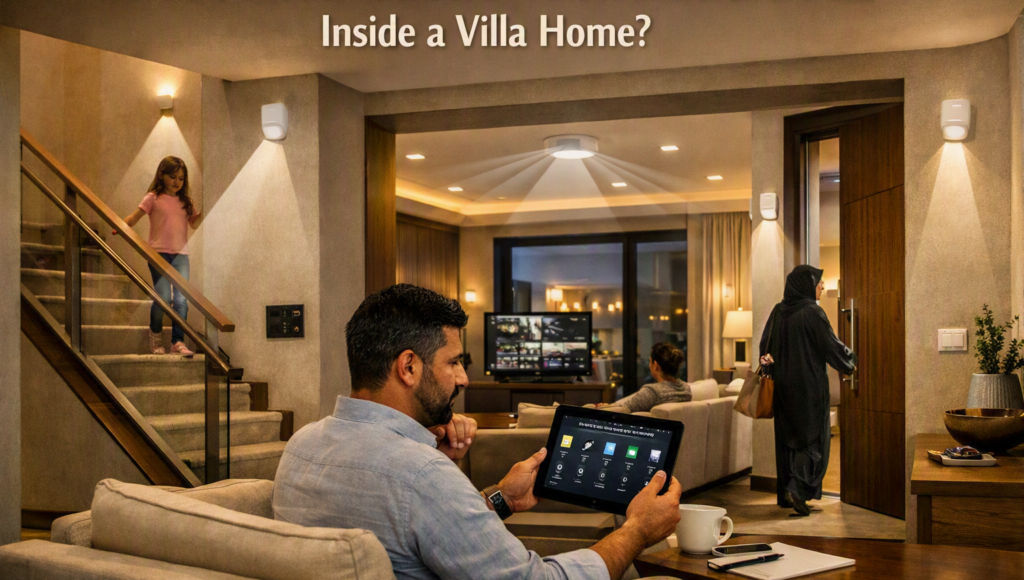
Smart Home Security for Villas can use motion sensors to monitor different parts of a property without requiring someone to watch every area all the time. Motion sensors detect movement and can send a signal when activity is noticed. Their usefulness depends on where they are placed, what type of sensor is used, and how the security system is set up.
What Is a Motion Sensor?
A motion sensor is a small security device that detects movement within a specific area. Many sensors use infrared technology to notice changes in heat caused by a moving person or animal. Some systems may also use microwave or other detection methods.
When movement is detected, the sensor can send a signal to a connected security system. Depending on the setup, this may trigger an alarm, activate a camera, turn on a light, or send an alert to a connected device.
Protecting Villa Entrances
Doors are common areas where motion sensors can be useful. A sensor placed near an entrance can detect movement around the doorway or nearby space.
For example, if someone enters through a door and moves into a hallway, the sensor can notice the activity. Door and window sensors can also work alongside motion sensors to provide another layer of information.
The placement should be planned carefully so that normal movement by family members does not create unnecessary alerts.
Monitoring Hallways and Staircases
Large villas often have long hallways, multiple floors, and staircases. These areas may not always be occupied, which makes them suitable locations for motion detection.
A sensor positioned in a hallway can cover movement between rooms. Staircases can also be monitored because they provide a natural route between different levels of a villa.
Using sensors in these locations can help identify movement that may otherwise go unnoticed, especially when the property is quiet.
Watching Living Rooms and Common Areas
Living rooms, dining areas, and other shared spaces can have large open sections. A properly positioned motion sensor can cover a wide part of these areas.
It is important to consider furniture, curtains, and other objects when choosing the sensor position. These objects can affect the sensor’s coverage.
In homes where people or pets move around regularly, the system should be configured to reduce unnecessary alerts.
Monitoring Bedrooms and Private Areas
Motion sensors can also be used near bedrooms, but their placement requires more care. The goal is usually to monitor entrances, nearby hallways, or selected areas rather than every part of a private room.
For example, a sensor outside a bedroom can detect movement along a hallway during a period when the area is normally empty.
Privacy should always be considered when deciding where sensors are installed inside a home.
Protecting Garages and Storage Areas
Garages, storage rooms, and utility spaces are often visited less frequently than living areas. This makes them useful places for motion detection.
A sensor in a garage can identify movement when the space is not expected to be occupied. In a storage room, it can help identify activity around equipment, tools, or stored items.
These areas may also have different temperatures and environmental conditions, so the sensor should be suitable for the location.
Monitoring Outdoor Areas
Motion detection does not have to be limited to indoor spaces. Depending on the equipment, sensors can be placed around gardens, driveways, walkways, and other outdoor areas.
Outdoor sensors need to handle conditions such as sunlight, wind, changing temperatures, and moving plants. Poor positioning can result in unwanted alerts caused by animals or environmental movement.
For this reason, outdoor sensor placement needs careful planning.
How Sensor Placement Affects Detection
The position of a motion sensor can have a major effect on how well it works. A sensor should have a clear view of the area it is intended to monitor.
Corners, entry points, and hallways can often provide useful coverage. However, the correct position depends on the shape of the room and the sensor’s detection range.
Sensors should also be positioned so that normal household activities do not constantly trigger them.
Using Motion Sensors With Other Security Devices
Motion sensors are generally more useful when they work with other security devices. A camera can provide visual information after a sensor detects movement. Door and window sensors can show whether an entry point has been opened.
Lighting can also be connected to motion detection. For example, outdoor lights may turn on when movement is detected near a walkway.
This combination can help create a clearer picture of what is happening around different parts of a villa.
Reducing Unwanted Alerts
Not every movement means that there is a security problem. Pets, children, visitors, and regular household activity can trigger sensors if the system is not adjusted properly.
Sensor sensitivity, detection zones, placement, and timing can all affect the number of alerts. Regular testing can help identify areas where adjustments are needed.
A well-planned setup should focus on important movement while allowing normal activity to continue without constant interruptions.
Choosing Sensors for Different Villa Areas
Different areas may need different types of sensors. An indoor hallway may require a simple motion detector, while an outdoor garden may need a sensor designed for changing weather conditions.
The size of the area also matters. A large open room may require a sensor with wider coverage, while a narrow passage may need a more focused detection range.
Understanding the layout and daily use of the villa makes it easier to decide where motion detection can be useful. When planned properly, Smart Home Security for Villas can use motion sensors to monitor entrances, rooms, hallways, garages, staircases, and selected outdoor areas in a practical way.