1. Retail Spaces Are Changing Faster Than Fixtures
Retail stores don’t stay the same for very long anymore. Products change, brands change, promotions change, and customer expectations keep moving. A fixture that looked perfect two years ago can suddenly feel outdated.
That’s one reason a modular display system makes practical sense. Instead of replacing an entire fixture whenever the merchandising plan changes, retailers can adjust the setup around what they actually need. Shelves can move. Graphics can be updated. Product sections can be expanded or reduced. It gives the store some breathing room.
And honestly, that matters. Retailers shouldn’t have to rebuild their displays every time the product mix changes.
2. Modular Display System Design Gives Retailers More Freedom
A good display should support the products, not get in their way. Modular systems are designed around that idea. They can be configured for different products, store layouts, brand requirements, and selling environments.
One week, a retailer might need more shelf space. A few months later, a featured product may need a dedicated presentation area. With a fixed fixture, those changes can become expensive and annoying. With modular retail displays, adjustments are much easier.
The real advantage is flexibility. Retailers get a fixture that can evolve instead of becoming another piece of store furniture that eventually gets thrown away.
3. Better Merchandising Starts With Practical Product Placement
Customers notice displays, even when they don’t consciously think about them. Poorly positioned products can be missed. Cluttered shelves can make a store feel disorganized. A smart layout does the opposite. It guides attention without making the shopping experience feel forced.
A modular display system gives retailers more control over product placement. Different heights, sections, shelves, signage areas, and graphic panels can work together to create a cleaner presentation.
This becomes especially useful when several product categories need to share one retail environment. The display can help separate them visually while keeping the overall space connected.
4. Cannabis Retail Needs Displays Built For Real Store Conditions
Cannabis retail has its own set of merchandising challenges. Products need to be presented clearly, branding needs to remain visible, and the store still has to feel professional rather than overloaded.
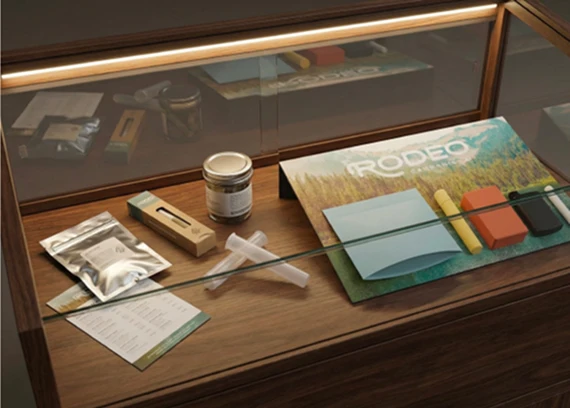
A dispensary display case can help create that balance. Instead of simply putting products behind glass and calling it done, retailers can think about the complete presentation. Lighting, spacing, product grouping, graphics, and customer sightlines all play a role.
The display should make products easier to understand and compare. It should also fit the store’s brand. A good cannabis retail display feels intentional. It doesn’t look like an afterthought squeezed into whatever space was left.
5. Brand Presentation Matters More Than Most Retailers Think
People remember brands through visual details. Colors, graphics, product positioning, signage and even the materials used in a fixture can influence the overall impression.
That’s where custom modular merchandising can be useful. A retailer can create a consistent visual identity while still having the ability to make changes later.
For cannabis brands especially, this is important. A dispensary display case can provide the physical structure, while graphics and merchandising elements create the brand experience around it.
The point isn’t to make the display louder. Sometimes quieter works better. Clean presentation usually wins over visual clutter.
6. Flexible Displays Can Reduce Long-Term Replacement Costs
Buying inexpensive fixtures can seem like the obvious choice when opening a store. But cheap doesn’t always mean economical.
If a fixture needs to be replaced whenever a product line changes, the costs start adding up. There’s the fixture itself, installation, labor, shipping, disposal, and the time spent managing the change.
A modular approach can reduce some of that waste. Instead of replacing the entire system, retailers may only need to change individual components.
That makes a modular display system more of a long-term retail investment. The fixture keeps working while the merchandising around it evolves.
7. Store Layouts Need Displays That Can Adapt
No two retail spaces are exactly alike. Even stores belonging to the same brand can have different walls, floor areas, traffic patterns, and customer behavior.
A modular fixture can be adjusted to work with those differences. Wall-mounted sections can be expanded. Freestanding units can define product zones. Counter displays can support smaller products or high-interest items.
This flexibility is especially useful during store renovations or layout changes. Retailers don’t necessarily have to start from scratch.
It’s a simple idea, really. The fixture should adapt to the store, not force the store to adapt around the fixture.
8. Modern Dispensary Displays Need Function Alongside Appearance
Looks matter, but appearance alone doesn’t sell products. A beautiful fixture that makes products difficult to see, reach, explain, or organize isn’t doing its job.
A strong dispensary display case needs to combine presentation with practical merchandising. Products should be visible. Information should be easy to communicate. Staff should be able to maintain the display without fighting with it every day.
That last part gets overlooked. Retail displays are used constantly. If cleaning, restocking, changing graphics, or rearranging products becomes a headache, the design has missed something.
Good retail design is attractive, sure. But it should also make everyday work easier.
9. Refreshable Merchandising Keeps Retail Environments Relevant
Retailers need reasons for customers to keep noticing the same space. Refreshable graphics, interchangeable components, and flexible product layouts can help create that change without requiring a complete renovation.
This is another strong benefit of a modular display system. A retailer can refresh the presentation around new products, seasonal campaigns, promotions, or changing customer interests.
For cannabis stores, the ability to update merchandising can be particularly valuable. New brands and product categories can be introduced without completely redesigning the sales floor.
A store doesn’t need to look different every week. It just needs enough flexibility to avoid looking stuck.
10. The Right Display Becomes Part of the Retail Strategy
A retail fixture is easy to treat as a basic purchasing decision. Find something that fits the wall, check the price, install it, move on.
But the better approach is to think beyond the fixture itself. Displays influence product visibility, customer movement, brand perception, merchandising flexibility, and the overall feel of the store.
That’s why modular retail solutions continue to make sense for businesses that expect change. They offer structure without locking retailers into one permanent configuration.
Whether the requirement is a flexible retail wall, a branded product section, or a dispensary display case, the goal should remain the same: make the product easier to notice and the shopping experience easier to navigate.
Conclusion: Build Retail Displays That Can Keep Up
Retail doesn’t sit still. Products change, brands evolve, stores get redesigned, and customers expect something better each time they walk through the door.
A modular display system gives retailers the flexibility to respond without constantly replacing their fixtures. That can mean better merchandising, less unnecessary waste, and a retail environment that stays relevant for longer.
For cannabis retailers, the same thinking applies to the dispensary display case. It should do more than hold products behind glass. It should support the brand, improve visibility, keep merchandising organized, and work for the people running the store every day.
That’s the real value of a good display. Not just looking good on opening day, but continuing to work long after it.
FAQs About Modular Display Systems
What is a modular display system?
A modular display system is a flexible retail fixture made from components that can be rearranged, expanded, or updated as merchandising needs change. It gives retailers more flexibility than many fixed display solutions.
Why use a modular display system in retail?
Retailers use modular systems because stores and product ranges change. A flexible fixture can be adjusted for new products, promotions, layouts, and branding without replacing the complete display.
What should a dispensary display case include?
A dispensary display case should provide clear product visibility, organized merchandising, suitable branding areas, practical access for staff, and a design that fits the overall retail environment.
Are modular displays suitable for cannabis retailers?
Yes. Modular displays can work well in cannabis retail because product ranges, branding, promotions, and store layouts can change over time. Flexible fixtures make those updates easier.
Can modular retail displays support branding?
Yes. Graphics, signage, finishes, panels, and product presentation areas can be incorporated into modular retail displays, allowing retailers to create a stronger and more consistent brand experience.