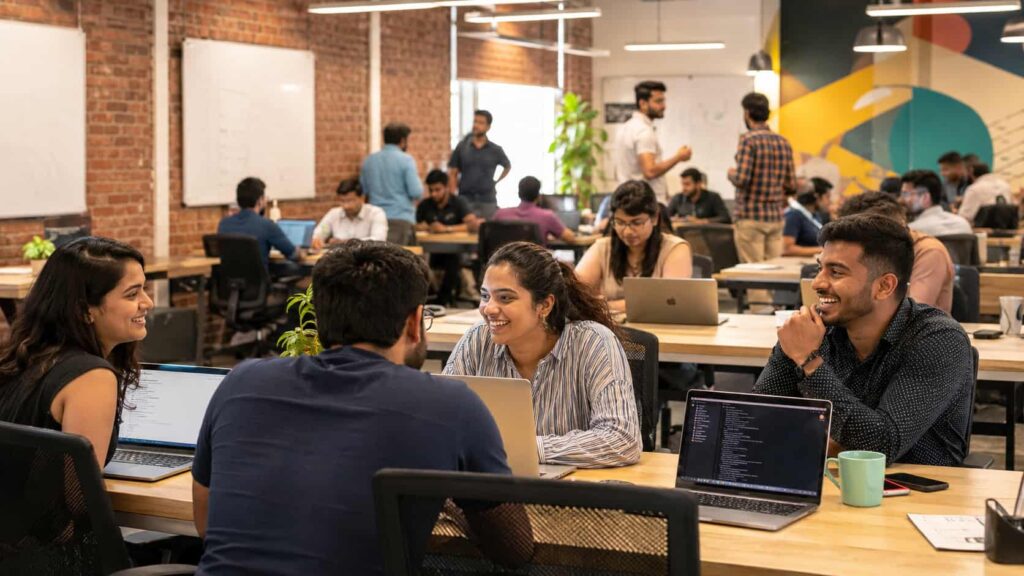
Finding office space in India used to be a long and painful process. You would call a broker, visit 10 different buildings, negotiate for weeks, sign a 3 to 5 year lease, and then spend another month setting up the space before anyone could sit down to work.
In 2026, that process looks very different. Coworking platforms have changed the way Indian companies and professionals find, compare, and book office space. What used to take months now takes minutes.
The Old Way of Booking Office Space in India
Before coworking platforms came along, booking office space in India involved a lot of middlemen. Brokers would show you spaces, add their commission on top, and push you toward properties that paid them the highest fees.
The tenant had very little control. There was no easy way to compare prices across different buildings. There was no standard way to know what was included in the rent. And once you signed, you were locked in for years.
Small businesses and startups suffered the most. They did not have the budget for a big lease. They could not afford a broker. And they did not have time to visit dozens of properties before making a decision.
What Coworking Platforms Changed
A coworking platform works like an online marketplace for office space. Instead of calling a broker, you open the platform, search by city, filter by price and space type, and see all available options in one place.
You can book a desk for one day, a private cabin for one month, or a managed office for one year. Everything is transparent. You see the price, the amenities, the location, and the availability before you commit to anything.
This one change removed most of the friction from the office booking process in India.
How Indian Companies Are Booking Office Space Today
Searching Online First
Today most companies start their office space search online. They type something like coworking space in Bangalore or private office Gurgaon and land on a platform that shows them all available options in that city.
Platforms like Stylework list 4000 plus spaces across 120 plus cities. A company in Delhi can search for a managed office in Hyderabad and find options, compare prices, and make an enquiry without ever speaking to a broker.
Comparing Multiple Options at Once
One of the biggest changes coworking platforms brought is the ability to compare. You can look at 10 different coworking spaces in one area, see their prices side by side, read about included amenities, and check availability in real time.
This saves companies a huge amount of time. Instead of visiting each building separately, they shortlist 2 or 3 options online and only visit the ones that actually match their needs.
Booking Without a Long Commitment
Traditional office leases in India required a 3 to 5 year commitment. Coworking platforms broke that model completely. Today you can book a day pass for Rs 199, a dedicated desk for one month, or a private cabin for 6 months.
This flexibility is especially valuable for companies that are growing fast or expanding to a new city. They can start small, test the location, and scale up when they are ready. No large deposit. No long lease. No risk.
The Rise of Enterprise Coworking Bookings
Coworking in India started as a solution for freelancers and small startups. But in 2025 and 2026, large enterprises have become the biggest users of coworking platforms.
Companies with 50 to 500 employees are now using platforms to manage office space for their teams across multiple cities. An HR team in Mumbai can log into a platform, assign workspace to 30 employees in Pune, 20 in Bangalore, and 10 in Chennai, all from one dashboard.
Tools like FlexBoard by Stylework are built specifically for this use case. They allow enterprise teams to manage bookings, track usage, control spending, and onboard new employees to a workspace in minutes.
This kind of control was not possible with traditional office leases. You could not manage a multi-city office from a single screen. Coworking platforms made it possible.
Tier 2 Cities Are Now on the Map
Another major change coworking platforms have brought is access to Tier 2 cities. Before, if a company wanted to open a small office in Jaipur or Indore or Lucknow, they had very few options. They would either rent a full floor or ask employees to work from home.
Today platforms like Stylework have coworking spaces listed in 120 plus cities across India. A company can give its Jaipur-based employees a professional workspace without setting up a full office there. The employee gets a proper desk and meeting room access. The company pays only for what it uses.
This has been a game changer for companies with distributed teams and for professionals who do not want to move to a metro city to access a good workspace.
What This Means for the Future of Office Space in India
The shift to coworking platforms is not slowing down. More companies are realising that they do not need to own or lease office space to give their employees a great place to work.
The role of the broker is shrinking. The role of the platform is growing. Decisions that used to take months are now made in days. Spaces that used to require a long commitment can now be booked for a single afternoon.
For Indian businesses, this means more flexibility, lower costs, and faster decisions. For employees, it means access to professional workspaces closer to where they live, in more cities than ever before.
Coworking platforms have not just changed how India books office space. They have changed what companies expect from office space altogether.