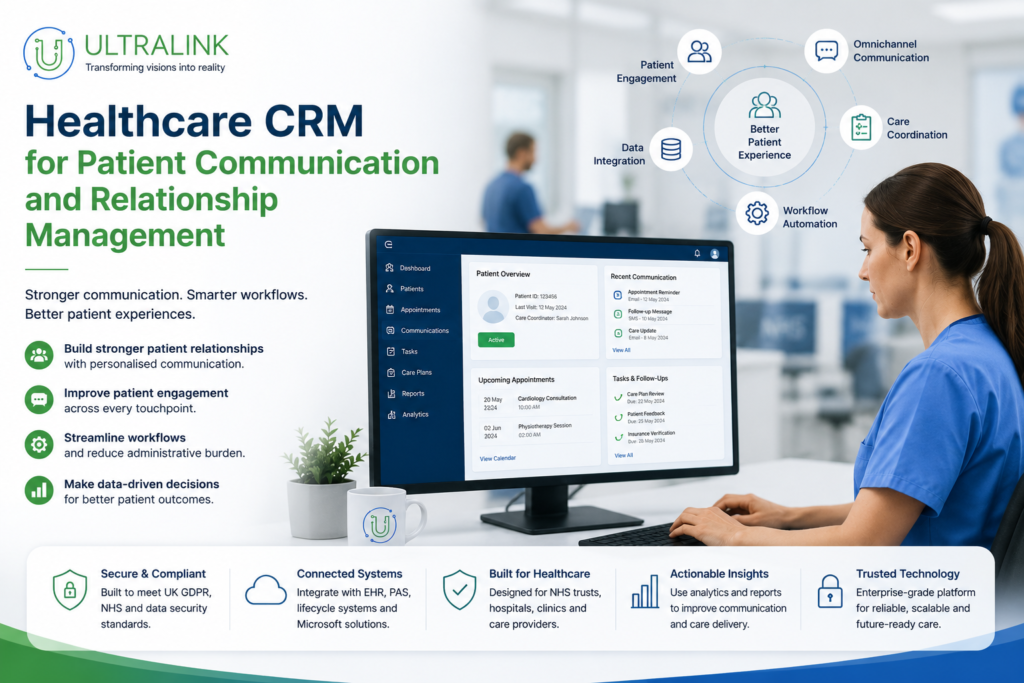
Communication plays an important role in every patient journey. From booking an appointment to receiving follow-up care, every interaction shapes a patient’s experience and influences how they perceive a healthcare organisation.
Many NHS organisations and UK healthcare providers have invested in digital systems to manage clinical information. However, patient communication often remains fragmented. Appointment reminders may come from one system, patient enquiries from another, and follow-up activities may still rely on emails, spreadsheets or manual phone calls.
This creates additional work for administrative teams while making it harder to deliver a consistent patient experience.
A modern Healthcare CRM helps bring these interactions together, enabling healthcare organisations to manage patient communication, strengthen relationships and improve operational efficiency throughout the patient journey.
Why Patient Communication Still Creates Challenges
Healthcare organisations communicate with patients every day, yet many still face common operational challenges.
Patients may miss appointments because reminders are inconsistent. Administrative teams often answer the same questions repeatedly. Clinicians may not always have visibility of previous communications, resulting in duplicated conversations or unnecessary delays.
As healthcare services continue their Digital Transformation, patients increasingly expect timely updates, digital communication and a more connected experience similar to other service industries.
Meeting these expectations requires more than simply introducing another software platform. It requires communication that is connected across departments and supported by reliable information.
Healthcare CRM Is More Than a Contact Database
Many people associate CRM software with sales and marketing, but healthcare organisations use it very differently.
Modern Healthcare CRM Systems help organisations manage relationships throughout the patient lifecycle. Instead of storing contact details alone, they bring together appointment history, communication records, referrals, enquiries, follow-up activities and patient preferences into a single view.
This gives administrative staff, clinicians and care coordinators greater visibility while reducing the need to switch between multiple applications.
For organisations delivering community care, specialist services or long-term treatment programmes, having a complete picture of patient interactions supports more personalised and efficient communication.
Creating a More Connected Patient Journey
Patients rarely interact with just one department.
A single episode of care may involve referrals, appointments, diagnostic services, clinicians, administrative teams and follow-up communications.
Without effective Healthcare Data Integration, these interactions often become disconnected, resulting in duplicated information, inconsistent communication and unnecessary administration.
Many healthcare providers are improving Healthcare Interoperability by connecting their existing systems rather than replacing them.
Supporting Staff Through Workflow Automation
Administrative teams often spend a significant part of their day completing repetitive tasks.
Sending appointment reminders, updating patient records, assigning follow-up activities and responding to routine enquiries all require time and attention.
Modern Healthcare Workflow Automation reduces this administrative burden by automating many routine processes while ensuring communication remains consistent.
For example, patients can receive appointment confirmations, reminders and follow-up messages automatically, while staff receive alerts when additional action is required.
This helps organisations improve operational efficiency without compromising the quality of patient communication.
Building Stronger Relationships Through Better Engagement
Healthcare is built on trust, and trust is strengthened through consistent communication.
A modern Patient Engagement Platform enables organisations to communicate with patients at every stage of their care journey, whether that’s appointment reminders, health updates, service information or post-treatment follow-ups.
Combined with Healthcare Analytics, organisations can better understand communication trends, identify areas for improvement and measure patient engagement over time.
As AI-Powered Patient Engagement continues to evolve, many healthcare providers are also exploring how AI in Healthcare can support routine enquiries, personalise communications and help patients access information more quickly while maintaining appropriate clinical oversight.
Choosing the Right Healthcare CRM
Every healthcare organisation has different operational requirements.
Some require better patient communication. Others need stronger reporting, improved collaboration between departments or more efficient administrative workflows.
Choosing the right Healthcare CRM UK solution means considering how it integrates with existing systems, supports regulatory requirements and fits the organisation’s long-term digital strategy.
Many organisations are also evaluating Microsoft Dynamics 365 CRM for Healthcare because it combines relationship management with workflow automation, reporting and integration capabilities that support broader healthcare operations.
Whether planning a new Dynamics 365 CRM Implementation or seeking specialist Dynamics 365 CRM Consulting Services, the objective should remain the same: improving communication while making everyday processes simpler for both staff and patients.
Better Communication Leads to Better Healthcare Experiences
Good patient communication is no longer simply about sending appointment reminders.
It is about creating connected experiences that help patients feel informed, supported and engaged throughout their care journey while reducing administrative complexity for healthcare teams.
A well-planned Healthcare CRM provides the foundation for stronger relationships, better operational visibility and more efficient communication across healthcare organisations.
Frequently Asked Questions
What is a Healthcare CRM?
A Healthcare CRM is a customer relationship management platform designed to help healthcare organisations manage patient communication, appointments, enquiries, follow-ups and ongoing relationships while improving operational efficiency.
How does a Healthcare CRM improve patient communication?
A Healthcare CRM centralises patient interactions, automates routine communications, supports follow-up activities and helps staff access accurate information from a single platform, creating a more consistent patient experience.
Can a Healthcare CRM integrate with existing healthcare systems?
Yes. Modern Healthcare CRM solutions support Healthcare Data Integration and interoperability, allowing organisations to connect with Electronic Health Records (EHR), patient administration systems, finance platforms and other healthcare applications without replacing their existing technology.