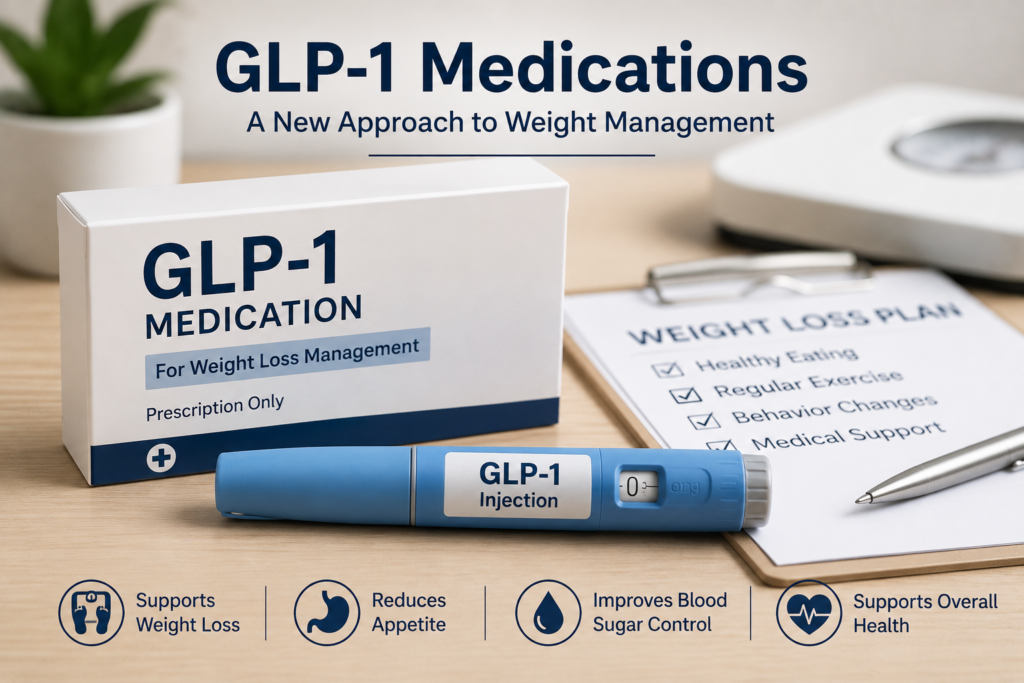
Weight loss is not always as simple as eating less and exercising more. For some people in the United States, persistent obesity or overweight combined with other health concerns can make weight management particularly difficult. In these situations, healthcare professionals may consider prescription weight-loss medications, including GLP-1-based treatments.
But who is actually eligible for these medications? How do they work, and what should patients know about their benefits and potential risks?
Understanding the answers can help people have a more informed conversation with their healthcare provider.
What Are GLP-1 Weight Loss Treatments?
GLP-1 stands for glucagon-like peptide-1, a hormone involved in appetite, blood sugar regulation, and digestion. GLP-1-based medications can mimic some of the effects of this naturally occurring hormone.
Certain medications used for weight management can help reduce appetite and increase feelings of fullness. Some treatments also affect how quickly food moves through the digestive system.
Not every medication marketed or discussed as a “GLP-1” works in exactly the same way. For example, tirzepatide acts on both GIP and GLP-1 pathways, while semaglutide and liraglutide are GLP-1 receptor agonists.
Who May Be a Candidate for GLP-1 Medication?
Eligibility is not determined simply by wanting to lose a few pounds.
In the U.S., healthcare professionals commonly consider BMI and weight-related health conditions when determining whether prescription weight-management medication may be appropriate. According to the National Institute of Diabetes and Digestive and Kidney Diseases, medications may be considered for adults with a BMI of 30 or greater, or a BMI of 27 or greater when weight-related health problems are present, such as high blood pressure or type 2 diabetes.
However, BMI is only one part of the decision.
A healthcare professional may also consider:
- Current weight and health history
- Existing medical conditions
- Previous weight-loss attempts
- Current medications
- Family medical history
- Lifestyle and eating habits
- Potential contraindications
- Treatment goals and expectations
If you’re trying to determine whether you could be a candidate, this guide on who may be a good candidate for GLP-1 medication provides additional factors to discuss with a healthcare professional.
Can GLP-1 Medications Help With Weight Loss?
For appropriate patients, prescription weight-management medications can contribute to meaningful weight loss when combined with lifestyle changes.
NIDDK reports that, on average, adults using prescription weight-management medications as part of a lifestyle program lose additional weight compared with people following lifestyle changes without medication. Results vary considerably depending on the medication and individual patient.
Some GLP-1-based treatments have demonstrated substantial weight-loss effects in clinical research. However, individual outcomes should never be assumed from another person’s results.
A medication that works well for one patient may not produce the same outcome for another.
How Do GLP-1 Medications Work?
One reason these medications can help with weight management is their effect on appetite and food intake.
GLP-1 therapies can influence areas of the brain involved in appetite regulation. They can also slow digestion and increase feelings of fullness, which may make it easier for some people to reduce food intake.
This does not mean the medication simply “burns fat.”
Instead, weight loss can occur partly because changes in appetite and fullness make it easier to maintain a lower calorie intake over time.
That distinction matters when evaluating online weight-loss claims.
What Are the Potential Benefits?
For eligible patients, GLP-1-based weight-management treatment may offer several potential benefits.
Weight Management
The most obvious potential benefit is helping patients achieve and maintain weight loss as part of a comprehensive treatment plan.
Improved Metabolic Health
Losing excess weight can improve several health markers. NIDDK notes that losing around 5% to 10% of starting body weight may help improve blood sugar, blood pressure, and triglyceride levels.
Support for Weight-Related Conditions
Weight loss can also benefit certain obesity-related health problems, although the specific benefits depend on the individual’s medical situation.
This is one reason healthcare professionals may consider prescription medication when lifestyle changes alone have not produced sufficient results.
What Are the Risks and Side Effects?
GLP-1 medications are prescription treatments, not ordinary dietary supplements. They can cause side effects and are not appropriate for everyone.
Potential gastrointestinal effects may include:
- Nausea
- Vomiting
- Diarrhea
- Constipation
- Abdominal discomfort
More serious risks and contraindications vary by medication. For example, NIDDK notes that certain GLP-1 medications should not be used by people with a personal or family history of medullary thyroid cancer or multiple endocrine neoplasia syndrome type 2.
This is why a medical evaluation is important before starting treatment.
Are Compounded GLP-1 Products the Same as FDA-Approved Medications?
Consumers should be particularly careful when purchasing GLP-1 products online.
The FDA has warned about risks associated with unapproved versions of GLP-1 medications, including concerns related to safety, effectiveness, quality, dosing, and administration. The agency recommends that patients obtain prescriptions from healthcare professionals and use state-licensed pharmacies.
A product being advertised online as “semaglutide” or “tirzepatide” does not automatically mean it is equivalent to an FDA-approved medication.
Patients should verify what they are receiving and discuss online purchasing options with their healthcare provider.
Do GLP-1 Medications Replace Diet and Exercise?
No.
Medication is generally considered one component of a broader weight-management strategy. NIDDK specifically states that weight-management medications do not replace healthy eating and physical activity.
A sustainable plan may include:
- Nutrient-dense meals
- Appropriate calorie intake
- Regular physical activity
- Adequate sleep
- Stress management
- Regular medical monitoring
Medication can potentially make weight management easier for some patients, but it does not eliminate the need for healthy lifestyle habits.
How Do You Know If GLP 1 Treatment Is Right for You?
There is no reliable online quiz that can determine whether GLP-1 medication is appropriate for everyone.
A healthcare professional can evaluate your BMI, health history, medications, existing conditions, previous weight-management efforts, and treatment goals.
The best discussion is not simply, “Which GLP-1 should I take?”
Instead, patients should ask:
- Am I an appropriate candidate?
- What are the expected benefits?
- What side effects should I watch for?
- Are there medications I should not combine with it?
- How long would treatment be needed?
- What happens if I stop treatment?
- How will my progress be monitored?
These questions help turn a general interest in GLP-1 medications into an individualized medical decision.
Frequently Asked Questions About GLP 1 Weight Loss Treatments
What BMI is usually considered for weight-loss medication?
For adults, prescription weight-management medication may be considered at a BMI of 30 or higher, or at least 27 when certain weight-related health problems are present. Individual treatment decisions require medical evaluation.
Do GLP-1 medications work for everyone?
No. Results vary between individuals, and some people may experience side effects or have medical reasons that make a particular medication inappropriate.
Can you take GLP-1 medication without changing your diet?
Medication is not intended to replace healthy eating and physical activity. Combining treatment with lifestyle changes is an important part of medical weight management.
Are GLP-1 medications safe?
FDA-approved GLP-1-based medications have undergone regulatory review for their approved uses, but they can still have side effects and contraindications. A healthcare professional should determine whether a specific medication is appropriate.
Can you buy GLP-1 medication online?
Prescription GLP-1 medications may be obtained through legitimate online healthcare and pharmacy services, but patients should use a valid prescription and a properly licensed pharmacy. The FDA warns consumers about risks associated with unapproved GLP-1 products sold online.
The Bottom Line
GLP-1 weight-loss treatments have become an important option in modern obesity care, but they are not a universal solution. Eligibility depends on factors such as BMI, weight-related health conditions, medical history, current medications, and individual treatment goals.
For suitable patients, these medications can support meaningful weight loss when combined with healthy lifestyle changes. At the same time, potential side effects, contraindications, cost, and long-term treatment considerations should be discussed with a qualified healthcare professional.
For anyone considering GLP-1 treatment in the United States, the safest starting point is a medical consultation rather than purchasing an unapproved product online.