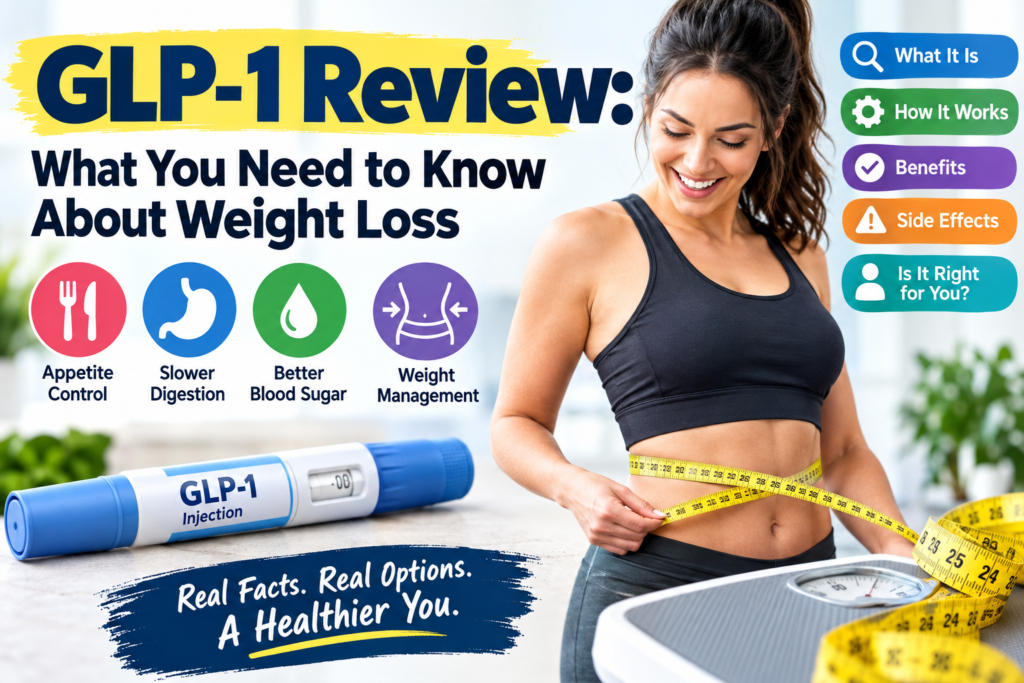
GLP-1 has become one of the most discussed topics in modern weight management. From prescription medications to social-media conversations about appetite control, many people are asking the same question: What is GLP-1, and can it really help with weight loss?
GLP-1 stands for glucagon-like peptide-1, a hormone naturally produced in the body. It plays an important role in appetite regulation, digestion, and blood sugar control. After eating, GLP-1 helps communicate with the brain and digestive system, contributing to feelings of fullness and influencing how quickly food moves through the stomach.
Certain prescription medications called GLP-1 receptor agonists mimic some of these effects. Depending on the medication, they may be prescribed to manage type 2 diabetes, obesity, or chronic weight management.
But GLP-1 is not simply a “weight-loss hormone.” Understanding what it does, how medications work, who may benefit, and what risks exist is important before considering treatment.
What Is GLP-1?
GLP-1 is an incretin hormone released primarily by the digestive system after food is consumed. One of its important functions is helping the body respond appropriately to a meal.
It can:
- Support insulin release when blood sugar rises
- Reduce the release of glucagon
- Slow stomach emptying
- Increase feelings of fullness
- Influence appetite and food intake
These effects can make a person feel satisfied after eating and may reduce the desire to consume as much food.
This is one reason researchers became interested in GLP-1 for weight loss and as a potential treatment pathway for metabolic health and obesity. GLP-1-based treatments may help support appetite regulation, reduced food intake, and sustainable weight-management efforts when used appropriately under medical guidance.
How Does GLP-1 Help With Weight Loss?
The connection between GLP-1 and weight loss is largely related to appetite, fullness, and food intake.
When activity is increased through certain medications, a person may experience greater feelings of satiety. Food can also remain in the stomach longer, which may contribute to feeling full for a longer period.
Medicines can also act on areas of the brain involved in appetite and food intake. As a result, some people find that they are less hungry or have fewer cravings.
This doesn’t mean medications directly “burn fat” in the same way a stimulant might be marketed to do. Instead, their effects can make it easier for some people to reduce overall food intake and maintain a calorie deficit.
GLP-1 vs. GLP-1 Medications: What’s the Difference?
This distinction is important.
GLP-1 is a naturally occurring hormone.
receptor agonists are medications designed to activate the body’s receptors and reproduce some of the hormone’s effects.
For example, semaglutide is a receptor agonist. Liraglutide is another medication in this category. Tirzepatide is different because it activates both GIP and receptors rather than acting solely on.
So when people talk about “taking GLP-1,” they are usually referring to a medication that acts on the pathway—not the hormone itself.
Which GLP-1 Medications Are Used for Weight Management?
Several medications interact with the GLP-1 pathway, although their approved uses and formulations differ.
Examples include:
Semaglutide
Semaglutide is a GLP-1 receptor agonist. Different formulations and brand names have different approved indications. Wegovy is approved for chronic weight management in appropriate patients, while Ozempic is primarily used for type 2 diabetes.
Liraglutide
Liraglutide is another GLP-1 receptor agonist. It is used in certain diabetes and weight-management settings, depending on the formulation and indication.
Tirzepatide
Tirzepatide works differently from traditional GLP-1-only medications because it activates both GIP and receptors. It has been used in diabetes care and is also available for chronic weight management under an FDA-approved indication.
Because medications can have different doses, indications, contraindications, and administration schedules, they should not be treated as interchangeable.
What Kind of Weight Loss Can GLP-1 Medications Provide?
Weight-loss results vary considerably from person to person.
Factors that can influence results include:
- The specific medication
- Dosage
- Treatment duration
- Starting weight
- Diet
- Physical activity
- Medical conditions
- Other medications
- Individual response
Clinical evidence has shown that some modern anti-obesity medications can produce substantial weight loss in appropriate patients. However, the amount of weight someone loses should not be predicted from another person’s experience.
NIDDK notes that weight-loss medicines may be appropriate when lifestyle changes alone aren’t enough, but they should generally be used alongside healthy eating and physical activity.
Is GLP-1 a Magic Weight-Loss Solution?
No.
The popularity of medications can sometimes make them sound like a quick or effortless solution. In reality, weight management is more complicated.
Body weight is influenced by appetite, genetics, sleep, physical activity, medications, health conditions, environment, and many other factors.
Weight-loss medications are generally considered tools within a broader treatment plan, rather than replacements for healthy habits. Mayo Clinic also emphasizes that weight-loss medicines are intended to be used along with diet, exercise, and behavioral changes.
For some people, medication can make those lifestyle changes easier to maintain by reducing hunger and increasing satiety.
Common Benefits of GLP-1 Weight-Loss Medications
For appropriate candidates, based treatment may offer several benefits.
1. Reduced Appetite
One of the most noticeable effects can be reduced hunger. Some people report feeling satisfied with smaller meals.
2. Greater Fullness
Because GLP-1 activity can slow stomach emptying and influence appetite signals, meals may feel more satisfying.
3. Weight Reduction
Reduced appetite and food intake can contribute to meaningful weight loss when treatment is effective.
4. Blood Sugar Support
receptor agonists can improve blood glucose regulation and are widely used in type 2 diabetes management.
5. Potential Improvement in Weight-Related Health
Losing excess weight can have broader health benefits, including improvements in some obesity-related conditions. The exact benefits depend on the individual’s health situation and treatment.
What Are the Side Effects?
Medications can cause side effects, particularly involving the digestive system.
Commonly reported effects include:
- Nausea
- Vomiting
- Diarrhea
- Constipation
- Bloating
- Gas
- Abdominal discomfort
- Indigestion
- Reduced appetite
Mayo Clinic notes that digestive side effects are common and may improve as the body adjusts to treatment.
Eating smaller meals, staying hydrated, and following the prescribing professional’s instructions may help some people manage mild digestive symptoms.
However, severe or persistent symptoms should be discussed with a healthcare professional.
Are There More Serious Risks?
Although many side effects are mild, GLP-1 medications can have more serious risks.
Depending on the medication and individual circumstances, concerns may include severe gastrointestinal symptoms, gallbladder problems, pancreatitis, kidney-related complications, allergic reactions, or low blood sugar when combined with certain diabetes medications.
This is why medications should be taken under appropriate medical supervision.
Anyone considering these medications should provide their healthcare professional with a complete medical history, including current medications and supplements.
Who May Be a Candidate for GLP-1 Weight Management?
based weight-loss medications are not appropriate for everyone.
Healthcare professionals typically consider factors such as:
- Body weight and BMI
- Existing health conditions
- Diabetes status
- Current medications
- Previous weight-loss attempts
- Family and personal medical history
- Potential medication interactions
- Possible contraindications
For adults with overweight or obesity, weight-management treatment may involve lifestyle changes, medication, surgery, or a combination depending on individual circumstances.
A healthcare professional can determine whether medication is appropriate.
What Happens When You Stop Taking a GLP-1 Medication?
Another important question is what happens after treatment ends.
Weight regain can occur after discontinuing weight-loss medication. Mayo Clinic notes that many people regain some of the weight they lost after stopping weight-loss drugs, although lifestyle habits may help limit weight regain.
This doesn’t necessarily mean medication has failed. Obesity is considered a chronic health condition, and long-term management may sometimes be necessary.
The appropriate length of treatment depends on the medication, response, side effects, and individual health goals.
GLP-1 and Diet: What Should You Eat?
Taking a medication doesn’t eliminate the importance of nutrition.
A balanced eating pattern can help support overall health during weight management. Depending on individual needs, a diet may emphasize:
- Protein-rich foods
- Vegetables and fruits
- Whole grains
- Fiber-rich foods
- Healthy fats
- Adequate hydration
Large, high-fat meals may worsen digestive symptoms for some people taking medications. Smaller meals may be easier to tolerate, particularly during the adjustment period.
A registered dietitian or healthcare professional can help create an eating plan appropriate for your individual needs.
GLP-1 and Exercise
Exercise remains valuable even when medication is part of a weight-management plan.
Regular physical activity can support:
- Muscle strength
- Cardiovascular health
- Mobility
- Energy levels
- Weight maintenance
- Overall metabolic health
The ideal exercise routine depends on your current fitness level and health status.
For someone beginning a weight-management program, gradually increasing activity may be more sustainable than immediately attempting intense workouts.
Are Over-the-Counter “GLP-1 Supplements” the Same?
No.
This is an important distinction for consumers.
Prescription receptor agonists are medications that have undergone regulatory review for specific medical indications.
An over-the-counter supplement marketed as a “GLP-1 booster,” “natural GLP-1,” or “GLP-1 support formula” is not automatically equivalent to a prescription medication.
Some supplements may contain ingredients marketed for appetite, blood sugar, or metabolic support, but that does not mean they reproduce the clinical effects of prescription receptor agonists.
Consumers should carefully check ingredient labels and avoid assuming that a supplement provides the same results as an approved medication.
GLP-1 Weight Loss: Pros and Cons
| Potential Advantages | Important Considerations |
|---|---|
| May reduce appetite | Digestive side effects are common |
| Can increase feelings of fullness | Not appropriate for everyone |
| May support significant weight loss | Requires medical evaluation |
| Can improve blood sugar control | Cost and insurance coverage may vary |
| May help with weight-related conditions | Weight can return after stopping |
The right choice depends on the individual’s health, goals, risks, and treatment options.
How to Approach GLP-1 Weight Loss Safely
If you’re considering GLP-1 treatment, start with a healthcare professional rather than purchasing medication from an unknown source.
A responsible approach includes:
- Discuss your weight and health goals.
- Review your medical history.
- Tell your provider about all medications and supplements you take.
- Ask whether you are an appropriate candidate.
- Understand the expected benefits and possible side effects.
- Follow the prescribed dosage and schedule.
- Maintain appropriate nutrition and physical activity.
- Report concerning or severe symptoms promptly.
Avoid changing your medication dose or stopping treatment without discussing it with your healthcare provider.
Frequently Asked Questions About GLP-1
What does GLP-1 stand for?
stands for glucagon-like peptide-1. It is a naturally occurring hormone involved in appetite regulation, digestion, insulin response, and blood glucose control.
Does GLP-1 burn fat?
Not directly in the way many advertisements suggest. Medications primarily influence appetite, fullness, digestion, and blood glucose regulation. These effects can reduce food intake and contribute to weight loss.
How quickly does GLP-1 cause weight loss?
Results vary. Some people notice appetite changes relatively early, while meaningful weight reduction generally develops over time. The response depends on the medication, dosage, treatment duration, and individual factors.
Can you take GLP-1 medication without changing your diet?
Medication can help with appetite and weight management, but it is generally used alongside healthy eating and physical activity rather than as a replacement for them.
Do GLP-1 medications have side effects?
Yes. Nausea, vomiting, diarrhea, constipation, bloating, and abdominal discomfort are among the commonly reported effects. More serious complications can occur less frequently, so medical supervision is important.
Will I regain weight after stopping GLP-1 medication?
Some people regain weight after discontinuing treatment. Maintaining healthy eating, physical activity, and other long-term weight-management strategies may help, but individual outcomes vary.
Final Verdict: Is GLP-1 Worth Considering for Weight Loss?
It has changed the conversation around medical weight management because it targets biological pathways involved in appetite, fullness, digestion, and blood sugar regulation.
For appropriate patients, GLP-1 receptor agonists can be an effective part of a comprehensive weight-management strategy. However, they are prescription medications, not quick-fix solutions, and they are not suitable for everyone.
The safest approach is to discuss your goals and medical history with a qualified healthcare professional. If medication is appropriate, it should be combined with sustainable nutrition, physical activity, and ongoing health monitoring.
Most importantly, don’t judge a treatment by social-media before-and-after stories alone. Individual results, side effects, and long-term needs can differ considerably.
Medical Disclaimer
This article is intended for informational and educational purposes only and does not replace professional medical advice, diagnosis, or treatment. Receptor agonists are prescription medicines with specific indications, risks, and contraindications. Speak with a qualified healthcare professional before starting, changing, or stopping any medication.
Research & References
- National Institute of Diabetes and Digestive and Kidney Diseases (NIDDK): Weight-management treatment and medications.
- NIDDK: GLP-1 medicines and diabetes treatment.
- NIDDK: Weight-management medications and GLP-1/GIP therapies.
- Mayo Clinic: Prescription weight-loss drugs and treatment considerations.
- Mayo Clinic: Common and serious side effects associated with weight-loss medications.