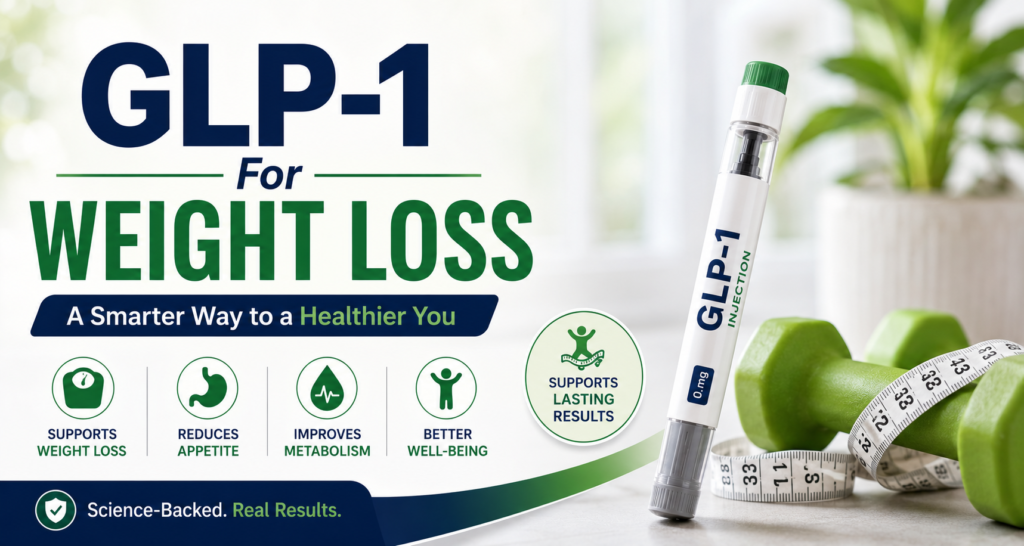
GLP-1 Weight Loss
Over the past few years, GLP-1 medications have become one of the most discussed topics in the world of weight loss. From celebrities and influencers to healthcare professionals, everyone seems to be talking about the impressive results some people have achieved with these treatments.
But while the success stories are everywhere, many people still have important questions. How do GLP-1 medications actually work? How much weight can you realistically lose? Are there side effects? And perhaps most importantly, are they the right choice for everyone?
If you’re considering GLP-1 treatment for weight management, understanding the facts can help you make a more informed decision. This guide covers everything you should know before starting your journey.
What Does GLP-1 Mean?
GLP-1 stands for Glucagon-Like Peptide-1, a hormone naturally produced in the intestines after eating.
This hormone plays several important roles in the body, including:
- Regulating appetite
- Supporting blood sugar control
- Slowing digestion
- Helping you feel full after meals
- Reducing food cravings
GLP-1 medications are designed to mimic the effects of this natural hormone. As a result, many people find it easier to eat less without constantly feeling hungry.
Why GLP-1 Medications Have Become So Popular
Traditional weight loss approaches often focus solely on willpower, calorie counting, and exercise. While these strategies can be effective, many individuals struggle with persistent hunger and cravings that make long-term weight management difficult.
GLP-1 medications address one of the biggest obstacles to weight loss: appetite regulation.
Many users report that for the first time in years they feel more in control of their eating habits. Instead of constantly thinking about food, they find it easier to make healthier choices and maintain smaller portions.
This shift in appetite control is one reason why these medications have attracted so much attention.
How GLP-1 Supports Weight Loss
Weight loss occurs when the body burns more calories than it consumes over time.
GLP-1 medications help create this calorie deficit by influencing hunger and satiety signals.
Reduced Appetite
Many users notice they simply feel less hungry throughout the day.
Earlier Fullness
Meals often become smaller because fullness occurs sooner.
Fewer Cravings
Some people experience a reduction in cravings for sugary, highly processed foods.
Better Portion Control
Because hunger decreases, maintaining reasonable portion sizes becomes easier.
Together, these effects may help support gradual and sustainable weight loss.
What Weight Loss Results Can You Expect?
One of the most common questions is how much weight people can realistically lose.
The answer varies based on several factors, including starting weight, lifestyle habits, medication dosage, and individual response.
Clinical studies have shown that many people lose approximately:
- 5% of body weight within the first few months
- 10% to 15% within six to twelve months
- Up to 20% or more in some cases
For example:
| Starting Weight | 10% Loss | 15% Loss | 20% Loss |
|---|---|---|---|
| 180 lbs | 18 lbs | 27 lbs | 36 lbs |
| 220 lbs | 22 lbs | 33 lbs | 44 lbs |
| 250 lbs | 25 lbs | 37.5 lbs | 50 lbs |
It’s important to remember that these results typically occur over months rather than weeks.
The First Month: What Usually Happens?
Many people expect dramatic results immediately after beginning treatment.
In reality, the first month is often an adjustment period.
Common experiences include:
- Reduced hunger
- Smaller portions
- Fewer cravings
- Mild weight loss
- Learning new eating habits
Some users lose several pounds during the first month, while others notice only small changes.
This variation is completely normal.
Common Side Effects of GLP-1 Medications
Like any medication, GLP-1 treatments may cause side effects.
Many side effects occur because digestion slows down.
Some commonly reported effects include:
Nausea
This is one of the most frequently reported side effects, especially when starting treatment or increasing dosage.
Fullness
Many people feel full sooner than usual.
Constipation
Slower digestion may contribute to bowel changes.
Diarrhea
Some individuals experience digestive discomfort instead.
Fatigue
Temporary tiredness may occur during the adjustment phase.
Fortunately, many side effects improve as the body adapts.
Tips for Managing Side Effects
Several strategies may help reduce discomfort.
Eat Smaller Meals
Large meals can sometimes worsen digestive symptoms.
Stay Hydrated
Adequate water intake supports digestion and overall health.
Eat Slowly
Giving your body time to recognize fullness may reduce nausea.
Prioritize Protein
Protein-rich foods can support satiety and muscle maintenance during weight loss.
Follow Your Prescribed Plan
Gradual dosage increases are often designed to minimize side effects.
Lifestyle Habits That Improve Results
Although GLP-1 medications can be highly effective, they work best when combined with healthy habits.
Focus on Nutrient-Dense Foods
Build meals around:
- Vegetables
- Fruits
- Lean proteins
- Whole grains
- Healthy fats
Stay Active
Regular movement supports both physical and mental health.
Walking, cycling, swimming, and strength training are all excellent options.
Prioritize Sleep
Poor sleep can increase hunger hormones and make weight management more difficult.
Manage Stress
Stress-related eating can interfere with progress, even when appetite is reduced.
Why Some People Lose More Weight Than Others
Weight loss results are highly individual.
Factors that influence outcomes include:
- Genetics
- Age
- Hormone levels
- Starting weight
- Physical activity
- Dietary choices
- Sleep quality
- Medical conditions
Comparing your progress to someone else’s can lead to unrealistic expectations.
Instead, focus on your own long-term improvements.
What Happens If Weight Loss Slows Down?
Many users eventually experience a plateau.
This is a normal part of the weight loss process.
As body weight decreases, calorie needs change, and the body naturally adapts.
If progress slows, consider:
- Increasing daily movement
- Reviewing portion sizes
- Prioritizing protein
- Improving sleep habits
- Staying consistent
Plateaus do not necessarily mean the medication has stopped working.
Can You Regain Weight After Stopping GLP-1?
Weight regain is possible if healthy habits are not maintained after treatment ends.
Because GLP-1 medications help regulate appetite, hunger may gradually return once the medication is discontinued.
This is why experts often recommend focusing on long-term behavior changes rather than relying solely on medication.
Sustainable habits remain the foundation of lasting weight management.
Benefits Beyond Weight Loss
Many people experience improvements that go beyond the number on the scale.
Potential benefits may include:
- Better blood sugar management
- Reduced food cravings
- Improved confidence
- Better mobility
- Increased energy
- Healthier eating patterns
- Improved quality of life
For some individuals, these changes become even more meaningful than the weight loss itself.
Is GLP-1 Right for Everyone?
GLP-1 medications are not suitable for every individual.
A healthcare provider can help determine whether this treatment aligns with your health history, goals, and overall medical needs.
The decision should always be based on personalized medical advice rather than social media trends or celebrity success stories.
Final Thoughts
GLP-1 medications Foe Weight Loss have changed the conversation around weight management by helping many individuals address one of the biggest challenges in weight loss: controlling hunger and cravings.
While these medications can produce impressive results, success rarely happens overnight. Meaningful weight loss usually develops gradually over months of consistent treatment and healthy lifestyle choices.
The most successful users often view GLP-1 treatment as a tool rather than a shortcut. When combined with balanced nutrition, regular exercise, quality sleep, and realistic expectations, these medications can support long-term health and sustainable weight management.
Frequently Asked Questions
How quickly do GLP-1 medications work?
Many people notice appetite changes within days or weeks, while significant weight loss often develops over several months.
Can I lose weight without dieting on GLP-1?
The medication may reduce appetite, but healthy eating habits generally improve results and support long-term success.
Are GLP-1 side effects permanent?
Most side effects are temporary and often improve as the body adjusts to treatment.
Can exercise improve GLP-1 weight loss results?
Yes. Exercise supports fat loss, preserves muscle mass, and improves overall health.
Do all GLP-1 users lose weight?
No. Individual responses vary based on lifestyle habits, medical conditions, dosage, and other factors.