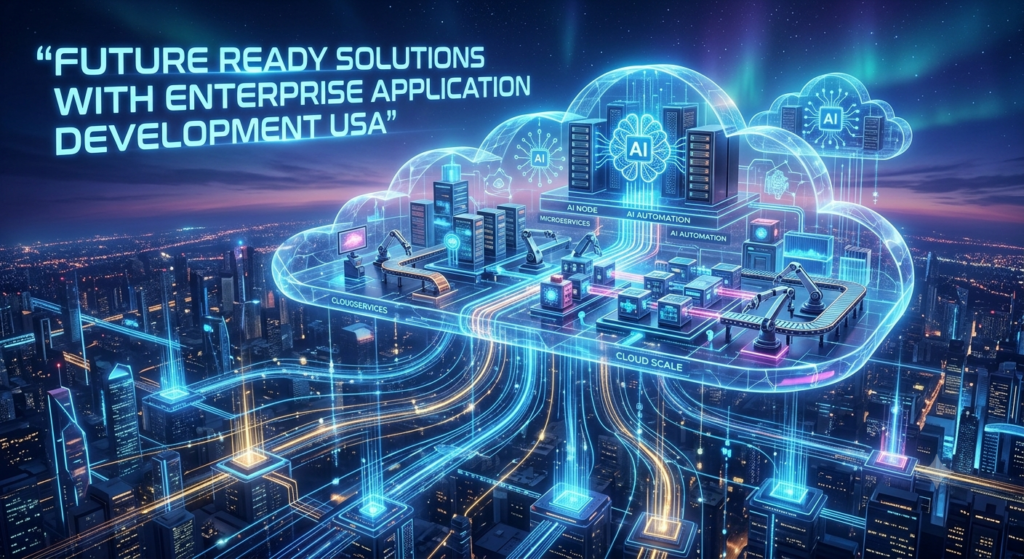
Businesses today are evolving faster than ever, and digital transformation has become a necessity rather than an option. The demand for enterprise application development USA is growing rapidly as organizations look for scalable, secure, and intelligent software solutions that can streamline operations and improve decision-making. Companies across industries are investing in advanced enterprise systems to stay competitive in a fast-changing market.
Understanding Enterprise Application Development
Enterprise application development refers to the process of building large-scale software systems designed to support complex business operations. These applications are created to manage data, automate workflows, and integrate different business functions into a unified system.
Unlike simple software tools, enterprise applications are built for scalability, performance, and long-term reliability. They help organizations manage everything from customer relationships and supply chains to financial systems and human resources.
Modern enterprise solutions are no longer limited to on-premise systems. Cloud-based architecture, microservices, and API-driven development have transformed how these applications are designed and deployed.
Why Businesses in the USA Are Investing in Enterprise Applications
The United States is one of the most advanced technology markets in the world. Businesses here are early adopters of innovative software solutions, especially when it comes to enterprise systems.
One of the main reasons for this investment is operational efficiency. Companies want systems that reduce manual work, eliminate errors, and automate repetitive processes.
Another major factor is data-driven decision-making. Enterprise applications help organizations collect and analyze large volumes of data, enabling leaders to make informed decisions quickly.
Security is also a top priority. With increasing cyber threats, businesses require robust systems that protect sensitive data and ensure compliance with industry regulations.
Key Features of Modern Enterprise Applications
Enterprise applications today are built with advanced technologies that improve performance and flexibility.
Scalability and Performance
Modern systems are designed to handle increasing workloads without compromising speed or efficiency. This ensures smooth performance even as businesses grow.
Cloud Integration
Cloud technology allows businesses to access applications from anywhere while reducing infrastructure costs. It also improves collaboration across teams and locations.
Automation Capabilities
Automation plays a major role in reducing manual tasks. From invoice processing to customer support workflows, enterprise systems help businesses save time and resources.
Data Security
Security features such as encryption, multi-factor authentication, and role-based access control ensure that sensitive information remains protected.
System Integration
Enterprise applications are designed to integrate with existing tools and platforms. This creates a unified digital ecosystem where data flows seamlessly across departments.
Technologies Driving Enterprise Application Development
The evolution of enterprise software is powered by several advanced technologies that enhance functionality and user experience.
Artificial Intelligence
AI is being integrated into enterprise systems to improve analytics, automate decisions, and enhance customer interactions. It allows businesses to predict trends and optimize operations.
Cloud Computing
Cloud platforms provide flexibility, scalability, and cost efficiency. They enable businesses to deploy applications without heavy infrastructure investments.
Microservices Architecture
Instead of building one large system, microservices break applications into smaller independent components. This improves scalability and makes maintenance easier.
API-First Development
APIs allow different software systems to communicate with each other. This is essential for building connected enterprise ecosystems.
Blockchain Integration
Some enterprise systems use blockchain to enhance transparency, security, and traceability, especially in industries like finance and supply chain management.
Benefits of Enterprise Application Development
Organizations that invest in enterprise applications gain several long-term advantages.
One of the biggest benefits is improved productivity. Employees can focus on high-value tasks instead of repetitive manual work.
Another advantage is better collaboration. Enterprise systems centralize data, making it easier for teams to work together efficiently.
Cost optimization is also a major benefit. Although initial development may require investment, long-term savings from automation and efficiency are significant.
Additionally, businesses gain better control over operations through real-time monitoring and reporting systems.
Industry Applications of Enterprise Software
Enterprise applications are used across multiple industries, each benefiting in unique ways.
In healthcare, enterprise systems help manage patient records, appointments, and billing processes. They also support compliance with strict regulations.
In finance, these applications are used for risk management, fraud detection, and transaction processing.
Retail businesses use enterprise software for inventory management, customer relationship management, and supply chain optimization.
Manufacturing companies rely on these systems to monitor production lines, manage resources, and ensure quality control.
Even government organizations use enterprise applications to manage public services, data processing, and administrative tasks.
Challenges in Enterprise Application Development
Despite its advantages, enterprise application development comes with challenges that businesses must address carefully.
One common challenge is system complexity. Enterprise applications often involve multiple modules and integrations, making development and maintenance more demanding.
Another challenge is data management. Handling large volumes of data requires strong infrastructure and proper architecture design.
Security concerns also remain critical. As systems become more connected, protecting sensitive information becomes more complex.
Additionally, aligning technology with business goals can be difficult without proper planning and expertise.
Future Trends in Enterprise Application Development
The future of enterprise applications is being shaped by innovation and emerging technologies.
One major trend is the rise of low-code and no-code platforms. These tools allow faster development and reduce dependency on traditional coding.
Another trend is increased use of artificial intelligence for predictive analytics and intelligent automation.
Edge computing is also gaining importance as businesses require faster processing closer to data sources.
Personalized enterprise solutions are becoming more common, allowing businesses to tailor applications according to specific needs.
Sustainability is also becoming a focus, with companies adopting energy-efficient and environmentally friendly technology solutions.
Choosing the Right Development Partner
Selecting the right partner for enterprise application development is crucial for success. Businesses should look for companies with proven experience in handling large-scale projects.
Technical expertise is essential, especially in areas like cloud computing, AI integration, and system architecture design.
A strong development partner should also focus on scalability and long-term support rather than just initial deployment.
Communication and understanding of business requirements play a key role in ensuring project success.
Conclusion
Enterprise applications are at the core of modern digital transformation. They help businesses streamline operations, improve decision-making, and enhance overall efficiency. As technology continues to evolve, companies that invest in advanced enterprise solutions will be better positioned for long-term success.
Organizations that embrace innovation today will lead the markets of tomorrow. With the right strategy and technology partner, businesses can unlock new levels of productivity and growth.
we are zylo specializes in delivering advanced enterprise application solutions tailored to modern business needs. Their expertise in scalable architecture, cloud integration, and custom software development helps organizations build powerful systems that drive efficiency and long-term digital success.