A private well provides essential water for drinking, cooking, bathing, laundry, and everyday household activities. When the water supply suddenly stops, even a short interruption can disrupt your routine. Problems involving well pumps, pressure tanks, electrical components, or water lines require careful troubleshooting to identify the cause and restore reliable service.
Homeowners seeking emergency well services in Iowa City, IA should recognize the warning signs of equipment failure and understand which precautions to take before a technician arrives. Some problems involve relatively simple components, while others require specialized testing or repairs. Acting quickly without attempting unsafe repairs helps protect your equipment and prevents avoidable damage.
Common Signs of a Well System Emergency
A failing well system does not always stop working without warning. Changes in water pressure, pump operation, or water quality can indicate a developing problem.
Watch for these symptoms:
A. Complete water loss: Faucets stop delivering water even though the property’s plumbing fixtures remain connected.
B. Low water pressure: Water flows weakly from several fixtures rather than one isolated faucet.
C. Rapid pump cycling: The pump repeatedly starts and stops over short intervals.
D. Unusual pump noises: Grinding, humming, or other unfamiliar sounds require investigation.
E. Air coming from faucets: Air in the plumbing can indicate a supply or pressure problem, although several causes are possible.
F. Unexpected changes in water appearance: Cloudiness, sediment, discoloration, or unusual odors can signal a water-quality concern.
These symptoms do not all indicate the same failure. Accurate diagnosis is important because replacing a pump without identifying the underlying cause can lead to recurring problems.
What to Do When Your Water Stops Working
When your well system fails, start with simple observations rather than dismantling equipment.
First, determine whether the outage affects the entire property or only one fixture. If every faucet has stopped delivering water, the problem might involve the well, pump, pressure tank, power supply, or main plumbing line.
Next, check whether other electrical equipment in the home is operating normally. If the pump’s circuit breaker has tripped, do not repeatedly reset it. A recurring trip can indicate an electrical fault that requires professional evaluation.
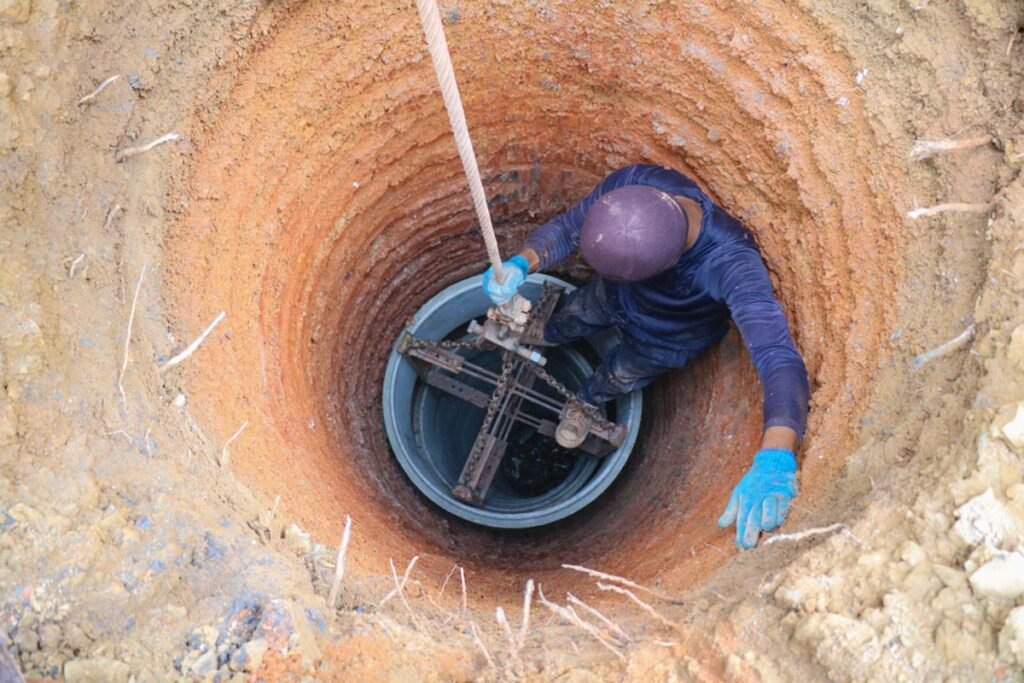
Listen for unusual pump activity, but avoid opening electrical enclosures or touching exposed wiring. Do not enter a well pit or confined well enclosure to investigate a problem.
If water has an unusual odor, color, or appearance, stop using it for drinking and food preparation until the concern has been evaluated. Follow local public health guidance regarding testing and safe alternative water supplies.
Why Well Pump Problems Require Professional Diagnosis
A private well system contains several components that work together to deliver water at the correct pressure.
Well Pump
The pump moves groundwater into the household plumbing system. Pump failure, damaged wiring, mechanical wear, or inadequate water availability can interrupt delivery.
Two common types of well pumps are submersible pumps and jet pumps. A submersible pump sits underwater inside the well, while a jet pump is typically installed above ground and draws water through a connected pipe system. Identifying which type you have can help you describe the equipment and its symptoms when contacting a technician.
Pump problems can have different causes depending on the equipment installed. Avoid attempting to remove, disassemble, or repair the pump yourself. A qualified professional can determine whether the issue involves the pump, electrical supply, water levels, or another system component.
Pressure Tank
The pressure tank helps regulate water pressure and reduces unnecessary pump cycling. Problems involving the tank’s internal components, pressure settings, or air charge can affect system performance.
Many conventional residential well systems use pressure-switch settings such as 30/50 PSI or 40/60 PSI. These numbers represent the pump’s cut-in and cut-out pressures. For example, a 30/50 PSI setting generally means the pump starts when pressure drops to approximately 30 PSI and stops when pressure reaches approximately 50 PSI.
The actual settings depend on the system, so check the pressure switch or equipment documentation rather than assuming your system uses one of these combinations. A pressure gauge can help you observe system pressure and provide useful information to your technician. Do not change the pressure-switch settings without understanding the equipment requirements.
Pressure Tank Air Charge Check
Checking the pressure tank’s air charge is a maintenance task some homeowners can perform if the tank is accessible and the manufacturer’s instructions permit it.
Before checking the air charge, switch off the pump’s electrical supply at the appropriate breaker and verify that the system is de-energized. Drain the water pressure from the system according to the manufacturer’s instructions. Use a suitable pressure gauge at the tank’s air valve to measure the air charge.
For many conventional bladder-style pressure tanks, the recommended air charge is approximately 2 PSI below the pump’s cut-in pressure, but the tank manufacturer’s specifications and the actual system configuration should determine the correct setting.
If water comes out of the tank’s air valve, the internal bladder may be damaged. Stop the inspection and contact a qualified technician. Do not open electrical enclosures, work on energized equipment, or attempt repairs you are not equipped to perform. If you are unsure how to check the air charge safely, leave the task to a professional.
Pressure Switch and Controls
Pressure switches control pump operation in many conventional systems. Worn contacts, damaged components, or incorrect settings can prevent the pump from operating as intended.
Electrical Supply
A pump depends on a suitable electrical supply and correctly functioning protection equipment. Electrical problems require careful testing by a qualified professional.
Well Yield and Water Levels
A sudden loss of water can also involve a low water level, changes in well yield, or excessive demand. A pump replacement alone will not necessarily resolve these conditions.
Professional troubleshooting helps distinguish among these causes and identify the most appropriate repair.
Preventing Water Quality Problems After Repairs
Restoring water flow does not automatically confirm that the water is safe to drink. Well repairs, flooding, damaged well components, or changes in water appearance can justify additional testing.
Private well owners should arrange water testing according to local recommendations and the specific circumstances of their system. Testing is particularly important after flooding or suspected contamination.
Keep the wellhead properly protected and maintain suitable drainage around the well. Surface water should flow away from the well rather than collect around its opening.
If contamination is suspected, follow instructions from the appropriate public health authority or water-testing professional before resuming normal drinking-water use.
How to Reduce the Risk of Future Well Emergencies
Preventive maintenance helps identify equipment deterioration before it causes a complete water outage.
Schedule periodic inspections of the pump system, pressure tank, electrical components, and accessible plumbing. Record recurring pressure problems and unusual operating sounds so technicians can identify patterns.
Protect exposed plumbing from freezing temperatures, especially during Iowa winters. Insulate vulnerable pipes where appropriate and maintain suitable temperatures in areas containing water equipment.
Avoid excessive simultaneous water use if your well has limited capacity. Irrigation, laundry, and other high-demand activities can place additional stress on some systems.
Maintain records of pump specifications, installation dates, previous repairs, and water tests. These details make future troubleshooting more efficient.
Conclusion
A dependable well system supports your household’s daily needs, so sudden water loss deserves prompt attention. Recognizing warning signs, avoiding unsafe troubleshooting, and arranging appropriate testing help protect your water supply and equipment.
If your property experiences a pump failure, persistent pressure problems, or an unexplained water outage, contact a qualified well service professional. Explain the symptoms and request a diagnostic assessment to determine the safest path toward restoring reliable water service.