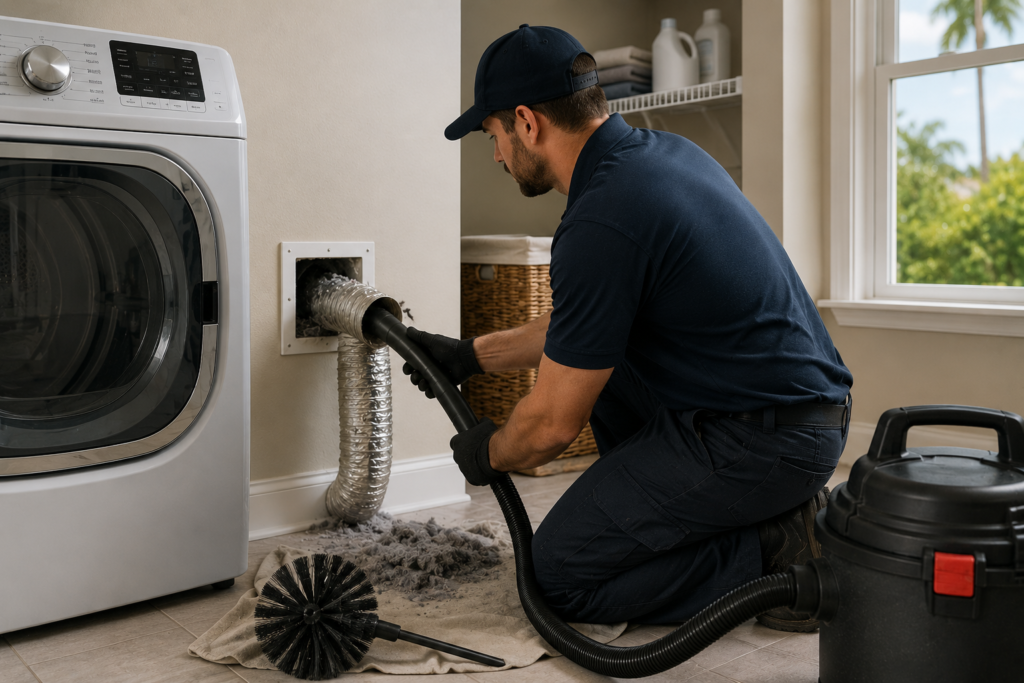
Your dryer is one of the hardest-working appliances in your home, but it often goes unnoticed until problems appear. Over time, lint, dust, and debris collect inside the vent system, reducing airflow and forcing your dryer to work harder than necessary. In a warm and humid climate like Hillsborough County, FL, regular maintenance helps prevent unnecessary wear while improving household safety and energy efficiency.
Many homeowners delay vent maintenance because the warning signs develop gradually. However, scheduling dryer vent cleaning in Hillsborough, FL before major issues arise can help protect your home, improve appliance performance, and reduce drying times. A clean vent system also allows hot air and moisture to escape properly, helping your dryer operate as intended.
Why Dryer Vent Cleaning in Hillsborough County, FL Matters
Dryer vents naturally collect lint every time you run a load of laundry. Even if you clean the lint trap after every cycle, fine particles still travel through the vent and build up over time.
Common risks of clogged dryer vents include longer drying cycles, higher utility bills, overheating appliances, excess moisture inside the laundry area, and increased fire hazards caused by lint buildup. According to the National Fire Protection Association, an estimated average of 13,820 home structure fires involving dryers occurred annually from 2014–2018. Failure to clean was responsible for 32% of dryer fires, making it the leading contributing factor. Routine maintenance helps eliminate these concerns before they become expensive repairs or safety issues.
Warning Signs Your Dryer Vent Needs Attention
Many homeowners overlook the early indicators of restricted airflow. Recognizing these symptoms allows you to address the problem before it worsens.
Watch for these signs:
Clothes remain damp after one drying cycle.
The dryer feels unusually hot during operation.
A burning smell appears while drying clothes.
The laundry room becomes excessively warm.
Lint collects around the outdoor vent opening.
Drying cycles continue getting longer over time.
If you notice one or more of these issues, your vent system may require professional cleaning.
Benefits of Routine Dryer Vent Maintenance
Regular vent cleaning does more than improve airflow. It also supports the long-term performance of your appliance while creating a safer home environment.
Improved airflow can help your dryer complete cycles more efficiently, reduce unnecessary energy use, limit wear on dryer components, and lower the chance of unexpected breakdowns. Keeping the vent clear also helps maintain better conditions in the laundry area and can contribute to a longer appliance lifespan. Whirlpool similarly notes that restricted venting can increase drying times and affect dryer performance. Keeping the vent clear allows your dryer to operate with less strain, helping you save time and money throughout the year.
How Often Should a Dryer Vent Be Cleaned?
As a general baseline, dryer vents should be professionally inspected and cleaned at least once every year, with more frequent service when conditions warrant it. Homes with large families, frequent laundry loads, pets, long vent runs, multiple bends, or recurring lint buildup may need cleaning more often. Manufacturer guidance can vary; for example, Whirlpool advises that outside venting should be cleaned every one to two years or as needed when drying performance decreases, while GE Appliances recommends cleaning at least annually. If drying times are increasing, the dryer becomes unusually hot, or a vent warning appears, do not wait for the next scheduled cleaning. Have the vent inspected promptly.
Maintenance Tips Between Professional Cleanings
While professional service removes deep lint buildup, simple habits help keep your vent system in better condition between appointments.
Clean the lint screen after every load, avoid overloading the dryer, and inspect the outdoor vent regularly for blockages. Keep the vent hood free of leaves, debris, and animal nests. Also, do not treat vent material as a matter of preference: dryer exhaust systems should use approved metal ducting in accordance with the dryer manufacturer’s instructions and applicable codes. Flexible plastic and foil-type venting can collapse, become crushed, and trap lint, increasing airflow restrictions and fire risk.
Technical Factors That Affect Dryer Vent Performance
Dryer vent performance depends on more than how much lint is visible. The length, configuration, bends, duct material, and termination point all affect airflow. Under the 2024 International Residential Code, the specified maximum exhaust duct length is 35 feet from the connection to the transition duct to the outlet terminal, excluding the transition duct. Where fittings are used, the allowable length is reduced according to their equivalent lengths. For example, a 4-inch-radius mitered 45-degree elbow accounts for 2 feet 6 inches, while a 4-inch-radius mitered 90-degree elbow accounts for 5 feet. Manufacturer installation instructions can establish the applicable length and fitting requirements for a particular dryer.
Vent termination also matters. The exhaust duct should terminate outdoors and, when manufacturer instructions do not specify another location, the termination should be at least 3 feet in any direction from building openings. The termination should have a backdraft damper, and screens should not be installed at the duct termination because they can restrict airflow. Gas dryers require additional attention. A gas dryer should never be operated without its proper venting because carbon monoxide fumes could enter the room. GE Appliances specifically warns against operating a gas dryer without the vent because carbon monoxide fumes could enter the room around the appliance.
Why Hillsborough County Homes Benefit From Regular Vent Cleaning
Homes throughout Hillsborough County, FL experience warm and humid conditions that make proper dryer ventilation especially important. A dryer exhausts hot, moist air, and restricted airflow slows the removal of that moisture. When moisture remains in the system longer, drying cycles can extend and the combination of moisture and lint can contribute to buildup along the duct walls. Manufacturer guidance confirms that restricted venting prevents hot, moist air from leaving efficiently and can increase drying times.
Families with larger households, pets, or frequent laundry loads often experience faster lint buildup than expected. Routine maintenance helps keep the system operating efficiently regardless of seasonal weather conditions.
Preventive care also supports consistent appliance performance during periods of heavy laundry use, reducing the likelihood of inconvenient breakdowns.
Conclusion
A properly maintained dryer vent protects both your appliance and your home. Regular inspections and cleaning improve efficiency, reduce energy waste, shorten drying times, and minimize safety risks caused by accumulated lint.
If your dryer takes longer to dry clothes or shows signs of restricted airflow, addressing the issue promptly can help prevent costly repairs while maintaining reliable performance. Investing in dryer vent cleaning in Hillsborough, FL is a practical way to improve household safety, extend the life of your dryer, and keep your laundry routine running smoothly.
Source URL – https://shorturl.at/5gjEU