A gold case looks wrong on a tool built for rocks, tanks, and salt water. It also looks right in a way steel never will.
A Solid Gold Dive Watch pairs a precious metal case and bracelet with a bezel, lume, a screw-down crown, and water resistance meant for diving. The metal changes how the watch feels, wears, and holds up.
For daily wear and light swimming, gold works. For hard diving and rough use, steel or titanium makes more sense.
The Short Answer
Yes, a solid gold case can meet dive watch specs. No, it does not make diving easier, safer, or cheaper.
Gold adds weight, softness, cost, and worry. It does not add water resistance, legibility, or timing accuracy.
What A Solid Gold Dive Watch Is, And Is Not
Gold on a watch can mean four builds. Price, durability, and value change with each one.
Solid Gold Means Alloy All The Way Through
Solid gold does not mean pure gold. Pure 24k gold is too soft for a case.
Most cases use 18k gold, which is 75 percent gold and 25 percent other metals such as copper and silver. Those alloys add strength and set color.
Plated, Capped, and Two-Tone Are Different Builds
Gold-plated watches carry a thin layer of gold over steel or brass. Gold capped watches bond a thicker sheet, often around 200 microns, to a steel case.
Two-tone watches mix steel and gold parts. If a listing does not say 14k or 18k, assume it is not solid.
Where Gold Helps Underwater
Gold does not rust. It resists corrosion from fresh and salt water well when seals stay intact.
A gold case can hold a strong water resistance rating, since depth rating comes from case design, gaskets, crown tubes, and crystal thickness.
Where Gold Works Against A Dive Watch
Weight You Feel All Day
Gold is dense. Pure gold measures about 19.3 grams per cubic centimeter. An 18k alloy measures about 15.2 to 15.6. Steel measures about 8.0.
A steel diver near 155 grams on a bracelet can pass 220 grams in solid gold.
Softness Shows Every Knock
Gold scratches more easily than steel. On the Vickers scale, 18k gold often falls near 120 to 170 HV. 316L steel often falls near 150 to 200 HV.
Polishing removes a thin layer of metal.
Price, Insurance, And Servicing Add Up
A gold automatic watch costs far more than the same design in steel. Much of that cost is metal, finishing, and market position, not better timekeeping.
Servicing needs care to protect the soft case. Professional refinishing often costs hundreds of dollars.
What About Swimming, Salt, and Chlorine?
You can swim in a solid gold watch rated for swimming if the seals are sound. The alloy metals matter more than the gold.
Copper and silver in 18k gold react more easily than pure gold. Repeated pool exposure can dull the finish. Salt water can leave deposits.
Rinse in fresh water after salt or pool use. Skip hot tubs, where heat and chemicals test seals harder than a normal swim. Have seals checked on schedule.
Who Should Buy One, and Who Should Skip It?
Buy solid gold if you want one watch for daily wear that can also handle a swim.
Skip it if you dive often, work with your hands, or want a watch you never think about. Two-tone gives a gold color with a steel case.
A More Practical Way To Get The Look
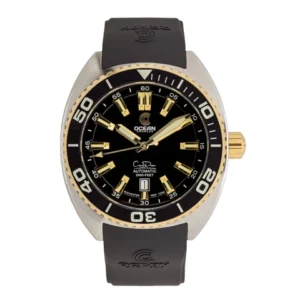
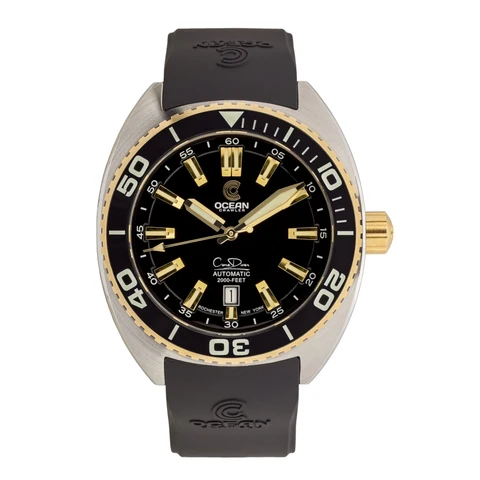
Steel keeps the dive watch idea intact. It resists knocks better, weighs less, and costs less to service. Ocean Crawler builds that kind of watch. Its steel automatic dive watches include models rated to 600 meters or 2000 feet, with a 5-year warranty. Prices for many models sit near 999 dollars to 1299 dollars.
The Bottom Line
A solid gold diver makes sense as a luxury gold watch you wear with care. It makes less sense as a hard-use dive tool.
Match the metal to the life the watch will lead. If most days mean desks, dinners, and pools, gold can work. If most days mean boats and rough gear, steel will serve you better.
Ocean Crawler shows how far a steel diver can go without the weight and worry of solid gold.
Frequently Asked Questions
Can You Dive With A Gold Case?
Yes, if the watch meets dive specs and seals are sound. Use a dive computer for depth and time. Treat the gold watch as a backup timer.
Does Gold Rust in Salt Water?
Gold does not rust. Salt can leave deposits and dull the finish. Rinse with fresh water after a swim and dry the case.
Is Gold Softer Than Steel?
In most watch alloys, yes. Gold picks up scratches faster than steel. The bezel, clasp, and case sides show marks first.
Does Solid Gold Hold Value Better Than Steel?
It can hold metal value, but resale depends on condition, demand, service history, and original price.
Should You Swim In A Chlorinated Pool With Gold?
Occasional swimming is fine in a sound watch. Rinse it right after. Limit long pool sessions, and skip hot tubs.