CAN Transceivers
Introduction:
The evolution of modern electronics has created a world where devices, machines, and systems must communicate continuously. From vehicles equipped with advanced electronic control units to automated industrial equipment managing complex processes, communication between different components has become essential for efficient operation.
Controller Area Network technology, commonly known as CAN, has become one of the most widely adopted communication standards for systems that require dependable data exchange. At the centre of every CAN communication network is a critical semiconductor component known as a CAN transceiver.
A CAN transceiver provides the essential connection between a CAN controller and the physical communication network. It converts digital information into electrical signals that can travel across the CAN bus and also converts received electrical signals back into digital data for processing.
Unlike simple communication interfaces, CAN transceivers are designed to operate in challenging environments where electrical interference, temperature changes, and continuous operation can affect performance. Their reliability and flexibility have made them a preferred solution across automotive, industrial, automation, medical, and embedded technology sectors.
As industries continue moving toward smarter and more connected systems, understanding the role of CAN transceivers has become increasingly important for engineers, manufacturers, and technology professionals.
What Is a CAN Transceiver and Why Is It Important?
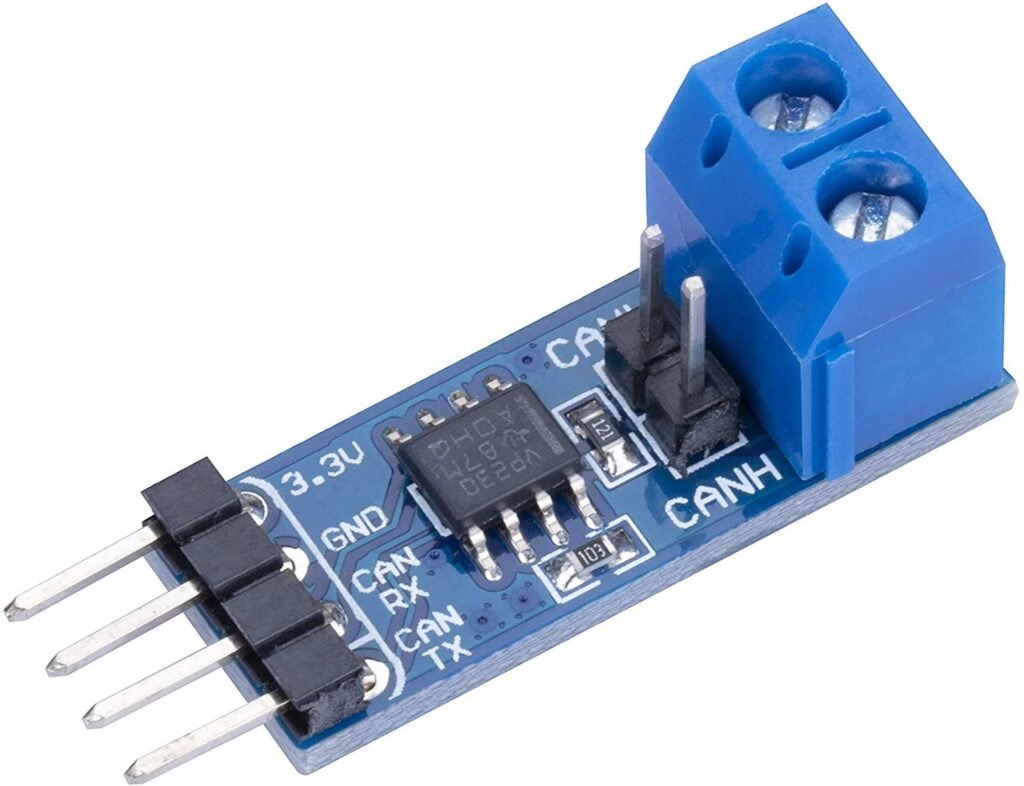
A CAN transceiver is an electronic device that works as the physical layer interface of a CAN communication system. It enables communication between a microcontroller or CAN controller and the CAN bus by managing the electrical signals required for data transmission.
The CAN controller is responsible for creating and managing communication messages, but it cannot directly send those messages through physical wiring. The transceiver performs the necessary signal conversion that allows communication to take place.
The importance of CAN transceivers comes from their ability to:
- Provide a stable communication pathway between electronic modules.
- Convert digital signals into electrical signals suitable for CAN networks.
- Receive and interpret incoming CAN bus signals.
- Protect electronic circuits from electrical disturbances.
- Maintain reliable communication in complex environments.
Without CAN transceivers, electronic control units would not be able to communicate effectively within a CAN-based system.
How Does a CAN Transceiver Work Within a CAN Network?
Understanding the operation of CAN transceivers requires looking at the relationship between the CAN controller, transceiver, and communication bus.
A typical CAN communication process begins when a microcontroller generates information that needs to be shared with other devices. The CAN controller processes this information according to the CAN protocol and sends it to the CAN transceiver.
The transceiver then performs signal conversion by changing the controller’s digital output into electrical signals that can travel through the CAN bus.
The communication process involves:
- The CAN controller preparing a message for transmission.
- The transceiver converting the message into differential electrical signals.
- The CAN bus carrying the information between connected devices.
- Another CAN transceiver receiving the transmitted signals.
- The receiving transceiver converting the signals back into digital information.
- The connected controller processing the received message.
This efficient communication method allows multiple electronic devices to exchange information through a shared network without requiring separate communication connections.
Why Does CAN Use Differential Signalling Technology?
One of the main reasons CAN communication remains reliable in demanding environments is its use of differential signalling. CAN transceivers operate using two communication lines known as CAN High and CAN Low.
Instead of measuring the voltage on a single wire, CAN communication determines information by comparing the voltage difference between these two lines.
This method provides several important advantages:
- Reduced sensitivity to electrical interference.
- Improved signal accuracy in noisy environments.
- Better communication reliability over longer distances.
- Increased resistance against electromagnetic disturbances.
Industrial facilities, vehicles, and automated systems often contain motors, power circuits, and electronic components that generate electrical noise. Differential signalling allows CAN transceivers to maintain stable communication even in these conditions.
This makes them particularly valuable in applications where communication failure could result in reduced performance or system downtime.
What Are the Main Types of CAN Transceivers?
CAN transceivers are available in different versions designed to support specific application requirements. Engineers select different types depending on communication speed, power consumption, environmental conditions, and system requirements.
Common types include:
High-Speed CAN Transceivers
High-speed CAN transceivers are widely used in applications that require rapid data exchange. They are commonly found in automotive systems and industrial equipment where quick communication between multiple control units is necessary.
Low-Power CAN Transceivers
Low-power CAN transceivers are designed for systems where energy efficiency is important. They are commonly used in battery-powered devices and applications that require reduced standby energy consumption.
Fault-Protected CAN Transceivers
These transceivers include additional protection features that improve reliability when exposed to electrical faults, voltage fluctuations, or accidental connection problems.
Extended Temperature CAN Transceivers
Designed for extreme environments, these devices can operate effectively across wider temperature ranges, making them suitable for automotive and industrial applications.
Each type provides different advantages depending on the requirements of the communication system.
How Are CAN Transceivers Transforming Automotive Electronics?
The automotive industry has been one of the largest adopters of CAN technology. Modern vehicles contain numerous electronic control units that must communicate with each other to manage performance, safety, and convenience features.
CAN transceivers enable communication between systems such as:
- Engine control modules.
- Transmission controllers.
- Brake management systems.
- Airbag control units.
- Battery management systems.
- Vehicle sensor networks.
- Driver assistance technologies.
Electric vehicles especially depend on reliable communication between battery systems, motor controllers, charging systems, and safety components. CAN transceivers provide the communication reliability required for these advanced vehicle architectures.
By reducing wiring complexity and enabling efficient data sharing, CAN technology helps manufacturers create smarter and more efficient vehicles.
How Do CAN Transceivers Improve Industrial Automation?
Industrial automation depends on accurate communication between machines, sensors, controllers, and monitoring systems. A communication failure in an automated environment can result in production delays, reduced efficiency, or equipment problems.
CAN transceivers provide a dependable communication solution for industrial applications because they are designed for continuous operation and harsh environments.
Industrial uses include:
- Factory automation systems.
- Robotic equipment.
- Manufacturing controllers.
- Industrial sensors.
- Machine monitoring systems.
- Process control equipment.
Benefits of using CAN transceivers in automation include:
- Reliable communication between multiple devices.
- Reduced system wiring complexity.
- Easier expansion of industrial networks.
- Improved machine coordination.
- Enhanced monitoring capabilities.
Their durability makes CAN transceivers suitable for industries where reliability is a priority.
What Protection Features Are Available in Modern CAN Transceivers?
Electronic communication systems can experience various electrical challenges, including voltage spikes, static discharge, and overheating. Modern CAN transceivers include protective features that improve system durability.
Important protection technologies include:
- Electrostatic discharge protection to reduce damage from static electricity.
- Short-circuit protection to prevent electrical failures.
- Thermal shutdown features to protect against excessive temperatures.
- Voltage protection systems for improved reliability.
- Electromagnetic compatibility improvements.
These features allow CAN transceivers to operate safely in environments where electronic components face demanding conditions.
Why Are CAN Transceivers Important for Embedded Systems?
Embedded systems are found in countless modern products, from smart devices to industrial controllers. These systems often require communication components that provide reliability while maintaining efficient operation.
CAN transceivers are widely used in embedded applications because they offer:
- Simple connection with microcontrollers.
- Efficient multi-device communication.
- Reliable data exchange.
- Compact implementation options.
- Reduced hardware complexity.
Engineers designing embedded products benefit from the proven performance and flexibility of CAN communication technology.
What Factors Should Engineers Consider When Selecting CAN Transceivers?
Choosing the correct CAN transceiver is an important design decision because communication reliability depends on selecting a component that matches system requirements.
Important considerations include:
- Communication speed requirements.
- Operating voltage compatibility.
- Power consumption levels.
- Required protection features.
- Environmental conditions.
- Network distance limitations.
- System size restrictions.
Engineers must evaluate these factors carefully to ensure that the selected CAN transceiver provides reliable performance throughout the product lifecycle.
How Is CAN Transceiver Technology Evolving?
Although CAN technology has existed for many years, continuous improvements have allowed CAN transceivers to remain relevant in modern applications.
Manufacturers are developing advanced CAN transceiver solutions with improved:
- Energy efficiency.
- Communication performance.
- Protection capabilities.
- Integration with compact electronic systems.
- Support for advanced automotive technologies.
Future developments will continue focusing on creating more intelligent and efficient communication components capable of supporting emerging technologies.
The Role of CAN Transceivers in Future Connected Systems
The demand for connected technology is increasing across almost every industry. Smart vehicles, automated factories, and intelligent devices all require reliable communication networks.
CAN transceivers will continue supporting these developments because they provide:
- Proven communication reliability.
- Cost-effective implementation.
- Strong resistance to interference.
- Flexible network design.
- Long-term industry acceptance.
While new communication technologies continue to develop, CAN remains a trusted solution for applications where reliability and stability are essential.
Conclusion:
CAN transceivers are a fundamental technology behind many modern electronic communication systems. By connecting controllers with physical communication networks, they enable accurate and reliable data exchange between multiple devices.
Their ability to operate in challenging environments, support complex networks, and provide strong electrical protection has made them essential across automotive, industrial, and embedded applications.
As technology continues advancing toward smarter and more connected solutions, CAN transceivers will remain a crucial component for building reliable communication systems. Their combination of performance, durability, and efficiency ensures they will continue supporting innovation across multiple industries for years to come.