
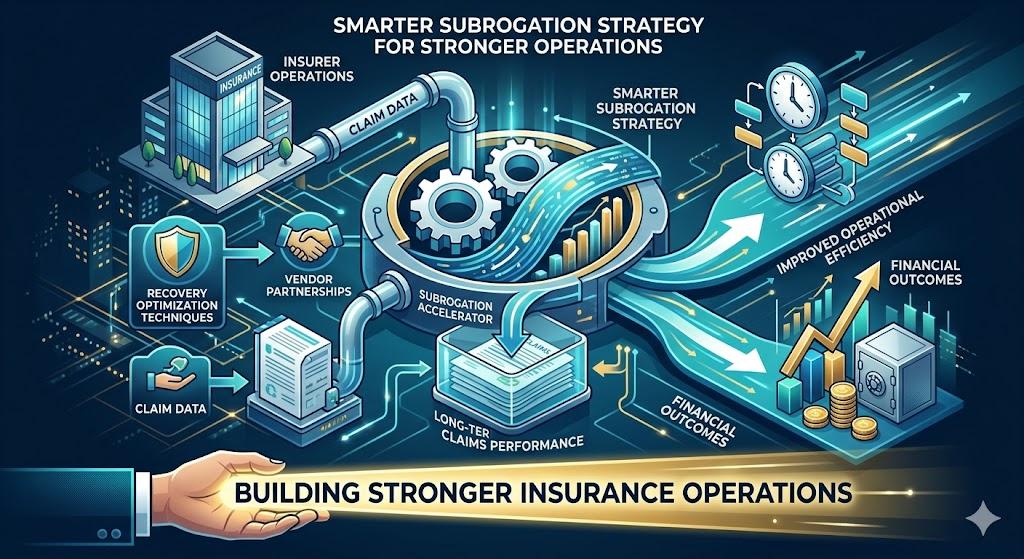
Insurance carriers today operate in an environment defined by rising claim volumes, tighter margins, and increasing pressure to improve operational efficiency. In this landscape, subrogation is no longer just a recovery function; it is a strategic lever that directly impacts financial performance and claims efficiency.
Smarter integration of insurance recovery services and structured processes within claims operations enables insurers to reduce leakage, improve cycle times, and strengthen long-term outcomes. The result is a more resilient, data-driven claims ecosystem that consistently captures recoverable value across multiple claim types, including med pay subrogation and PIP subrogation services.
Why Does Subrogation Strategy Matter for Insurance Operations?
A structured subrogation strategy improves recovery outcomes while reducing operational inefficiencies. Without it, insurers often experience missed recoveries, inconsistent workflows, and delayed reimbursements across claims.
Modern insurance subrogation services help carriers shift from reactive recovery efforts to proactive, system-driven processes that integrate directly into claims operations.
Key operational benefits:
- Reduced claim leakage
- Faster recovery turnaround times
- Improved claims team efficiency
- Better financial forecasting accuracy
Industry research from insurance associations and carrier audits consistently shows that a significant portion of recoverable claims are missed due to process gaps rather than liability issues, highlighting the need for structured subrogation strategies.
What Makes a Smarter Subrogation Strategy?
A smarter strategy focuses on structure, consistency, and specialization. It ensures that every claim is evaluated for recovery potential early in the lifecycle.
Effective insurance recovery services are built on three pillars:
1. Structured workflows
- Standardized claim intake processes
- Early identification of recovery opportunities
- Automated flagging for potential subrogation
2. Data-driven evaluation
- Claim analytics and trend identification
- Liability scoring models
- Performance tracking dashboards
3. Specialized execution
- Dedicated teams for recovery handling
- Clear escalation pathways
- Consistent negotiation strategies
Together, these components ensure insurers can scale recovery operations without increasing internal workload.
How Do Vendor Partnerships Improve Subrogation Performance?
Partnering with a specialized insurance subrogation services provider enhances both efficiency and recovery outcomes. Vendors bring expertise, scalability, and focused resources that internal teams often cannot maintain at scale.
Benefits of strong vendor partnerships:
- Access to dedicated recovery specialists
- Reduced internal operational burden
- Faster claim processing cycles
- Improved recovery accuracy and consistency
For example, insurers handling large volumes of med pay subrogation and PIP subrogation services claims often rely on external specialists to manage complexity and ensure compliance across jurisdictions.
This division of labor allows internal teams to focus on core claims handling while recovery experts optimize financial returns.
How Does Smarter Subrogation Improve Financial Outcomes?
A well-executed subrogation strategy directly impacts an insurer’s bottom line. Efficient insurance recovery services reduce loss ratios and improve cash flow through faster reimbursements.
Financial improvements include:
- Increased recovery rates on eligible claims
- Reduced claim settlement leakage
- Faster reimbursement cycles
- Improved reserve accuracy
Industry analyses (including carrier benchmarking studies and public insurance reporting trends) suggest that insurers with structured subrogation programs consistently outperform those without dedicated recovery frameworks in terms of recovered claim value and operational efficiency.
Where Do Med Pay and PIP Subrogation Fit In?
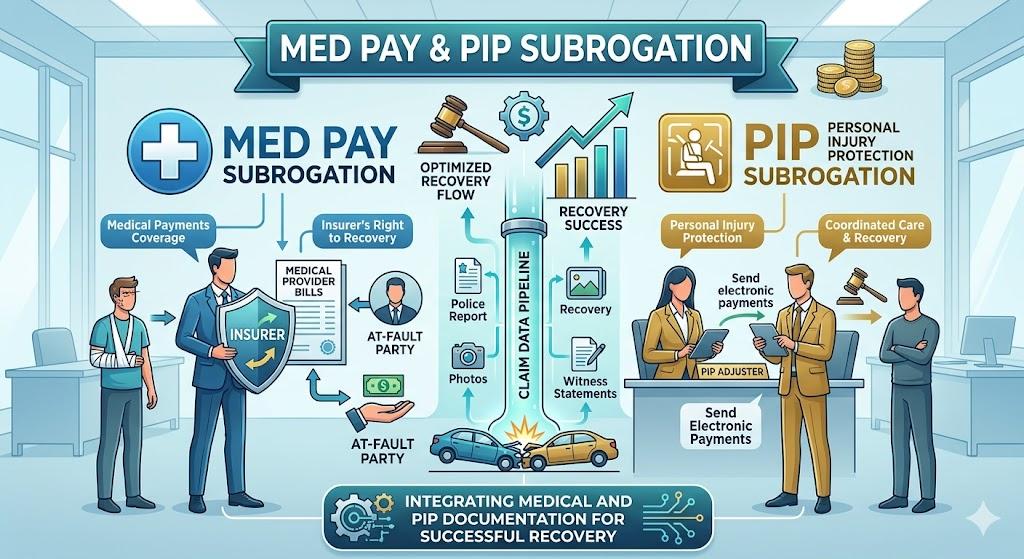
Specialized claim types such as med pay subrogation and PIP subrogation services require precise handling due to regulatory and jurisdictional differences.
Smarter strategies ensure these claims are not overlooked or under-recovered.
Med Pay Subrogation
- Focuses on recovering medical payments made on behalf of insured parties
- Requires accurate coordination with medical billing records
- Often subject to state-specific regulations
PIP Subrogation Services
- Involves Personal Injury Protection recoveries
- Requires detailed liability and coverage analysis
- Can vary significantly by state laws
By integrating these claim types into structured insurance subrogation services, carriers ensure no recovery stream is left unmanaged.
How Can Insurance Carriers Optimize Subrogation Operations?
Optimization requires a combination of process discipline, technology, and expert execution.
Step-by-step approach:
- Standardize claim intake and documentation
- Identify subrogation potential early in the lifecycle
- Integrate analytics into claims decision-making
- Partner with specialized recovery providers
- Continuously monitor recovery performance metrics
This approach transforms subrogation from a reactive task into a proactive financial strategy.
What Does the Future of Subrogation Look Like?
The future of subrogation is increasingly data-driven and automation-supported. Advanced analytics, AI-assisted claim triaging, and integrated recovery platforms are shaping how insurance recovery services operate.
Carriers that adopt smarter strategies now will be better positioned to:
- Scale operations efficiently
- Improve recovery consistency
- Reduce administrative overhead
- Strengthen long-term profitability

Partner With Venture Subrogation Inc. Now!
Venture Subrogation Inc. supports insurers with advanced insurance subrogation services designed to improve recovery efficiency and operational performance. Through structured processes and specialized expertise in med pay subrogation and PIP subrogation services, the company helps carriers optimize recoveries across complex claim portfolios.
As a trusted provider of insurance recovery services, Venture Subrogation enables insurance organizations to reduce leakage, improve cycle times, and strengthen overall claims performance through smarter subrogation execution.
Their approach ensures that recovery is not just a function, but a strategic advantage for long-term insurance success. Contact them today to schedule a free consultation.
About the Author
Jessica Marlowe is a claims and insurance operations writer specializing in subrogation strategy, recovery optimization, and insurance process efficiency. With over 8 years of experience analyzing insurance workflows, she focuses on translating complex recovery systems into clear, actionable insights for carriers and industry professionals seeking improved claims performance outcomes.