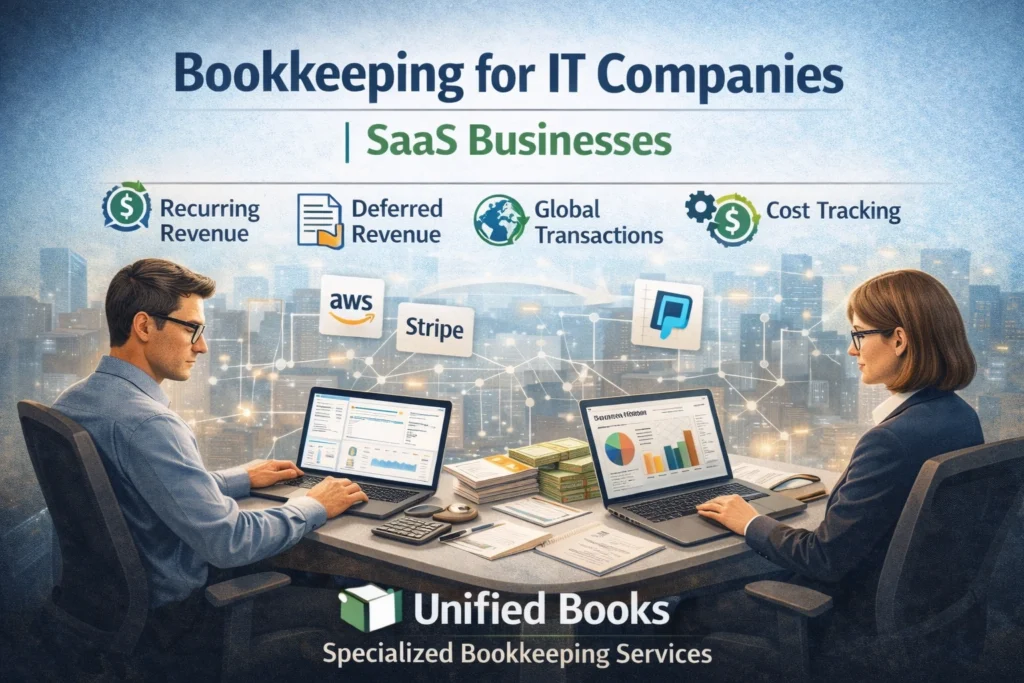
In today’s fast-paced digital economy, IT companies operate in a highly dynamic environment with recurring revenue models, global clients, and complex financial transactions. Whether you run a software development firm, a tech startup, or a SaaS platform, maintaining accurate financial records is essential for sustainable growth.
This guide explains everything you need to know about Bookkeeping for IT Companies and how specialized practices like Bookkeeping for SaaS Businesses can help ensure compliance, clarity, and better decision-making.
Why Bookkeeping is Critical for IT Companies
Unlike traditional businesses, IT companies deal with:- Subscription-based revenue models
- Multi-currency transactions
- Deferred revenue and contract billing
- High operational and development costs
- Accurate financial reporting
- Better tax compliance
- Clear visibility into revenue streams
- Improved investor confidence
Key Challenges in Bookkeeping for IT Companies
1. Managing Recurring Revenue
Many IT companies, especially SaaS businesses, rely on monthly or annual subscriptions. Tracking recurring revenue accurately requires proper systems and processes. This is where Bookkeeping for SaaS Businesses becomes essential, as it focuses on:- Monthly Recurring Revenue (MRR)
- Annual Recurring Revenue (ARR)
- Customer churn and retention metrics
2. Revenue Recognition Complexity
IT and SaaS companies must follow structured accounting standards when recognizing revenue. For example, subscription fees cannot always be recognized upfront and may need to be spread over time. Improper handling can lead to inaccurate financial statements and compliance issues.3. Handling Global Transactions
IT companies often work with international clients, which involves:- Currency conversions
- Cross-border tax regulations
- Payment gateway fees
4. Tracking Development and Operational Costs
From software development to cloud infrastructure, IT companies incur various expenses that must be categorized correctly. Proper bookkeeping helps in:- Budget planning
- Cost control
- Profitability analysis
Best Practices for Bookkeeping for IT Companies
1. Use Cloud-Based Accounting Software
Modern IT businesses benefit from cloud accounting tools that provide:- Real-time financial data
- Automated invoicing
- Easy integration with payment platforms
2. Separate Revenue Streams
Clearly distinguish between:- Subscription revenue
- One-time project income
- Support and maintenance services
3. Maintain Accurate Deferred Revenue Records
For SaaS models, revenue often needs to be recognized over time. Proper tracking ensures compliance and prevents overstatement of income. This is a key aspect of Bookkeeping for SaaS Businesses.4. Regular Reconciliation
Frequent reconciliation of:- Bank accounts
- Payment gateways (Stripe, PayPal, etc.)
- Invoices and receipts
5. Monitor Key Financial Metrics
IT companies should regularly track:- Cash flow
- Profit margins
- Customer acquisition cost (CAC)
- Lifetime value (LTV)
Benefits of Professional Bookkeeping Services
Outsourcing Bookkeeping for IT Companies offers several advantages:- Access to experienced professionals
- Reduced operational costs
- Improved accuracy and compliance
- Scalable solutions as your business grows
Simplify Financial Management with Unified Books
Managing finances in the IT sector can be complex, especially with evolving business models and compliance requirements. Unified Books offers specialized bookkeeping solutions tailored for IT companies and SaaS businesses. Their services help you:- Maintain accurate and up-to-date financial records
- Handle subscription-based revenue models effectively
- Ensure compliance with accounting standards
- Generate clear and actionable financial reports