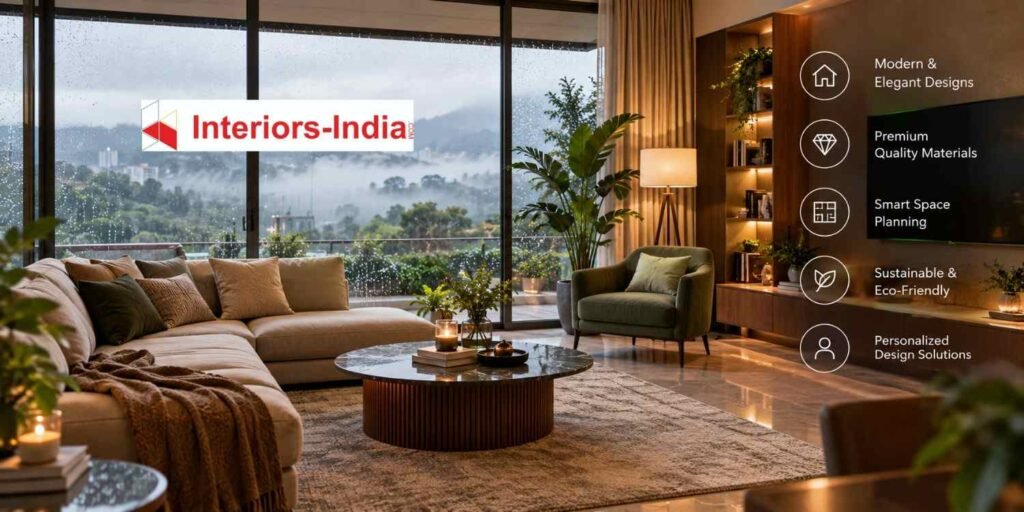
Building a home that is aesthetically appealing is not all about selecting good-looking furniture and colors. The Best Interiors in India are about creating spaces that incorporate aesthetics, functionality, comfort, storage, lighting, and durability. For residents in Delhi NCR, the appropriate interior design will help them turn their small apartments into spacious living rooms, organize their homes better, and even create a more personalized space. Interior India’s approach to interior designs involves space planning, conceptualization, construction, management, and the way of life of the residents.
Contemporary Indian homeowners have been on the lookout for interiors that are elegant yet easy to take care of. Current interior design trends also include a growing interest in warm minimalism, natural materials, multi-functional spaces, biophilic elements, and contemporary yet functional interior designs.
What Makes the Best Interiors in India Different?
Best Interiors of India are not always those interiors that have high costs. Successful interior design is when all the decisions regarding the interior correlate with the way of life of the residents.
A good-designed house must have comfortable movement throughout the space, proper amount of storage space, adequate lighting, durable construction materials, and appropriate scale of furniture. Likewise, Interiors-India also focuses on space planning and design concept rather than using one particular style for every interior.
Three principles should guide the project:
- Function first: Every room should support its primary activities without unnecessary clutter.
- Personal character: Colours, textures, furniture, artwork, and materials should reflect the occupants.
- Long-term usability: Storage, lighting, finishes, and furniture should remain practical as lifestyle requirements change.
This approach is particularly important in Indian urban homes, where available floor area may be limited and several activities often happen within the same room.
How to Plan Stylish Living Spaces
An elegant living room is not only visually appealing but also needs to be practical for the daily use of its occupants and any guests that may come in. Begin by understanding what the function of the room will be before deciding on the furniture.
For instance, in an apartment in Delhi NCR, the room could have one space for watching TV, hosting guests, playing with kids, and more storage. One does not have to overcrowd the room with furniture but can have multipurpose furniture, concealed storage, appropriate seating, and lighting.
The room also has to have pathways. Big furniture can make a room look small despite having enough floor space. Proportions are as important as the decorative elements.
Use Lighting as a Design Layer
Lighting is known to have a tremendous impact on the look and functionality of interiors. One can use lighting that combines ambient lighting, task lighting, accent lighting, and decorative lighting.
For example, light on the wall around the TV creates a comfortable evening mood, and task lighting close to a desk is needed for work. Sunlight will play a role in positioning of furniture, drapes, and mirrors.
Build Storage Into the Design
The issue of storage should be taken into account at the planning stage and not after selecting the furniture.
Examples of such furniture include built-in wardrobes, overhead cabinets, TV cabinets, windowsills that have storage space, and multi-functional furniture. The room-by-room planning concept by Interiors-India places emphasis on custom-made furniture and efficient use of available space.
Interior Design Firms in Delhi NCR: What Should You Check?
In considering interior designers, homeowners need to consider more than just the nice pictures in their portfolios. The selection process entails taking into account how Interior Design Firms in Delhi NCR manage requirements, drawings, materials, budgeting, implementation, and handover. Going through the scope of work, process of communication, time period, material details, and project management can help in knowing what the engagement entails.
The homeowner needs to start by going through some of their previous work related to his house in size and type. An experienced designer in large villas will have a different approach compared to one used in designing small apartments.
Before finalizing a firm, ask about:
- Initial site measurement and requirement assessment
- Space planning and furniture layouts
- 3D visualisation or design presentations
- Material specifications and finish samples
- Modular furniture and custom carpentry
- Electrical and lighting planning
- Project supervision and execution
- Expected completion schedule
- Payment milestones
- Warranty and post-installation support
Interiors-India states that the strategy involves progressing from the need analysis to concept formation, design planning, implementation and management of the projects. Their services emphasize space planning, customized concepts, craftsmanship and customer service.
A good tip is easy: never compare quotations just on the basis of the final figure. Compare the contents of the quotations.
Interior Design in Dwarka: Planning for Local Homes
The local market plays a critical role in shaping residential design ideas for the space. The Dwarka property type comprises apartments, builder floors, bigger houses, and various other Dwarka property types. Hence, Interior Design in Dwarka must consider the existing layout, room sizes, storage possibilities, and movement needs rather than following the conventional design approach.
In fact, Interiors-India provides its experience with the different types of Dwarka property types.
For a typical Dwarka apartment, practical design priorities may include:
- Maximizing wardrobe and kitchen storage
- Keeping circulation areas uncluttered
- Using furniture appropriate to room dimensions
- Creating a flexible work-from-home corner
- Improving artificial and natural lighting
- Selecting finishes that are easy to maintain
- Integrating concealed storage wherever possible
For example, a compact 2BHK can use a full-height wardrobe, a wall-mounted TV unit, a foldable work desk, and a modular kitchen to gain functionality without visually overcrowding the home.
Popular Interior Styles for Indian Homes
There is no single style that defines modern Indian interiors. The strongest designs often combine contemporary planning with materials, colours, patterns, or craft elements that feel familiar.
Warm Minimalism
Warm minimalism uses clean forms without making the home feel cold. Beige, earthy neutrals, natural wood, soft textures, and carefully selected decorative pieces can create a comfortable atmosphere.
Contemporary Indian
This approach combines modern furniture and clean layouts with Indian materials, artwork, textiles, brass details, woodwork, or handcrafted accents.
Biophilic Interiors
Indoor plants, natural textures, daylight, wood, stone, and visual connections to greenery can make urban homes feel more connected to nature. Biophilic design is also becoming more prominent in current interior discussions.
Flexible Multifunctional Design
A room can serve more than one purpose when furniture and storage are planned carefully. A dining area can double as a workspace, while a guest room can incorporate a study zone.
This is particularly useful for Delhi NCR apartments where every square metre needs to work efficiently.
Local Interior Design Costs in Delhi NCR
Interior costs vary considerably according to property size, material specification, design complexity, carpentry requirements, modular products, civil work, and the level of finishes selected.
As a broad market reference, current Delhi listings show home interior projects ranging from a few lakh rupees to substantially higher budgets depending on scope and specifications. Magicbricks, for example, currently lists individual Delhi interior projects with starting figures ranging from around ₹1 lakh to ₹5 lakh or more, while some listed complete-home packages begin around ₹3.2–₹3.5 lakh. These are marketplace examples rather than universal market rates.
For practical planning, divide the budget into categories rather than treating interior design as one fixed expense:
- Design and planning
- Modular kitchen
- Wardrobes and storage
- Living and dining furniture
- Electrical and lighting
- False ceiling
- Flooring or wall treatments
- Soft furnishings
- Civil or renovation work
- Appliances and accessories
A homeowner should keep a contingency amount for changes, upgrades, or site-related requirements. The final quotation should clearly identify materials, quantities, specifications, labour, installation, taxes where applicable, and exclusions.
A Step-by-Step Interior Design Process
Step 1: Define Your Requirements
List the people using the home, daily routines, storage needs, preferred style, special requirements, and expected budget.
Step 2: Measure and Assess the Space
The designer should study room dimensions, doors, windows, electrical points, plumbing, structural limitations, daylight, ventilation, and existing conditions.
Step 3: Create the Space Plan
Furniture placement, circulation, storage, kitchen workflow, wardrobes, work areas, and room functions should be resolved before decorative selections are finalized.
Step 4: Develop the Design Concept
Colours, materials, textures, furniture forms, lighting, ceilings, wall treatments, and decorative details can then be brought together into a coherent visual direction.
Step 5: Review 3D Designs and Materials
3D visualisation helps homeowners understand proportions and the relationship between different elements. Interiors-India highlights 3D design as part of its Dwarka offering.
At this stage, confirm material samples and specifications rather than approving designs based only on digital images.
Step 6: Finalize the Budget
Every major component should be documented before execution. Changes made after procurement can increase costs and affect timelines.
Step 7: Execute and Monitor
Production, civil work, electrical work, installation, painting, lighting, furniture placement, and finishing should follow an agreed sequence. Dedicated project management can reduce communication gaps between the homeowner, designer, vendors, and installation teams.
Step 8: Inspect and Handover
Before handover, check shutters, hinges, drawers, lighting, electrical points, paint finishes, hardware, plumbing fixtures, and other specified work.
How to Make an Interior More Valuable Over Time
It is important not to replicate the trend exactly.
Select long-lasting materials as the base elements of interior decoration and apply new styles by using cushioning elements, art pieces, carpeting, accessories, and additional furniture items. In this way, you will be able to keep on updating the interior design of your house and not redo the whole thing.
Make sure that more priority is given to storage spaces and proper planning rather than just decorative elements that take up much-needed floor space. It will become very annoying if you cannot place everyday objects due to the nicely decorated but impractical room design.
This principle of sustainability can also be achieved through durable materials, energy-saving lights, ventilation systems when possible, environmentally responsible materials, and furniture meant to be used for decades. Modern interior trends in India pay much attention to sustainability and flexibility of design solutions.
Why Interiors-India Can Be Considered for a Complete Interior Project
The emphasis at Interiors-India lies in designing interiors in accordance with personal tastes, lifestyles, and requirements. The offered services range from customized design concepts, efficient space planning, quality workmanship, luxury finishes, and project management.
The real takeaway for those seeking Best Interiors in India is that a holistic assessment of the entire process of designing interiors must be done. While aesthetics do matter, one should take into consideration the accuracy of planning, quality of materials, communication, execution, and follow-up.
Moreover, there is a special emphasis at Interiors-India that dwells upon Dwarka and includes services related to designing of apartments in Dwarka, efficient space planning, 3D visualization, project management, and modular designs.
The correct interior therefore should start way before the arrival of furniture. It should begin with getting acquainted with how the client lives and designing the interior accordingly.
A Short Client–Designer Conversation
Client: I want stylish interiors that are practical and comfortable for everyday living.
Designer: Interiors-India can create a personalized space based on your lifestyle, layout, and budget.
Client: How can I achieve the Best Interiors in India without compromising functionality?
Designer: With smart space planning, quality materials, and thoughtful design, your home can look beautiful while remaining practical.
Summary
The Best Interiors in India come from a fine balance between the elements of design, function, material quality, space planning, and personal creativity. It doesn’t matter whether the building is a small apartment in Dwarka or a big one anywhere else in Delhi NCR; the principles involved stay the same: analyze the space, determine what is needed for your lifestyle, plan the storage areas, have an appropriate budget, and move forward step by step.
Thus, when choosing among the numerous Interior Design Firms in Delhi NCR, one should consider many factors aside from how pretty they look.
Some Important Questions
1. What should I consider when choosing an interior designer in India?
Review the designer’s relevant portfolio, design process, material specifications, project-management approach, quotation structure, execution capabilities, timelines, and post-installation support. Choose based on how well their process matches your property’s requirements rather than photographs alone.
2. How much does home interior design cost in Delhi NCR?
There is no single fixed rate because costs depend on property size, scope, materials, carpentry, modular furniture, civil work, and finishes. Current Delhi marketplace listings show projects beginning from a few lakh rupees, with costs increasing substantially for larger or more detailed projects.
3. What is included in a full-home interior project?
Depending on the designer and package, a full-home project may include space planning, design concepts, modular kitchen, wardrobes, furniture, lighting, false ceiling, wall finishes, electrical coordination, installation, project management, and final handover. Always confirm inclusions in the written quotation.
4. Why is space planning important for apartment interiors?
Space planning determines how people move, where furniture is positioned, how storage is accessed, and whether different activities can happen comfortably. Good planning can make a compact apartment more functional without simply adding more furniture.
5. What are popular interior trends for Indian homes in 2026?
Warm minimalism, natural materials, multifunctional spaces, biophilic elements, smart-home features, sustainable design, and combinations of contemporary and Indian design influences are among the trends appearing in current 2026 interior discussions.
6. How can I control my interior design budget?
Start with a clear scope, divide spending into major categories, compare specifications rather than only totals, prioritize essential work, approve materials before procurement, and keep a contingency reserve. A detailed quotation helps reduce misunderstandings and unexpected changes during execution.
About us –
Official No. – +91 971-812-5263
Official Email – team@interiors-india.com