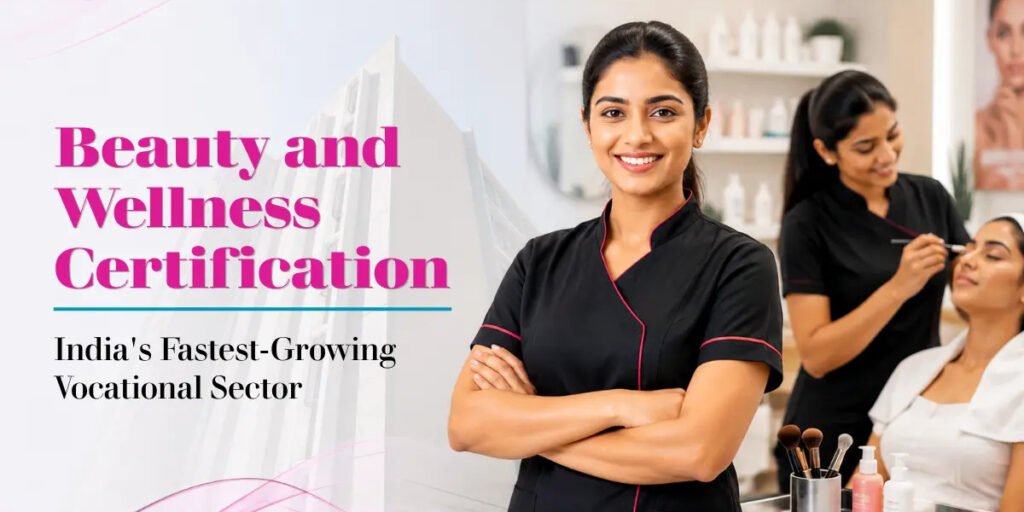
The beauty and wellness industry in India is no longer just about salons and parlours tucked into neighbourhood lanes. It has evolved into a thriving, professional ecosystem — one that rewards skilled, certified individuals with lucrative careers, entrepreneurial freedom, and global opportunities. If you have been wondering where to start, this guide will walk you through everything you need to know about building a career in this dynamic sector.
Why the Beauty and Wellness Industry Is Booming Right Now
India’s beauty and wellness sector is growing at a compound annual growth rate of over 18%, with its market size estimated at more than ₹80,000 crore. Fuelled by a rising middle class, growing awareness of self-care, and an increasing demand for trained professionals, this industry is creating thousands of new job opportunities every year.
Yet, the biggest gap in this space remains the same — a shortage of skilled, certified professionals.
That is exactly why getting the right training and certification matters more than ever.
What Is Driving the Demand?
- Rising consumer spending on personal grooming and wellness
- Growth of luxury salons, spas, and wellness centres across Tier 1 and Tier 2 cities
- Increasing demand for certified professionals in the bridal, film, and fashion industries
- A boom in beauty entrepreneurship — from home studios to premium salon chains
- Social media and the creator economy opening new income streams for beauty experts
What Is a Beauty and Wellness Certification?
A Beauty and Wellness Certification is a formal, recognised credential that validates your skills in one or more areas of beauty therapy, skincare, cosmetology, nail art, hair styling, or holistic wellness. Unlike informal learning, a structured certification programme follows a defined curriculum, includes hands-on practical training, and concludes with an assessment — ensuring that graduates meet industry standards.
These certifications are not just pieces of paper. They signal to employers, clients, and peers that you have been trained to a recognised level of competence and professionalism.
Types of Courses You Can Pursue
- Certificate Courses — Short-duration programmes (3 to 6 months) focusing on specific skills such as skincare, waxing, or makeup artistry
- Diploma Programmes — More comprehensive training (6 to 12 months) covering multiple disciplines including hair, skin, and wellness services
- Advanced Diplomas — For professionals looking to upgrade their skills in cosmetology, spa management, or aesthetic treatments
- Vocational Skill Training — Government-aligned courses under frameworks like the National Skills Qualifications Framework (NSQF) that enhance employability nationally and internationally
How to Choose the Right Certification Programme
With dozens of institutes and programmes available, selecting the right one can feel overwhelming. Here are the key factors you should evaluate before enrolling:
1 – Accreditation and Recognition
Always look for programmes that are aligned with national standards — particularly those recognised under the National Council for Vocational Education and Training (NCVET) or affiliated with reputed industry bodies. A certification from a credible awarding body holds weight with employers across India and abroad.
2 – Curriculum Quality
The best programmes balance theory with practical application. Look for:
- Hands-on training in real or simulated salon environments
- Coverage of hygiene, safety, and client consultation protocols
- Up-to-date content reflecting current industry trends
- Soft skills modules such as communication and customer service
3 – Trainer Expertise
Your learning is only as good as your trainer. Seek programmes where instructors bring real industry experience — not just academic qualifications.
4 – Placement Support
A strong institute does not just teach you skills — it helps you launch your career. Look for programmes that offer placement assistance, internship opportunities with leading salons and spas, and connections with industry employers.
5 – Infrastructure and Facilities
State-of-the-art labs and equipment matter. Practical training with professional-grade tools prepares you for the actual demands of the job.
Industry-Led Skill Development: The Future of Beauty Training
One of the most significant shifts in vocational education in India is the move towards industry-led training. Rather than following outdated textbooks, forward-looking organisations are developing course content directly in consultation with employers — ensuring that graduates are job-ready from day one.
Institutions that operate under the Recruit-Train-Deploy (RTD) model are particularly effective. This approach maps real employer demand, prepares candidates through structured training, and then connects them directly with industry partners for placement.
CII Skills has been a key driver in this space, championing industry-integrated vocational training across multiple sectors — including beauty and wellness — through its network of Multi Skill Training Institutes (MSTIs) and industry partnerships. Their model empowers youth with not just technical skills, but also psychometric-based career counselling, soft skills training, and end-to-end placement support — making them a reliable partner for anyone serious about launching a professional career.
Career Paths After Getting Certified
One of the most exciting aspects of a Beauty and Wellness Certification is the sheer diversity of career options it unlocks. You are not limited to one job role or one type of workplace.
Career Opportunities in Beauty and Wellness
- Beauty Therapist — Work in salons, spas, or wellness centres providing skin, hair, and body treatments
- Makeup Artist — Specialise in bridal, editorial, film, television, or fashion makeup
- Nail Technician — Offer nail art, extensions, and nail care services in dedicated nail studios
- Cosmetologist — Provide a full range of beauty services including hair cutting, colouring, and treatments
- Salon Manager or Owner — Use your skills and business acumen to run your own salon or studio
- Beauty Educator or Trainer — Train the next generation of beauty professionals at academies or institutes
- Beauty Influencer or Content Creator — Leverage your expertise on social media platforms to build a personal brand
- Skincare Consultant — Work with skincare brands as a technical advisor or product educator
The earning potential is equally impressive — experienced makeup artists and cosmetologists can earn significantly higher during peak seasons such as wedding seasons and festivals, and those who build their own client base or open studios enjoy long-term financial independence.
What to Expect During Your Training
If you are enrolling in a certified beauty and wellness programme for the first time, here is what your learning journey will typically look like:
- Orientation and Theory — Understanding the science behind skin types, hair structure, products, and hygiene standards
- Practical Lab Sessions — Hands-on practice in a supervised salon environment using professional equipment
- Client Interaction and Consultation Training — Learning how to assess client needs, recommend services, and manage expectations
- Internship — Most quality programmes include 100 to 150 hours of industry internship with leading salons or wellness centres
- Assessment and Certification — A formal evaluation of both theoretical knowledge and practical skills, after which you receive your certification
Tips for Beginners Starting Their Beauty Career
Before you take the plunge, keep these practical points in mind:
- Start with a foundation course — Do not rush into advanced specialisations. A solid foundation in basics sets you up for long-term success
- Build your portfolio early — Document your practical work with photographs and create a portfolio even while you are training
- Stay current with trends — The beauty industry evolves quickly. Follow industry publications, attend workshops, and keep learning
- Network actively — Connect with fellow professionals, attend trade events, and build relationships with salon owners and trainers
- Choose government-aligned programmes — Certifications recognised under national frameworks like NSQF improve your credibility and open doors to global opportunities
Final Thoughts
The beauty and wellness sector rewards passion, professionalism, and continuous learning. Whether your dream is to become a sought-after makeup artist, open your own wellness studio, or build a career as a trainer, the right certification is your launchpad.
India’s skill development ecosystem — backed by government frameworks and industry leaders — has made it easier than ever to access quality training that is both affordable and career-focused. The opportunity is real. The demand is growing. All that remains is your decision to take that first, confident step.
Start your journey today, and let the right certification turn your passion for beauty into a profession that lasts.