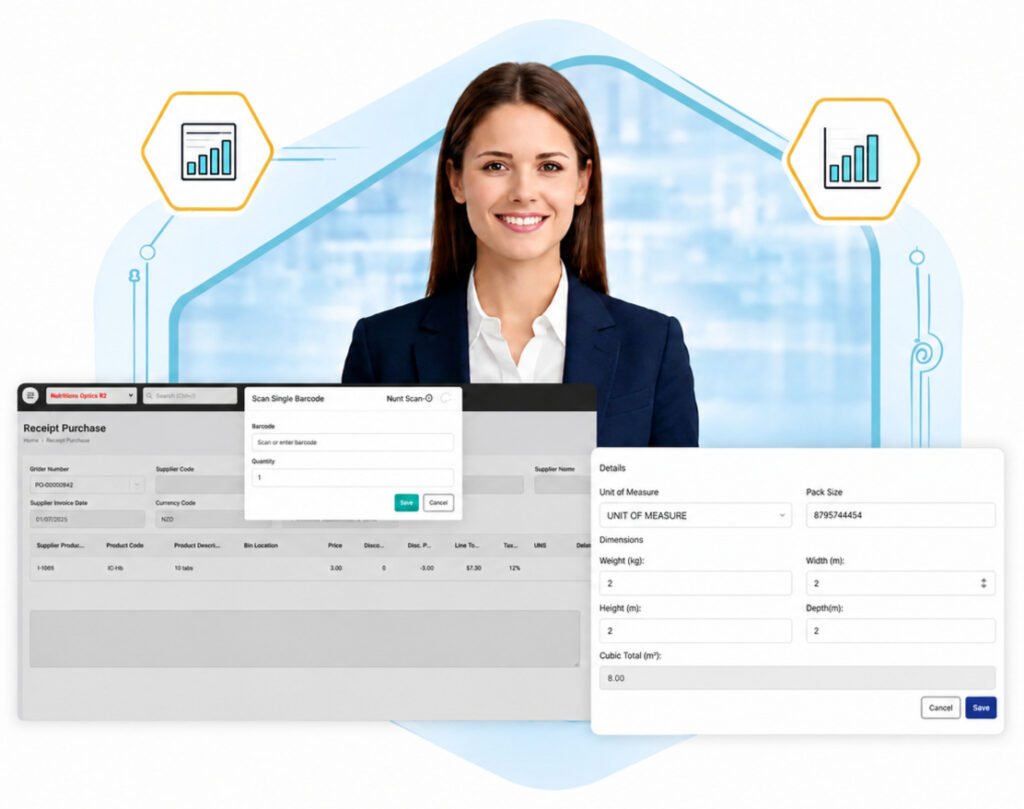
Managing inventory efficiently is essential for businesses that handle products, raw materials, components, and finished goods. Whether operating a warehouse, retail store, manufacturing facility, or distribution centre, maintaining accurate stock records can become challenging when everyday activities depend heavily on manual data entry. Recording product details, updating quantities, tracking stock movements, and verifying orders require time and attention. Even small recording mistakes can create confusion across different departments.
As businesses expand, these challenges become more noticeable. Handling hundreds or thousands of products through traditional recordkeeping methods can increase administrative workloads and make inventory information difficult to maintain. This is where Barcode Inventory Software becomes a practical solution. By connecting physical products with digital inventory records, barcode technology helps businesses simplify routine stock operations, improve accuracy, and maintain better control over their inventory.
Understanding Barcode-Based Inventory Management
Barcode-based inventory management uses machine-readable codes to identify products and retrieve their associated information through scanning devices. Each barcode represents a specific product, item, or tracking reference stored within an inventory system.
Instead of manually entering product descriptions, item codes, or quantities during every transaction, employees can scan barcodes to record inventory activities. The system can then update relevant information according to the configured workflow.
Common barcode inventory activities include:
- Receiving incoming stock from suppliers.
- Recording product quantities during stock entry.
- Updating inventory after sales or dispatch.
- Identifying products during picking and packing.
- Tracking stock transfers between locations.
- Supporting physical stock counts.
- Verifying products before shipment.
- Maintaining organised product identification records.
This approach creates a more consistent way to manage everyday inventory responsibilities while reducing repetitive administrative work.
How Barcode Inventory Software Reduces Manual Work
Manual inventory management often involves repeated data entry across receiving, storage, sales, purchasing, and dispatch operations. Employees may need to write product codes, check descriptions, count quantities, and update spreadsheets separately.
Barcode technology simplifies these activities by allowing employees to retrieve product information through scanning.
1. Faster Stock Receiving
Receiving inventory requires employees to verify delivered products against purchase orders or supplier documentation. When several items arrive together, manually checking every product can consume considerable time.
With barcode scanning, employees can identify products more efficiently and record received quantities within the inventory system. This helps reduce repetitive typing and supports a more organised receiving process.
It also makes it easier to identify discrepancies between expected and received quantities before stock moves into storage.
2. Simplified Stock Updates
Everyday inventory operations involve continuous stock changes. Products are received, sold, transferred, returned, assembled, or consumed during manufacturing.
Updating these movements manually can create delays between physical stock changes and recorded inventory levels.
Barcode scanning helps employees record transactions closer to the time they occur. Depending on system configuration, inventory quantities can be updated automatically after a completed transaction.
This reduces the administrative effort required to maintain stock records and helps teams work with more current information.
3. Reduced Data Entry Errors
Manual data entry creates opportunities for mistakes, including incorrect product codes, duplicated records, and inaccurate quantities.
Barcode scanning reduces the need to type lengthy identification numbers repeatedly. Since the scanner reads the encoded information, employees can identify products more consistently.
However, accurate results still depend on correctly labelled products, functioning equipment, and properly configured inventory records.
Improving Accuracy Across Warehouse Operations
Warehouses manage multiple activities simultaneously, including receiving, put-away, picking, packing, transfers, and dispatch. Maintaining accurate product information throughout these processes is important for operational efficiency.
Barcode inventory systems help establish consistent identification practices across different warehouse activities.
For example, warehouse employees can scan an item before placing it in a storage location. When the product is required for an order, they can scan it again during picking and verify the selected item before packing.
This creates a more structured process for tracking stock movements.
Better Product Identification
Businesses dealing with similar-looking products, multiple variations, or different packaging sizes can benefit from barcode-based identification.
Scanning helps employees distinguish between products using their recorded item information rather than depending entirely on visual recognition.
This is particularly useful for:
- Wholesale and distribution businesses.
- Retail inventory operations.
- Ecommerce fulfilment centres.
- Food and beverage manufacturers.
- Electronics and component suppliers.
- Businesses managing multiple warehouses.
Supporting Real-Time Inventory Visibility
Knowing how much stock is available is important for purchasing decisions, order fulfilment, and production planning.
When inventory records are updated only after manual paperwork is completed, businesses may work with outdated information. This can lead to unnecessary purchasing, unexpected stock shortages, or delays in fulfilling customer orders.
Barcode Inventory Software can help improve inventory visibility by recording stock movements through connected scanning workflows.
Managers can use available inventory information to understand:
- Current stock quantities.
- Products received and dispatched.
- Stock movement history.
- Items requiring replenishment.
- Differences identified during stock counts.
- Inventory distribution across locations.
The availability of these details depends on the software’s features and how frequently employees record transactions.
Making Physical Stock Counting More Efficient
Physical stock verification is an important part of inventory control. However, counting products manually and comparing the results with existing records can require considerable effort, particularly in large storage facilities.
Barcode scanning provides a more organised method of conducting stock counts.
Employees can scan products while checking physical quantities, allowing the recorded information to be compared with system inventory.
This can help businesses identify:
- Missing products.
- Unexpected stock differences.
- Incorrect product identification.
- Unrecorded inventory movements.
- Items stored in the wrong locations.
Regular stock verification combined with barcode scanning can support more reliable inventory records and reduce the effort involved in reconciliation.
Improving Order Picking and Dispatch
Order fulfilment requires employees to select the correct products, quantities, and variations before preparing shipments.
Manual checking can become difficult when warehouses process numerous orders throughout the day. Selecting an incorrect item may result in returns, additional handling costs, and customer dissatisfaction.
Barcode scanning can introduce verification steps into picking and dispatch workflows.
For example, employees can scan products against order details before packing them. This provides an additional opportunity to identify incorrect selections and confirm that the required items are being prepared.
A structured scanning process can support:
- More organised picking activities.
- Better product verification.
- Improved dispatch documentation.
- Reduced dependence on handwritten records.
- More consistent order processing.
The Business Impact of Reducing Manual Inventory Work
Reducing repetitive inventory tasks can influence several areas of business performance. When employees spend less time entering product information manually, they can focus more attention on receiving, organising, checking, and fulfilling stock requirements.
The broader importance of inventory accuracy is also reflected in industry research. GS1, the global organisation behind widely used barcode standards, identifies barcode-based product identification as an important foundation for improving information accuracy and supply chain visibility.
For businesses, the practical benefits may include:
- Improved productivity: Employees can complete routine scanning activities without repeatedly entering product details.
- Better inventory accuracy: Standardised product identification helps reduce common recording mistakes.
- Lower administrative workload: Digital transaction records reduce dependence on manual paperwork.
- Faster stock verification: Scanning can simplify product identification during inventory counts.
- Improved coordination: Different departments can work with more consistent inventory information.
- Better customer service: More reliable stock records can support smoother order fulfilment.
These improvements depend on implementation quality, employee training, and the consistency of inventory processes.
Choosing the Right Barcode Inventory Solution
Selecting suitable software requires more than checking whether it supports barcode scanning. Businesses should evaluate how effectively the system fits their existing inventory and operational requirements.
Important features to consider include:
- Barcode scanning compatibility: Support for suitable barcode formats and scanning devices.
- Product management: Centralised product details, codes, descriptions, and variations.
- Inventory tracking: Recording stock receipts, issues, transfers, and adjustments.
- Purchase management: Connecting incoming inventory with purchasing activities.
- Sales integration: Updating stock information according to completed sales transactions.
- Warehouse visibility: Supporting stock identification across different storage locations.
- Reporting capabilities: Providing useful inventory summaries and transaction records.
- Scalability: Supporting additional products, users, and operational requirements as the business expands.
Businesses should also consider integration capabilities, data migration, implementation costs, employee training, and technical support before making a decision.
Preparing Inventory Operations for Future Growth
As businesses expand, managing stock through disconnected spreadsheets and manual records can become increasingly difficult. More products, suppliers, customers, and storage locations introduce additional coordination requirements.
Barcode-based inventory management provides a structured way to connect physical stock with digital records. By simplifying routine identification and recording activities, it helps businesses establish more organised inventory processes.
The objective is not simply to scan products faster. It is to build a dependable inventory workflow that supports purchasing, warehousing, sales, manufacturing, and distribution.
Conclusion
Efficient inventory management depends on accurate information, consistent processes, and timely stock updates. Manual recordkeeping can make these responsibilities increasingly demanding as business operations grow.
Barcode Inventory Software helps reduce repetitive data entry, simplify stock receiving, support physical verification, improve product identification, and create better visibility across everyday inventory activities. When combined with well-defined workflows and employee training, barcode technology can help businesses manage stock operations with greater consistency and control.
For companies looking to modernise inventory management, adopting barcode-enabled processes can be a valuable step towards more organised and scalable operations.
Make Everyday Inventory Management Simpler With PlanIT
PlanIT helps businesses improve inventory visibility and organise essential stock management activities through practical inventory management solutions. Whether your business operates in manufacturing, retail, wholesale, distribution, or ecommerce, PlanIT can help you explore a more structured approach to inventory operations.
Contact Details:
- Company: PlanIT
- Mobile: +91-9958474631
- Email: sales@plan-it.pro