The way businesses sell products has changed significantly with the growth of digital commerce. Customers now expect convenient shopping experiences, transparent pricing, accurate product information, and reliable order fulfilment. At the same time, businesses must manage different customer requirements, pricing structures, order volumes, and sales channels without compromising operational efficiency.
For companies serving both business buyers and individual consumers, managing these expectations through separate systems can create unnecessary complexity. Wholesale customers may require bulk pricing, negotiated discounts, and repeat ordering options, while retail customers generally look for simple navigation, flexible payment methods, and a convenient checkout experience.
A well-designed B2B/B2C ECommerce Platform brings these selling models together within a connected digital environment. It helps businesses manage pricing, streamline orders, improve customer interactions, and create opportunities for sustainable growth.
Understanding the Role of a B2B/B2C ECommerce Platform
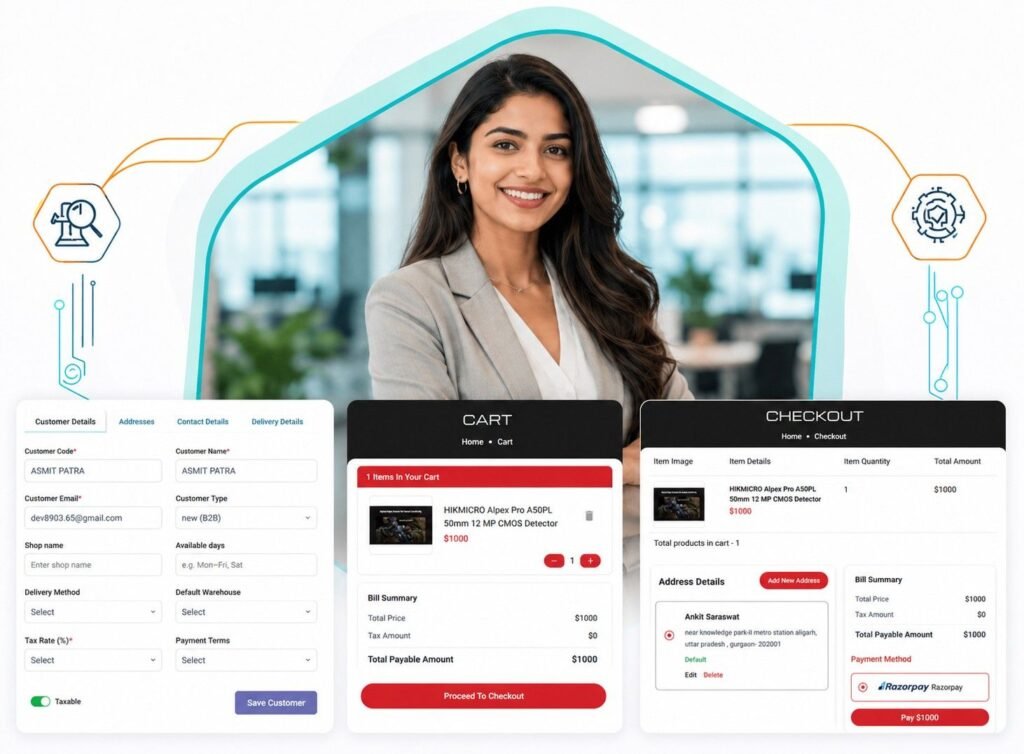
A B2B/B2C ECommerce Platform is a digital commerce solution that supports business-to-business and business-to-consumer transactions through an integrated system. Instead of operating completely separate online stores, businesses can manage different customer segments using shared product information, inventory visibility, and order management processes.
The platform can provide different experiences depending on the customer type.
For B2B customers:
- Customised pricing based on customer agreements.
- Bulk purchasing and quantity-based discounts.
- Repeat ordering for regular requirements.
- Customer-specific product catalogues.
- Flexible payment and credit arrangements.
- Access to order history and account information.
For B2C customers:
- Easy product discovery and navigation.
- Transparent retail pricing.
- Secure online payment options.
- Convenient checkout processes.
- Order tracking and purchase history.
- Personalised product recommendations.
Combining these capabilities allows businesses to serve different audiences while maintaining greater control over their overall commerce operations.
Smarter Pricing for Different Customer Segments
Pricing is one of the most important factors influencing online purchasing decisions. However, businesses selling to wholesalers, distributors, retailers, and individual consumers cannot always follow the same pricing structure.
A wholesale customer purchasing hundreds of units may expect a different price from an individual buying a single product. Similarly, long-term business partners may have negotiated rates or special commercial agreements.
An advanced eCommerce system helps businesses manage these differences through structured pricing capabilities.
Flexible Customer-Based Pricing
Customer-specific pricing allows businesses to offer different rates depending on customer categories, purchasing agreements, or account requirements.
For example, a distributor may receive preferential pricing because of regular bulk purchases, while a retail customer sees the standard selling price.
This approach helps businesses maintain consistent pricing policies without manually calculating every order.
Quantity Discounts and Promotional Offers
Flexible quantity discounts can encourage customers to purchase larger quantities while supporting sales objectives.
Businesses can establish discount structures based on:
- Minimum purchase quantities.
- Total order value.
- Product categories.
- Customer groups.
- Seasonal promotions.
- Special purchasing agreements.
These pricing options can improve the purchasing experience and help businesses develop more effective sales strategies.
According to Salesforce’s State of Commerce research, B2B buyers increasingly expect digital purchasing experiences comparable to those available in consumer commerce. This highlights why pricing flexibility and convenient online ordering are becoming important parts of modern business relationships.
Better Order Management Through Centralised Operations
Managing orders across multiple sales channels can become complicated when businesses depend on disconnected applications or manual processes.
An integrated commerce platform helps bring order information into a central environment, making it easier for teams to monitor transactions and coordinate fulfilment activities.
Important order management capabilities may include:
- Centralised order processing.
- Order status visibility.
- Customer-specific order information.
- Automated order confirmations.
- Inventory availability checks.
- Shipping and fulfilment coordination.
- Order history and reporting.
When order information is easier to access, sales and operations teams can spend less time searching through separate systems and more time addressing customer requirements.
Improving Order Accuracy
Incorrect product selections, outdated pricing, duplicate entries, and manual data entry can create costly order-processing problems.
A connected system can reduce these risks by using consistent product records, customer pricing rules, and structured ordering workflows.
For businesses handling recurring wholesale orders, this can be especially useful. Customers can review previous purchases, reorder frequently purchased products, and reduce the effort involved in submitting regular requirements.
Creating Stronger Customer Relationships
Successful digital commerce is not only about completing transactions. It is also about building relationships that encourage customers to return.
B2B buyers often prioritise reliability, consistent pricing, product availability, and dependable fulfilment. Individual consumers may place greater importance on convenience, product information, payment flexibility, and responsive customer service.
A flexible commerce platform helps businesses address both sets of expectations.
Personalised Shopping Experiences
Personalisation allows businesses to present relevant products, pricing, and purchasing options based on customer information and buying behaviour.
For business buyers, this could mean displaying negotiated prices, frequently ordered products, or account-specific catalogues.
For individual consumers, personalisation may include product suggestions, relevant promotions, and recommendations based on previous purchases.
These experiences can make online shopping more relevant and convenient.
Better Customer Communication
Clear communication throughout the purchasing journey helps customers understand what happens after placing an order.
Useful features may include:
- Automated order confirmations.
- Order processing notifications.
- Shipping updates.
- Delivery information.
- Account-related notifications.
- Easy access to customer support.
Providing timely information can reduce uncertainty and help establish trust between businesses and their customers.
Connecting Inventory and Product Information
Accurate inventory information is essential for successful eCommerce operations. A product displayed as available when it is actually out of stock can create frustration, cancellations, and lost sales.
For businesses operating through multiple sales channels, inventory coordination becomes even more important.
An integrated platform can connect product information and stock visibility with online ordering activities.
This helps businesses:
- Monitor available stock.
- Reduce the risk of overselling.
- Coordinate orders across sales channels.
- Maintain consistent product information.
- Identify products requiring replenishment.
- Improve communication between sales and inventory teams.
When inventory and commerce processes work together, businesses can make more informed decisions about product availability and customer commitments.
Supporting Business Growth Across Multiple Markets
Digital commerce allows businesses to reach customers beyond their immediate geographical markets. However, expanding into new regions also introduces additional requirements, including different currencies, tax considerations, shipping arrangements, payment preferences, and customer expectations.
A scalable B2B/B2C commerce solution can help businesses establish more organised processes for managing these requirements.
Supporting International and Regional Customers
Businesses targeting international markets may need to consider:
- Multiple currency support.
- Region-specific product catalogues.
- Different tax configurations.
- International shipping options.
- Local payment preferences.
- Customer-specific commercial terms.
Not every platform supports all these capabilities natively, so businesses should evaluate regional requirements before selecting a solution.
The objective is to create a commerce environment that can accommodate expansion without requiring businesses to rebuild their entire sales infrastructure.
Using Commerce Data for Better Business Decisions
Every online transaction generates information that can help businesses understand customer behaviour and sales performance.
However, collecting data is only valuable when businesses can turn it into useful insights.
A connected commerce platform can support reporting and analysis across several important areas.
Key performance indicators to monitor include:
- Total sales revenue.
- Average order value.
- Customer repeat purchase rate.
- Order fulfilment time.
- Product performance.
- Customer acquisition costs.
- Inventory turnover.
- Cart abandonment rate.
- Sales by customer segment.
For example, businesses may discover that certain wholesale customers consistently purchase specific product categories or that retail customers respond better to particular promotional offers.
These insights can help management refine pricing strategies, improve product availability, and identify opportunities for additional revenue.
Choosing the Right B2B/B2C ECommerce Solution
Selecting an eCommerce platform requires more than comparing website designs or subscription costs. Businesses should consider how well the solution supports their commercial processes and future requirements.
Before making a decision, evaluate the following capabilities:
- Flexible pricing management: Support for customer-specific rates, quantity discounts, and promotional pricing.
- Order management: Centralised order processing, tracking, and fulfilment visibility.
- Inventory integration: Accurate stock information across connected sales channels.
- Customer management: Access to customer profiles, purchasing history, and account information.
- Payment flexibility: Support for relevant payment methods and business payment arrangements.
- Reporting capabilities: Useful insights into sales, customers, products, and order performance.
- Scalability: The ability to accommodate increasing product ranges, customers, and transaction volumes.
- Integration options: Compatibility with inventory, accounting, ERP, shipping, and other business applications.
Businesses should also consider implementation time, security, ongoing maintenance, employee training, and technical support.
The Future of Unified Digital Commerce
The future of online selling will increasingly depend on how effectively businesses connect their customer experiences with internal operations.
Customers want convenient purchasing experiences, while businesses need accurate pricing, reliable order processing, and better control over inventory. Managing these requirements through disconnected systems can become increasingly difficult as operations expand.
A unified B2B/B2C ECommerce Platform provides an opportunity to bring these processes together. By connecting customer segments, pricing structures, product information, inventory, and orders, businesses can create a more consistent foundation for digital commerce.
Ultimately, the goal is not simply to sell products online. It is to develop an efficient commercial environment that supports customer satisfaction, operational control, and long-term business growth.
Build Smarter Commerce Operations With PlanIT
Managing B2B and B2C sales requires the right combination of pricing flexibility, order visibility, inventory coordination, and customer-focused processes. PlanIT helps businesses explore smarter approaches to inventory and commerce management, supporting more organised operations as their digital sales requirements evolve.
Whether your business is improving wholesale ordering, managing customer-specific pricing, or strengthening its online sales operations, the right technology can make a meaningful difference.
To learn more about how PlanIT can support your business requirements, visit PlanIT or connect with the team directly.
Contact Details:
- Company: PlanIT
- Mobile: +91-9958474631
-
Email: sales@plan-it.pro