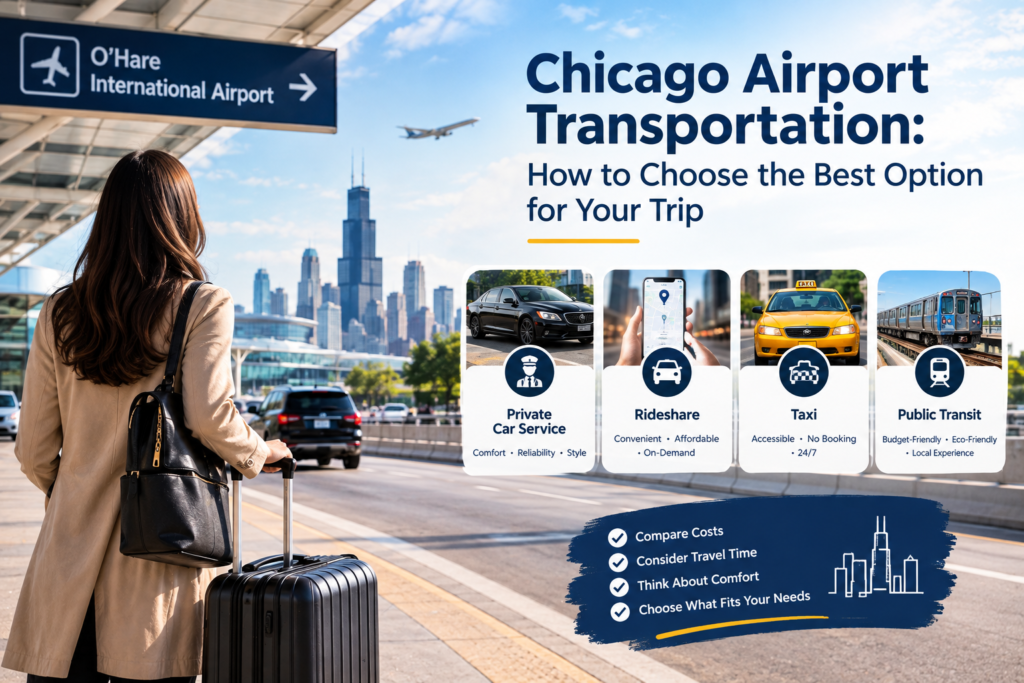
Traveling to or from Chicago can involve more planning than simply booking a flight. Whether you’re arriving for a business meeting, visiting family, heading to a hotel downtown, or traveling to the suburbs, your choice of airport transportation can affect your budget, schedule, and overall experience.
Chicago is served by two major airports: O’Hare International Airport and Midway International Airport. Both offer several ways to reach the city and surrounding areas, including public transit, taxis, rideshare services, airport shuttles, rental cars, and prearranged private transportation. The best option depends on where you’re going, how much luggage you’re carrying, when you’re traveling, and how much flexibility you need.
Instead of automatically choosing the cheapest or most convenient-looking option, it helps to compare the available services against your actual travel plans. A solo traveler heading downtown may have different priorities from a family with several suitcases or a business traveler with a tight schedule.
1. Start by Identifying Which Chicago Airport You’re Using
Before comparing transportation options, confirm which airport your flight uses. O’Hare and Midway serve different parts of the Chicago area, and the best route can vary significantly depending on your destination.
O’Hare International Airport is located northwest of downtown Chicago. It has direct access to the CTA Blue Line, which connects the airport with downtown and other parts of the city. The Blue Line operates 24 hours a day, making it a useful option for travelers arriving outside normal business hours.
Midway International Airport is on Chicago’s southwest side. The CTA Orange Line connects the airport with downtown, with a typical journey of approximately 20–25 minutes when trains are operating normally. The station is accessible through an enclosed walkway near the terminal.
These rail connections make public transportation a practical choice for many visitors. However, reaching the nearest station is only part of the journey. You should also consider how far your hotel, office, or home is from the station and whether you’ll need another ride after getting off the train.
For destinations outside downtown, such as suburban hotels, residential neighborhoods, or business parks, a direct car service may be more practical than combining multiple transit connections.
2. Compare the Main Airport Transportation Options
There isn’t one transportation method that works best for every passenger. Each option offers a different balance of cost, convenience, flexibility, and travel time.
Public transportation
CTA trains are worth considering if you’re traveling alone, carrying manageable luggage, and heading somewhere near a convenient station. They can also help you avoid road traffic and reduce transportation costs.
The Blue Line provides direct rail access from O’Hare, while the Orange Line connects Midway with downtown. Depending on your final destination, you may need to transfer to another train or bus, or walk part of the way.
Public transit is less convenient when you’re carrying bulky bags, traveling with small children, or arriving after a long international flight. You should also check schedules and service alerts before departure, particularly if your flight arrives late at night or you need to catch an early-morning departure.
Taxis
Taxis provide a familiar option for travelers who want a direct ride without arranging a reservation in advance. They can be useful for short trips, straightforward airport pickups, and destinations that are difficult to reach by public transportation.
However, the final fare and journey time can depend on traffic, the route, and applicable charges. Before leaving the airport, make sure you understand how the fare is calculated and confirm that you’re using an authorized pickup area.
Rideshare services
Rideshare apps allow passengers to request a vehicle using a smartphone. They’re convenient for many individual travelers and can provide a choice of vehicle categories depending on availability.
The main consideration is that prices and pickup times can change with demand. During busy arrival periods, severe weather, or major events, you may need to wait longer or pay more than expected. Airport pickup instructions also matter, since passengers may need to reach a designated loading area rather than meet the driver directly outside baggage claim.
Airport shuttles
Shuttle services may offer shared or dedicated transportation, depending on the provider. Shared shuttles can be useful for travelers heading to popular hotels or established service areas, particularly when reducing the cost per passenger is a priority.
The trade-off is that shared transportation may involve waiting for other passengers, additional stops, or a longer overall journey. Check whether the service operates on a fixed schedule, requires advance booking, and serves your exact destination.
Private car and chauffeur services
Prearranged private transportation is worth considering when you want a planned pickup, a direct journey, or a vehicle suited to your travel requirements. Depending on the provider and booking arrangement, services may include scheduled pickups, flight tracking, chauffeur-driven vehicles, or assistance coordinating group travel.
For travelers researching Chicago Airport Transportation, the important question is not simply whether a private car is more comfortable. It’s whether the service matches the trip’s requirements, including the pickup time, number of passengers, luggage capacity, destination, and expected total price.
Private transportation generally requires more planning than requesting an on-demand ride, but confirming the details in advance can make the arrival process easier to manage.
3. Consider Your Total Budget, Not Just the Initial Fare
Price is often the first factor travelers compare, but the lowest advertised fare doesn’t always represent the lowest overall cost.
Public transportation typically offers a relatively economical way to reach downtown, especially for solo travelers. A taxi or rideshare may cost more, but it can provide a direct journey without requiring additional transfers. Private car services may have higher upfront prices, depending on the vehicle, route, and level of service.
To compare options fairly, look beyond the initial quote.
Additional charges: Check whether the quoted price includes airport fees, tolls, gratuity, waiting time, and other potential charges. Policies vary by provider, so don’t assume every expense is included.
Surge pricing: Rideshare fares can increase when demand is high or driver availability is limited. If you’re traveling during a major convention, holiday period, or severe weather, check the estimated fare close to the time you intend to travel.
Group size: A transportation option that seems expensive for one passenger may become more competitive when the cost is divided among several people. Compare the total fare for the entire group rather than looking only at the per-person price.
Luggage and additional rides: A low-cost train journey may require a separate taxi or rideshare at the other end. When comparing alternatives, include the entire journey from the airport to your final destination.
Waiting and cancellation policies: If your flight is delayed or your plans change, the provider’s policies may affect the final cost. Review these details before confirming a reservation.
A useful approach is to compare at least two or three realistic options for the same journey. Use the same passenger count, destination, approximate departure time, and luggage requirements so the comparison is meaningful.
4. Allow Enough Time for Chicago Traffic
Chicago road conditions can change considerably throughout the day. Rush-hour congestion, construction, weather, sporting events, and downtown activity can all affect driving times.
A journey that appears short on a map may take much longer during peak traffic. This matters most when you’re traveling to the airport for a departure, attending a time-sensitive meeting, or connecting to another flight.
When planning a ride to the airport, work backward from your flight’s departure time. Account for the airline’s check-in and baggage deadlines, security screening, airport walking distances, and the possibility of unexpected delays. International departures may require additional preparation depending on the airline and destination.
For an airport arrival, consider when you need to be at your hotel or appointment rather than relying exclusively on the estimated drive time.
If you choose a car-based service, check traffic conditions before leaving and ask about the provider’s approach to scheduled pickups. A professional transportation company may be able to advise on suitable departure timing, but no driver or service can guarantee that traffic will remain clear.
For travelers who want to avoid road congestion where practical, rail transportation can be an alternative on routes served directly by the CTA. However, you should also account for train frequency, transfers, and any walking required at the destination.
5. Match the Vehicle to Your Passengers and Luggage
The right vehicle depends on more than the number of people traveling. Suitcases, carry-on bags, strollers, mobility equipment, and business materials can all affect how much space you need.
A solo traveler with one small bag may be comfortable using a standard rideshare vehicle or public transit. A couple with several large suitcases may prefer a vehicle with more dedicated luggage space. Families and larger groups may need a van or another vehicle designed to accommodate additional passengers.
Before booking a private transfer, ask the provider to confirm both passenger capacity and luggage capacity. A vehicle that technically seats six people may not have enough room for six passengers and their full-size suitcases.
If you’re traveling with children, confirm whether an appropriate child safety seat is available and whether you need to request it in advance. Travelers who require wheelchair accessibility or other specific accommodations should confirm those arrangements directly with the transportation provider.
For groups arriving on the same flight, traveling together in one suitable vehicle can simplify coordination. However, if the group has different arrival times or is heading to several destinations, separate rides or a flexible transportation plan may be more practical.
6. Plan Around Flight Delays and Pickup Instructions
Air travel rarely follows a perfect schedule. Flights can arrive early, land late, or experience extended waits at the gate. Your transportation plan should account for these possibilities.
If you’re booking a private airport transfer, ask whether the provider monitors flight status and how pickup timing is adjusted when a flight is delayed. Also confirm whether waiting time is included, when additional charges begin, and how the driver will contact you after landing.
If you’re using a rideshare service, follow the airport’s current instructions for requesting a ride and reaching the correct pickup area. Requesting a vehicle too early may mean waiting in a crowded area, while requesting too late can add unnecessary time to your journey.
For taxi passengers, identify the official taxi stand and follow airport signage rather than accepting unsolicited offers from people approaching travelers inside the terminal.
Before your flight, save the driver’s contact details or the provider’s support number if applicable. Keep your phone charged and make sure you can access any booking confirmation, pickup instructions, or messages you may need.
A few minutes spent checking these details before departure can prevent confusion when you’re tired, carrying luggage, or unfamiliar with the airport.
7. Think About the Type of Trip You’re Taking
Your purpose for visiting Chicago can help determine which transportation option makes the most sense.
Business travel: If you’re heading directly to a meeting, a prearranged car may be useful when punctuality, privacy, or a predictable itinerary matters. Travelers with multiple appointments should check whether hourly service or planned stops are available and how those arrangements are priced.
Family vacations: Families often benefit from choosing transportation around luggage capacity, child safety requirements, and the location of their accommodation. Public transit can work well for some itineraries, but a direct ride may be easier after a long flight.
Weekend visits: Solo travelers and couples staying near a CTA station may find rail transportation sufficient for much of the trip. If the accommodation is far from transit or the itinerary includes several stops, compare the cost and convenience of a car.
Group events: Weddings, conferences, concerts, and sporting events can involve multiple passengers and strict arrival times. Booking suitable transportation in advance can help coordinate the group, particularly when several people are arriving at the same airport.
Suburban destinations: A trip beyond downtown may require additional connections by train or bus. Compare the complete door-to-door journey with the cost of a direct ride before deciding.
The goal is to choose transportation based on the actual demands of your itinerary, rather than assuming that the same option will suit every trip.
8. Check These Details Before You Book
Once you’ve narrowed down your options, take a moment to verify the practical details. This is especially important when booking transportation for an unfamiliar airport or a time-sensitive journey.
-
Confirm the destination: Make sure the quote covers your exact hotel, home, office, or other drop-off location.
-
Verify the pickup point: Check the terminal, designated meeting area, and any instructions for contacting the driver.
-
Review the complete price: Ask about tolls, airport fees, gratuity, waiting time, extra stops, and cancellation terms.
-
Check vehicle capacity: Confirm that the vehicle can accommodate every passenger and all luggage.
-
Understand the timing: Allow enough time for traffic, check-in, security, and airport navigation.
-
Keep confirmation details accessible: Save the reservation, contact information, and pickup instructions on your phone.
-
Check accessibility requirements: Confirm any mobility accommodations, child seats, or other special arrangements in advance.
If you’re booking a service for someone else, share the pickup instructions with the traveler and make sure the provider has the correct flight number and contact information, where required.
These checks apply whether you’re reserving a private transfer, arranging a shuttle, or planning to use an on-demand ride.
9. So, Which Chicago Airport Transportation Option Is Best?
The best option depends on your priorities.
Public transportation is often a strong choice for budget-conscious travelers heading to destinations near rail stations. Taxis and rideshare services can be convenient when you want a direct ride and have some flexibility around price and availability. Shuttles may suit passengers traveling to established service areas, while private car services can be a good fit for scheduled pickups, business travel, families, and groups that need specific vehicle arrangements.
There is no universal winner. A traveler arriving alone at O’Hare and staying downtown may have very different needs from a family landing at Midway with several suitcases and a hotel outside the city center.
Start with the airport and destination, then compare the complete journey, total cost, travel time, luggage requirements, and pickup arrangements. If you have a strict schedule, build in a reasonable time buffer instead of relying on the most optimistic estimate.
A little preparation can make airport travel in Chicago more predictable and help you begin or end your trip with fewer unnecessary complication.