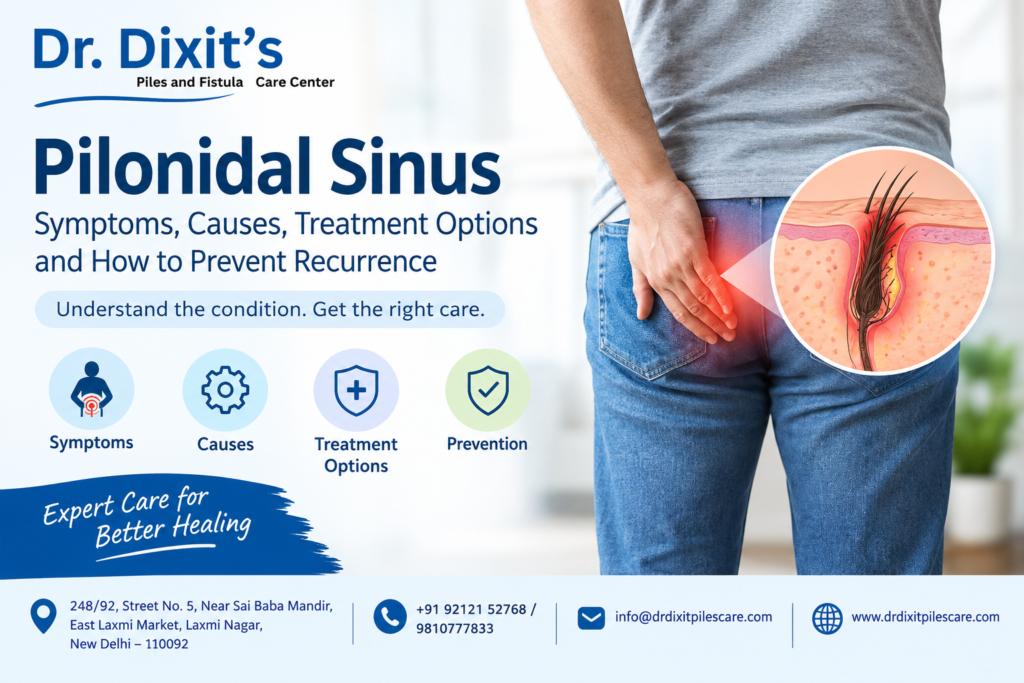
A painful swelling or small opening near the tailbone can be easy to overlook at first. However, when it becomes red, swollen, or starts releasing pus, it may indicate a condition known as a pilonidal sinus. Although it commonly affects young adults, many people are unsure what causes it, how it differs from piles, and when medical attention is necessary.
Understanding the symptoms, available treatment options, and preventive measures can help patients make informed decisions about their health. Early diagnosis is particularly important because an untreated pilonidal sinus can develop into a painful abscess or a recurring infection.
This guide explains everything you need to know about pilonidal sinus, including its causes, warning signs, treatment approaches, and practical steps to reduce the risk of recurrence.
What Is a Pilonidal Sinus?
A pilonidal sinus is a small tunnel or cavity that develops in the skin, usually near the top of the buttock crease, close to the tailbone. It may contain trapped hair, skin debris, and inflammatory tissue. When hair penetrates the skin and triggers an inflammatory reaction, a sinus or cyst-like cavity can develop.
The condition may remain relatively painless initially. However, when bacteria enter the affected area, infection can cause swelling, tenderness, and pus discharge.
A pilonidal sinus may present as:
- A small pit or opening near the tailbone.
- A tender lump in the buttock crease.
- Redness, swelling, or warmth around the affected skin.
- Pus or blood-stained discharge.
- Pain while sitting, walking, or performing everyday activities.
- Repeated episodes of swelling and discharge.
Not every patient experiences all these symptoms. Some people notice only a small opening, while others develop a painful abscess that requires prompt medical treatment.
What Causes Pilonidal Sinus?
Pilonidal sinus development is often associated with loose hair becoming trapped in the skin around the buttock crease. Friction, pressure, and inflammation can contribute to the formation of a sinus tract.
Several factors may increase the likelihood of developing this condition.
1. Excessive Hair and Hair Penetration
Loose hair can collect in the buttock crease and penetrate the skin. The body may react to the trapped hair as a foreign object, triggering inflammation and sometimes infection.
2. Prolonged Sitting
People who spend long periods sitting, including office workers, students, and professional drivers, may experience increased pressure and friction around the tailbone area.
Prolonged sitting does not automatically cause a pilonidal sinus, but it may contribute to the conditions that encourage its development.
3. Friction and Sweating
Tight clothing, repeated friction, and moisture around the buttock crease can irritate the skin. These factors may contribute to inflammation, particularly when hair becomes trapped.
4. Other Risk Factors
Additional risk factors include:
- A deep buttock crease.
- Coarse or thick body hair.
- Previous pilonidal sinus infection.
- A family history of the condition.
- Being overweight, which may increase friction in the affected area.
Importantly, pilonidal sinus is not simply a result of poor personal hygiene. Regular cleansing is beneficial, but the condition can occur even in people who maintain good hygiene.
Pilonidal Sinus vs. Piles: Understanding the Difference
Pilonidal sinus and piles are different conditions, although both can cause discomfort in the lower part of the body. Confusing them may delay appropriate diagnosis and treatment.
Piles, also called haemorrhoids, involve swollen blood vessels in or around the anus. A pilonidal sinus develops in the skin near the tailbone, usually higher up in the buttock crease.
| Feature | Pilonidal Sinus | Piles |
|---|---|---|
| Location | Near the tailbone, at the top of the buttock crease | In or around the anus |
| Main problem | Inflamed or infected sinus tract | Swollen blood vessels |
| Common symptoms | Swelling, pain, pus, or discharge | Rectal bleeding, itching, swelling, or discomfort |
| Discharge | May release pus or blood-stained fluid | May cause bleeding or mucus, depending on the type |
| Treatment | Depends on infection, sinus extent, and recurrence | Depends on severity and haemorrhoid type |
Location is an important clue, but it is not enough to establish a diagnosis. A medical professional can examine the affected area and determine the underlying cause.
For more information, read this guide to the differences between piles and pilonidal sinus.
How Is Pilonidal Sinus Diagnosed?
Diagnosis usually begins with a review of symptoms and a physical examination. A healthcare professional will assess the location of the opening, any swelling or discharge, and whether an abscess or an established sinus tract is present.
In many cases, a physical examination is sufficient. Additional investigations may be considered if the presentation is unusual or another condition needs to be ruled out.
During the consultation, patients should mention:
- When the symptoms first appeared.
- Whether the swelling has occurred before.
- Whether pus or blood is draining from the area.
- Whether sitting or walking makes the pain worse.
- Any previous treatment or surgery for pilonidal sinus.
Providing this information helps the clinician assess the condition and recommend an appropriate treatment plan.
Pilonidal Sinus Treatment Options
Treatment depends on whether the sinus is infected, whether an abscess has formed, and whether the condition keeps returning. Not every patient needs surgery, but an established or recurrent sinus may require a procedure.
1. Conservative Care for Mild Symptoms
When there is no abscess or significant infection, a clinician may recommend measures to keep the area clean and reduce irritation.
These may include:
- Gently cleaning the area and drying it thoroughly.
- Avoiding prolonged pressure on the affected region.
- Wearing comfortable clothing that reduces friction.
- Following medical advice about hair management.
- Monitoring the area for increasing pain, redness, or discharge.
These measures can help manage irritation and support prevention, but they may not eliminate an established sinus tract.
2. Drainage of a Pilonidal Abscess
If a painful abscess develops, a healthcare professional may need to drain the collection of pus. This procedure can relieve pressure and pain.
Drainage is not always a permanent cure because the underlying sinus tract may remain. Further treatment may be necessary if the area does not heal or the condition returns.
Antibiotics may be appropriate in selected cases, such as when there is spreading skin infection or another specific indication. They do not replace drainage when an abscess requires a procedure.
3. Surgical Treatment
For persistent or recurrent pilonidal sinus, surgical options may include removing the affected tissue, treating the sinus tract, or using techniques designed to reduce the chance of recurrence.
The appropriate procedure depends on the extent of the disease, previous treatments, wound-healing considerations, and the patient’s overall health.
Patients should discuss the expected recovery period, wound-care requirements, potential complications, and recurrence risk with their treating surgeon before making a decision.
4. Minimally Invasive Procedures
Selected patients may be suitable for minimally invasive techniques that treat the sinus through a smaller opening or limited access to the affected tract.
These approaches may offer advantages in certain cases, but they are not appropriate for every type of pilonidal sinus. Availability, outcomes, and recurrence rates vary according to the technique and the patient’s condition.
A qualified clinician can explain which options are appropriate after examining the area.
Home Care and Recovery After Treatment
Recovery depends on the treatment performed. Following medical instructions is essential, particularly when the wound needs regular dressing changes or is left open to heal.
Practical recovery tips include:
- Follow wound-care instructions: Clean and dress the area exactly as advised.
- Keep the area dry: Moisture can irritate the surrounding skin.
- Avoid unnecessary pressure: Take breaks from sitting and gradually return to normal activities as advised.
- Maintain a balanced diet: Adequate protein, fluids, and essential nutrients support normal wound healing.
- Attend follow-up appointments: These allow the clinician to assess healing and identify complications early.
- Avoid self-treatment: Do not squeeze the swelling, insert objects into the opening, or apply unprescribed substances.
Seek prompt medical attention if you develop fever, worsening pain, spreading redness, increasing swelling, or significant discharge. These symptoms may indicate infection or another complication.
How to Prevent Pilonidal Sinus Recurrence
Pilonidal sinus can return even after treatment, particularly when the underlying risk factors persist. Preventive care can reduce irritation and may lower the risk of another episode.
Maintain Gentle Skin Hygiene
Wash the buttock crease gently and dry it thoroughly. Avoid harsh scrubbing or products that irritate the skin.
Manage Hair Carefully
Ask your clinician whether hair removal is appropriate for your situation. Depending on your skin and medical history, they may recommend a suitable method. Avoid shaving irritated or infected skin without medical advice.
Reduce Prolonged Pressure
If your routine involves sitting for long periods, take regular movement breaks when possible. Choose comfortable clothing and avoid activities that repeatedly irritate the affected area during recovery.
Maintain a Healthy Weight
For people who are overweight, gradual weight management may help reduce friction and moisture in the buttock crease. However, pilonidal sinus can affect people of all body types.
Do Not Ignore Recurring Symptoms
Repeated swelling, pain, or discharge should be evaluated by a healthcare professional. Early assessment may help prevent complications and clarify whether additional treatment is needed.
When Should You See a Doctor?
Do not wait for symptoms to become severe before seeking medical advice. Arrange an assessment if you notice a persistent opening near the tailbone, recurring discharge, or a lump that does not settle.
Seek urgent medical evaluation if you experience:
- Severe or rapidly worsening pain.
- A painful, swollen lump that may contain pus.
- Fever or chills.
- Redness that spreads around the affected area.
- Difficulty sitting or carrying out normal activities because of pain.
These symptoms can indicate an abscess or spreading infection that requires prompt attention.
Conclusion: Take the Right Steps Toward Pilonidal Sinus Care
Pilonidal sinus is a condition affecting the skin near the tailbone that can cause pain, swelling, and recurring discharge. Although mild symptoms may initially seem manageable, an untreated abscess or persistent sinus tract can lead to repeated episodes of infection.
Understanding the difference between pilonidal sinus and piles, recognising warning signs, and seeking timely medical advice can help you choose the right course of treatment. Good hygiene, appropriate hair management, reduced friction, and proper follow-up may also support recovery and help lower recurrence risk.
Experiencing pain, swelling, or discharge near your tailbone? Consult a qualified healthcare professional for an accurate diagnosis and a treatment plan suited to your condition. You can also visit Dr. Dixit’s Piles and Fistula Care Centre to learn more about anorectal conditions and available care options.