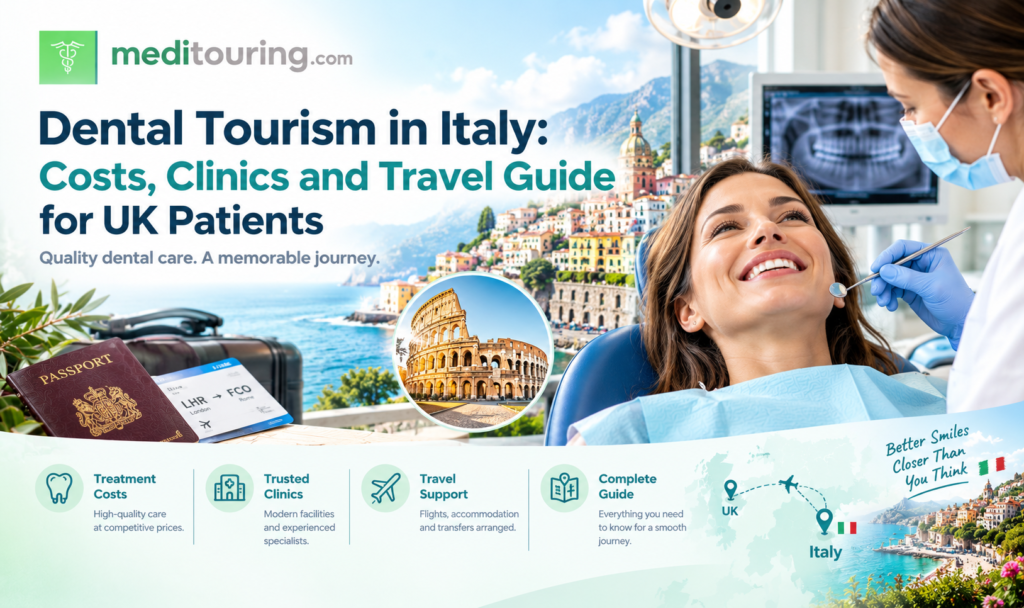
Dental tourism in Italy is becoming an option for UK patients exploring alternatives to private dental care at home. From dental implants and crowns to veneers and full-mouth rehabilitation, Italy offers a range of dental services for people seeking personalised treatment plans alongside the opportunity to travel.
However, choosing dental tourism involves more than comparing prices. Patients need to assess clinic credentials, understand treatment timelines, plan travel arrangements and consider aftercare before making a decision.
Meditouring helps patients explore dental treatment options in Italy by connecting them with clinics and assisting with treatment coordination and travel arrangements. This guide explains what to consider when planning dental tourism Italy, including costs, clinics and travel.
What Is Dental Tourism in Italy?
Dental tourism involves travelling to another country to receive dental care. For UK patients, dental tourism Italy can provide an opportunity to compare treatment options, clinic services and overall expenses before choosing a suitable provider.
Popular treatments include:
- Dental implants: Replacement options for missing teeth.
- All-on-4 and All-on-6: Implant-supported solutions for selected patients with extensive tooth loss.
- Dental crowns: Restorations used to protect or rebuild damaged teeth.
- Porcelain veneers: Cosmetic restorations designed to improve the appearance of selected teeth.
- Full-mouth restoration: A comprehensive treatment plan addressing multiple damaged, missing or worn teeth.
The appropriate treatment depends on oral health, bone condition, gum health and individual clinical needs. A qualified dentist should assess these factors before recommending a procedure.
How Much Does Dental Treatment in Italy Cost?
Cost is one of the main reasons patients investigate affordable dental treatments abroad. However, the final price depends on the treatment required, materials, clinical complexity, diagnostic tests and the number of appointments.
Rather than relying on advertised starting prices, request an itemised quotation that explains exactly what is included.
Example Dental Treatment Package Prices
Meditouring’s indicative package prices for treatments in Italy include the following examples:
| Treatment | Indicative package price |
|---|---|
| All-on-4 full dental implants | £9,000 |
| All-on-6 extended dental implants | £10,500 |
| Dental crowns | £2,500 |
| Full-arch mouth rehabilitation | £10,500 |
| Porcelain veneers | £8,300 |
These are indicative prices supplied for Meditouring’s Italy treatment packages, not universal market rates. Confirm the current quotation, the number of teeth or implants covered, the materials used and the precise inclusions with the provider before booking.
Some packages may include treatment, hotel accommodation and transport. Patients should verify whether flights, consultations, scans, medication, temporary restorations, additional procedures and follow-up appointments are included.
How to Compare Costs Properly
When comparing dental treatments abroad with private treatment in the UK, calculate the total expected expense rather than looking at the treatment fee alone.
Consider:
- Initial consultation and diagnostic imaging.
- The dentist’s recommended procedure and materials.
- Bone grafting, extractions or other additional treatments, if necessary.
- Flights, accommodation, airport transfers and local transport.
- Food, medication and other personal expenses.
- Additional visits for treatment completion.
- Follow-up care and potential corrective treatment.
This approach helps patients evaluate whether travelling for dental care offers genuine financial value for their individual circumstances.
How to Choose a Dental Clinic in Italy
Choosing the right clinic is one of the most important steps in planning dental tourism. Attractive pricing and professional-looking websites are not enough to establish clinical quality.
Before committing to a provider, investigate the following areas.
1. Dentist Qualifications and Registration
Ask about the treating dentist’s qualifications, relevant experience and registration with the appropriate Italian professional authority. For complex procedures, such as implant-supported full-arch restorations, enquire about experience with similar cases.
You should also establish who will carry out each stage of treatment and who will be responsible for managing complications.
2. Treatment Planning and Diagnostic Assessment
A reliable clinic should assess your dental history, current oral health and treatment requirements before finalising a plan.
Depending on the procedure, assessment may involve dental X-rays, three-dimensional imaging, gum examinations or other diagnostic tests. Ask for a written treatment plan explaining the proposed procedure, alternatives, expected timeline and possible risks.
Be cautious of providers who promise a particular result without adequate assessment.
3. Materials, Technology and Hygiene
Ask which implant systems, crown materials or veneer materials the clinic uses. For implant treatment, request information about the manufacturer and how implant details will be documented for future maintenance.
You can also ask about infection-control procedures, sterilisation standards, emergency arrangements and the technology used to plan treatment.
4. Transparent Pricing and Written Documentation
A clear quotation should separate the main procedure from optional extras and identify possible additional costs.
Before travelling, obtain copies of your treatment plan, quotation, consent documents, appointment schedule and information about warranties or guarantees. Understand any exclusions and the conditions that apply to remedial treatment.
5. Communication and Aftercare
Effective communication is essential when receiving treatment in another country. Confirm whether English-speaking staff are available and how you can contact the clinic after returning to the UK.
Ask what happens if you experience pain, swelling, a damaged restoration or another complication after travelling home. Establish whether remote advice, local referrals or another trip may be necessary.
Planning Your Dental Treatment Trip to Italy
Travel planning should be based on the clinical schedule rather than convenience alone. Some procedures can be completed in a short visit, while others require multiple appointments separated by weeks or months.
Before You Travel
Start by sharing relevant dental records and recent imaging, if available. Arrange a consultation to discuss your concerns and request an initial treatment proposal.
Before booking flights, confirm:
- The proposed treatment and appointment dates.
- Whether an in-person examination is required before final approval.
- How many visits may be needed.
- The likely duration of each visit.
- The arrangements for temporary teeth, if applicable.
- What happens if treatment takes longer than expected.
Avoid booking non-refundable travel until the clinic has clarified the likely treatment schedule and any necessary assessments.
During Your Stay
Allow sufficient time for consultations, procedures, recovery and follow-up checks. Do not plan a tightly scheduled sightseeing holiday immediately after surgery without discussing it with your dentist.
For implant procedures, the process may involve placing implants first and attaching definitive restorations after a healing period. Immediate or temporary restorations may be appropriate in selected cases, but they are not suitable for everyone.
Follow your dentist’s advice about eating, oral hygiene, physical activity and travel after treatment.
After Returning to the UK
Aftercare remains important even when treatment takes place abroad. Keep your clinical records, implant details, prescriptions and invoices in an accessible place.
Arrange any recommended reviews and maintain regular dental check-ups. Before treatment, identify a local dentist who may be able to provide routine care if needed, and understand that another provider may charge separately for assessments or corrective work.
What UK Patients Should Know About Travel and Healthcare
Travel arrangements should include suitable accommodation, transport to appointments and enough flexibility to accommodate changes in the treatment schedule.
Check your passport and entry requirements before departure. Review travel insurance carefully, as policies may exclude planned dental procedures, complications arising from elective treatment or related expenses.
A UK Global Health Insurance Card (GHIC) is not a substitute for travel insurance and does not cover planned private dental treatment abroad. The NHS advises patients to understand the relevant funding arrangements and obtain appropriate authorisation where applicable before travelling for planned healthcare.
For further guidance, consult the NHS information on going abroad for medical treatment and the UK government’s Italy health advice.
How Meditouring Can Help With Dental Tourism in Italy
Planning dental care abroad can involve several moving parts, from selecting a clinic to coordinating appointments and accommodation.
Meditouring helps patients explore dental treatment options in Italy and provides support with treatment coordination and travel-related arrangements. Depending on the selected package, assistance may include connecting patients with a clinic, coordinating appointments, and arranging accommodation or transport.
Patients can explore options for dental implants, All-on-4 and All-on-6 procedures, crowns, veneers and full-mouth rehabilitation.
The clinic remains responsible for clinical assessment, diagnosis, treatment recommendations and dental care. Patients should review the clinic’s credentials and treatment plan independently and confirm all package inclusions before making a booking.
To begin, visit Meditouring to discuss your requirements and explore the available options.
Is Dental Tourism in Italy Right for You?
Dental tourism may be worth considering if you need significant dental work and want to compare treatment plans and total costs across different providers. It may be less suitable if you require urgent treatment, have complex medical needs that have not been assessed, or cannot accommodate multiple visits when necessary.
The decision should balance affordability, clinical suitability, travel demands, aftercare and personal circumstances. The cheapest quotation is not necessarily the best option, particularly when long-term maintenance and potential complications are considered.
Final Thoughts
Dental tourism Italy offers UK patients another route to explore dental care, but successful planning requires careful research and realistic expectations. Compare itemised quotations, verify dentist credentials, understand the treatment timeline and plan for aftercare before travelling.
If you are considering affordable dental treatments abroad, take time to evaluate the complete cost and clinical arrangements rather than focusing on headline prices alone.
With careful preparation and appropriate professional guidance, patients can make a more informed decision about dental treatments abroad and determine whether treatment in Italy suits their needs.