Hair extensions are popular across beauty salons, online stores, specialist retailers, and professional hair businesses. However, maintaining product quality does not end when extensions are manufactured or styled. Appropriate packaging is essential for keeping hair products organised, protecting them from dust and unnecessary handling, and presenting them professionally to customers.
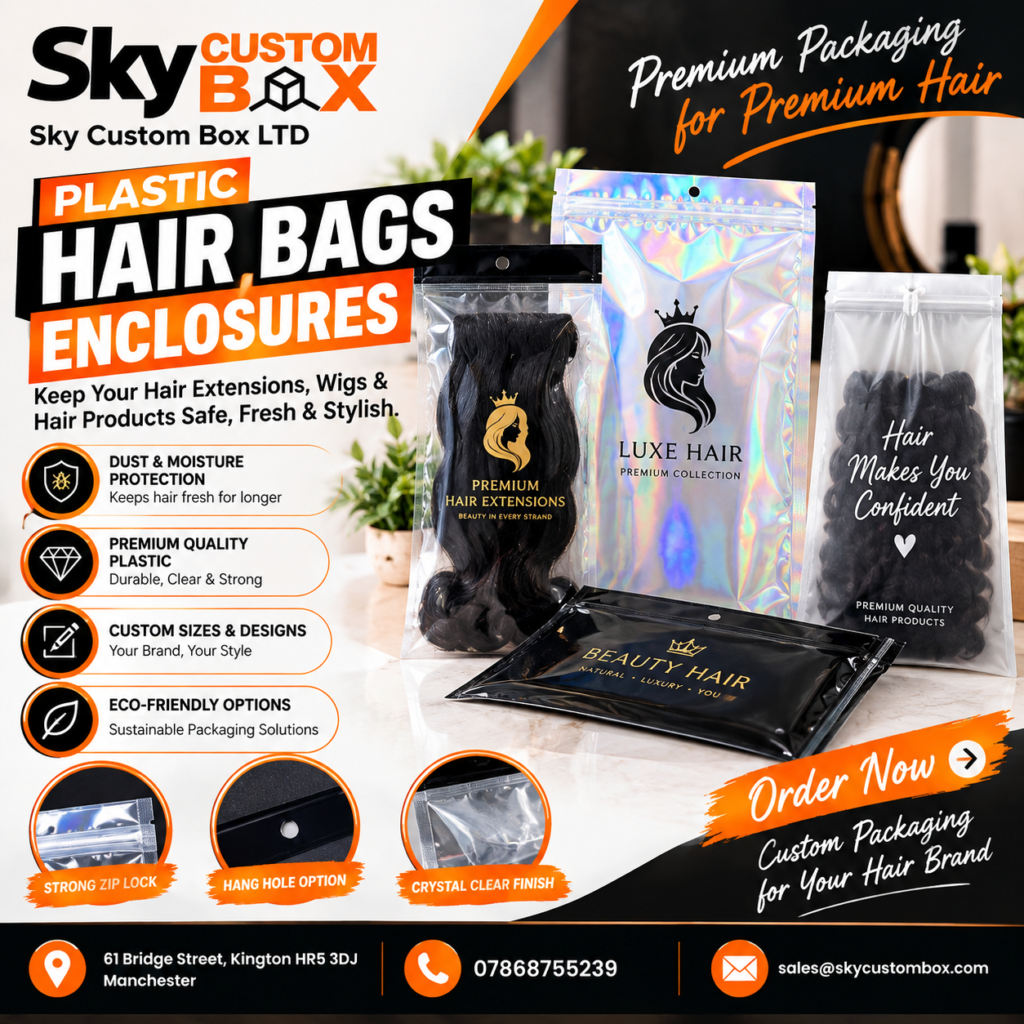
plastic hair extension bags packaging offer a practical packaging option for businesses selling human hair bundles, synthetic extensions, clip-in hairpieces, ponytails, and wigs. Their lightweight construction, product visibility, and availability in different sizes make them useful for retail display, wholesale distribution, and e-commerce fulfilment.
Choosing suitable packaging requires more than selecting a transparent bag. Businesses must consider material quality, dimensions, closure systems, product protection, branding, sustainability, and storage requirements. Understanding these factors helps retailers and manufacturers choose packaging that supports efficient operations while delivering a positive customer experience.
1. Why Plastic Hair Extension Bags Packaging Matters
Packaging plays an important role throughout the hair extension supply chain. Products may pass through manufacturing facilities, warehouses, wholesalers, salons, and delivery networks before reaching the final customer. During this process, unsuitable packaging can contribute to tangling, contamination, poor organisation, or damaged presentation.
Protecting Hair Extensions During Storage and Delivery
Hair extensions can become tangled or disorganised when handled repeatedly or stored without adequate support. A properly sized bag helps contain the product and creates a barrier against dust and routine handling.
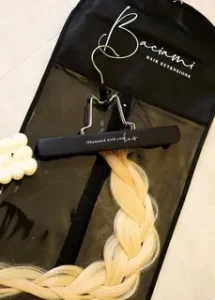
For businesses shipping hair extensions, packaging should be selected according to the product’s length, weight, texture, and shape. Long bundles may require larger bags, while clip-in extensions and smaller hairpieces can often fit into compact packaging.
Useful protective features include:
- Durable seams that resist splitting during normal handling.
- Sufficient space to accommodate the hair without excessive compression.
- Secure closures that help keep products contained.
- Smooth internal surfaces that reduce the likelihood of snagging.
- Additional inserts or product cards for bundles that need extra support.
A plastic bag alone may not provide enough protection for every shipment. Businesses sending fragile accessories or high-value hair products may need an additional cardboard box or protective outer packaging.
Read More:
https://www.skycustombox.com/blog/
Improving Product Organisation
Clear packaging allows warehouse staff, salon professionals, and retail customers to identify products without opening every package. This is especially useful when managing multiple lengths, shades, textures, and extension types.
A consistent packaging system can reduce picking errors and make stock control more efficient. Labels showing product details can further improve identification, particularly for wholesalers handling large inventories.
2. Choosing the Right Bag Material, Size and Closure
The best packaging format depends on how the hair extensions will be stored, displayed, and transported. Material thickness, transparency, bag dimensions, and closure design all influence usability.
Material Thickness and Durability
Plastic bags are available in different thicknesses, depending on the material and intended application. Lightweight options may suit smaller hair accessories, while heavier bundles or products with rigid clips may require stronger packaging.
However, thicker material is not automatically the best choice. Excessive thickness can increase material consumption and cost without providing meaningful benefits for a lightweight product.
Businesses should assess:
- The weight and shape of the packaged product.
- The likelihood of punctures or tearing.
- The strength of the seams.
- How frequently the package will be handled.
- Whether the bag will be used for storage, retail presentation, or shipping.
Testing samples with actual products is more reliable than choosing a bag based solely on a supplier’s general description.
Selecting Suitable Dimensions
Incorrect sizing is a common packaging problem. Bags that are too small may compress hair extensions or make removal difficult, while oversized bags can allow bundles to move around unnecessarily.
Before ordering, measure the product in its intended packaged position. Allow sufficient room for ties, backing cards, labels, and any other components.
For businesses selling multiple extension styles, maintaining a small range of standard bag sizes can simplify purchasing and inventory management.
Comparing Closure Options
Different closure systems offer different levels of convenience.
Resealable zip bags are useful when customers or staff need repeated access to the product.
Adhesive-strip bags provide a straightforward closure for products that do not need frequent reopening.
Heat-sealed bags can create a closed package for certain distribution applications, although opening them may damage the bag.
The closure should be secure without catching hair fibres or making the product difficult to remove. Businesses should test opening and closing procedures before committing to a large order.
Read More:
3. Custom Plastic Hair Bags Enclosures for Branding and Retail
Packaging is often one of the first physical elements customers notice when receiving a hair extension product. Consistent presentation can help a brand look organised and professional, even when the packaging itself is relatively simple.
Custom packaging may include printed logos, branded labels, colour accents, product information, or cardboard inserts.
Making Product Information Clear
A well-designed label can help customers distinguish between similar products and understand what they have purchased.
Depending on the product, useful information may include:
- Brand and product name.
- Extension length and colour.
- Hair texture or style.
- Bundle quantity.
- Care and storage instructions.
- Barcode or stock-keeping unit (SKU).
- Relevant manufacturer or importer details.
Descriptions should be accurate and supported by reliable product information. For example, claims about hair origin, composition, processing, or durability should not be included unless the business can substantiate them.
Balancing Appearance and Practicality
Transparent bags can make products easy to inspect, while printed designs can strengthen brand recognition. Some businesses use a combination of clear plastic packaging and a printed cardboard sleeve to create a more premium appearance.
For example, a salon supplier may prioritise simple, durable bags with readable product labels. A direct-to-consumer beauty brand may prefer branded packaging with a coordinated colour scheme and care card.
Businesses researching customised packaging options may consider suppliers such as Sky Custom Box as part of their evaluation. Comparing available materials, print specifications, sample quality, minimum order quantities, and delivery arrangements helps determine whether a packaging format meets the business’s requirements.
The most effective design is one that improves product identification and presentation without making packaging unnecessarily complicated.
4. Sustainability, Costs and Common Packaging Challenges
Plastic packaging offers advantages in terms of weight, flexibility, and product visibility, but businesses should also evaluate its environmental impact and total operating cost.
Making More Informed Material Choices
The environmental performance of plastic packaging depends on the polymer used, material quantity, manufacturing process, reuse potential, and disposal arrangements.
Some plastic packaging can be recycled through appropriate collection systems, but acceptance varies by material type and location. Labels, adhesives, colours, and mixed-material components can also affect recyclability.
Businesses can take practical steps to reduce unnecessary waste:
- Choose bag dimensions that fit the product properly.
- Avoid excessive material thickness.
- Explore suitable recycled-content options.
- Check local recycling requirements before making disposal claims.
- Consider reusable packaging where it is practical and hygienic.
- Provide accurate disposal guidance when appropriate.
Alternative materials may suit some applications, but they should be tested for durability, moisture resistance, and product compatibility before replacing an existing packaging system.
Read More:
Understanding Packaging Costs
The cost of plastic hair extension bags packaging depends on several variables, including material thickness, dimensions, closure type, printing requirements, order quantity, and delivery expenses.
Plain bags may be suitable for businesses handling high volumes, while customised formats can involve additional design, printing, and setup costs.
To manage expenditure effectively, businesses should calculate the total cost per packaged product rather than comparing unit prices alone.
This calculation may include:
- The bag and any additional packaging.
- Printing and labelling.
- Labour required for packing.
- Storage space.
- Damaged or unusable packaging.
- Fulfilment and shipping efficiency.
Ordering larger quantities may reduce the unit cost, but excessive inventory can tie up working capital and create storage difficulties. Small businesses can reduce this risk by forecasting demand and testing samples before placing larger orders.
Avoiding Common Packaging Mistakes
Several simple mistakes can affect product presentation and operational efficiency.
One is choosing bags based only on price without checking seam strength or closure quality. Another is using oversized packaging that allows extensions to shift during transportation.
Inconsistent labelling can also create problems when staff need to distinguish between similar shades, lengths, or textures.
A standard packaging checklist, clear product labels, and routine sample testing can help prevent these issues.
5. Best Practices for Hair Extension Packaging and Fulfilment
A reliable packaging process should protect products while remaining easy to repeat as order volumes increase.
Businesses can follow these practical steps:
- Inspect products before packing. Check that extensions are clean, correctly prepared, and free from visible defects.
- Choose the appropriate bag. Match dimensions, material strength, and closure type to the product.
- Prepare the hair carefully. Use suitable ties or backing cards where necessary to reduce tangling.
- Apply accurate labels. Make length, colour, style, and product identification easy to read.
- Check closure quality. Ensure bags remain securely closed during normal handling.
- Add outer protection when required. Use suitable mailers or shipping boxes for products that need additional protection.
- Review the finished package. Check appearance, labelling, and suitability before dispatch.
These practices are particularly useful for e-commerce brands, wholesalers, and salons managing multiple product types. They also make it easier to identify recurring problems and improve packaging procedures over time.
Conclusion
Plastic hair extension bags provide a practical way to store, organise, and present hair products across retail, wholesale, salon, and e-commerce environments. Their effectiveness depends on selecting the right dimensions, material quality, closure system, and level of additional protection.
For businesses evaluating plastic hair extension bags, the priority should be finding packaging that protects the product, supports accurate identification, and remains cost-effective throughout the supply chain. Clear bags can improve product visibility, customised labels can strengthen brand consistency, and suitable sizing can reduce unnecessary material use.
CONTACT US:
ABOUT US:
Social Media: