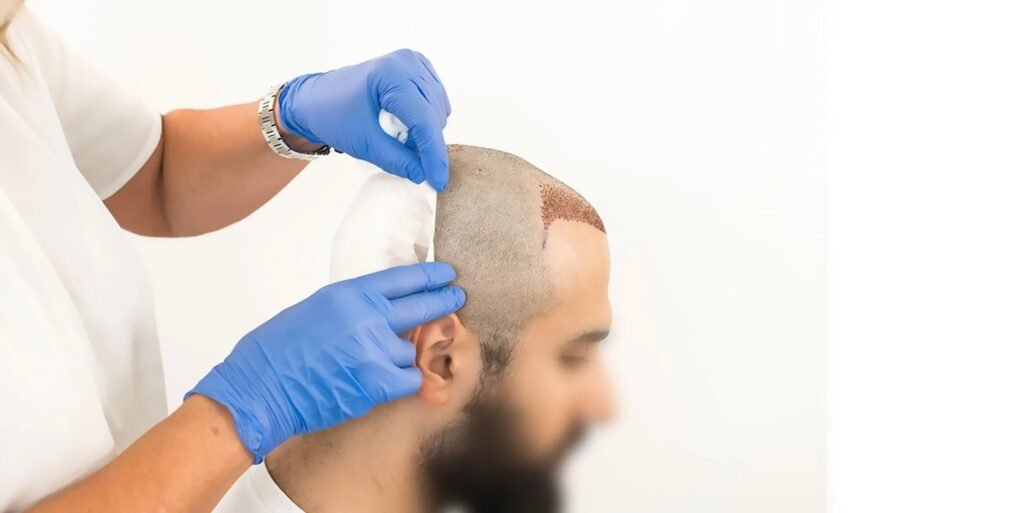
Robotic hair restoration has introduced advanced methods for identifying suitable follicular units, planning extraction patterns, and supporting consistent graft harvesting. However, the accuracy of a procedure depends on more than the technology used. Proper assessment of the scalp, careful monitoring of follicular units, and the experience of the medical team remain essential throughout the process. Understanding these factors can help patients make informed decisions when considering Robotic Hair Transplant in Dubai.
Grafts are small units of tissue containing one or more hair follicles. During a transplant, these units are typically extracted from a donor area, often at the back or sides of the scalp, and implanted into regions affected by thinning or hair loss. Each graft must be handled carefully to protect the follicles and preserve their potential to grow after transplantation.
Robotic systems can assist with identifying follicular units and guiding certain stages of extraction, depending on the platform and technique used. Nevertheless, automated identification does not eliminate the need for professional supervision. Medical teams must assess extraction quality, monitor graft integrity, and make adjustments when the scalp’s characteristics or hair direction create challenges.
Graft accuracy is especially important because the donor supply is limited. Excessive extraction, damage to follicular units, or an unsuitable distribution of grafts can affect the appearance of the donor area and the overall result. Patients should therefore understand how accuracy is assessed, what technology can realistically accomplish, and why human oversight remains central to safe hair restoration.
How Is Graft Accuracy Checked During Robotic Hair Transplantation?
Graft accuracy is evaluated through several complementary checks rather than a single measurement. These assessments help the medical team determine whether follicular units have been identified correctly, extracted with minimal trauma, and handled appropriately before implantation.
Follicular Unit Identification
Robotic systems may use digital imaging, cameras, and specialised software to identify individual follicular units. Depending on the technology, the system can help map visible hair shafts, estimate follicular locations, and guide the extraction instrument toward selected targets.
Before extraction begins, the medical team assesses hair density, shaft thickness, growth direction, and the characteristics of the donor scalp. These details matter because curly hair, closely spaced follicles, scarring, and variations in hair angle can make accurate identification more challenging.
Extraction Quality and Graft Integrity
After extraction, grafts can be examined to assess whether the follicular unit has been removed intact. Medical staff may look for visible follicular structures, surrounding tissue, transection, and other signs of damage.
Transection occurs when a follicle is cut or injured during harvesting. A robotic system may help reduce certain forms of inconsistency, but it cannot guarantee that every graft will be extracted without damage. The operator’s settings, the patient’s anatomy, and the system’s capabilities all influence the outcome.
Graft Counting and Documentation
Accurate graft counting helps the medical team compare the planned extraction with the number of grafts actually collected. Staff may document the number of follicular units, the distribution of single- and multiple-hair grafts, and any concerns identified during harvesting.
This information also supports planning for implantation. For example, single-hair grafts may be selected for the hairline, while multi-hair units may be more suitable for adding density behind it, depending on the patient’s anatomy and treatment goals.
What Technology Contributes to Graft Accuracy
Robotic hair transplantation is not a single, standardised procedure. Different systems offer different levels of imaging, automated guidance, and operator control. Understanding these differences is important when evaluating treatment options.
Digital Imaging and Follicle Mapping
Imaging technology can help locate visible follicles and identify potential extraction sites. Software-guided mapping may also support more systematic donor-area coverage, helping the team plan where grafts should be harvested.
However, the quality of the images and the system’s ability to recognise individual follicles can affect performance. Digital mapping should support clinical judgment rather than replace it.
Automated Punch Guidance
Some robotic platforms guide a small extraction punch toward selected follicular units. The system may assist with alignment, angle, or depth, depending on its design.
Correct positioning is essential because follicles extend beneath the skin and may not follow the same direction as the visible hair shaft. Experienced operators must monitor extraction and intervene when necessary to reduce the risk of follicular damage.
Real-Time Monitoring and Manual Review
Robotic guidance can make parts of harvesting more systematic, but manual review remains important. The team should monitor the donor area for signs of overharvesting, uneven extraction, or unexpected tissue responses.
Visual examination of collected grafts provides another opportunity to identify problems. When a graft appears damaged or incomplete, the team can document the finding and adapt its approach where clinically appropriate.
Why Graft Accuracy Matters for Natural-Looking Results
Graft accuracy affects both the donor area and the recipient site. A technically successful extraction is only one part of the process; the harvested follicles must also be allocated and implanted appropriately.
Protecting the Donor Area
The donor region contains a finite supply of follicles. If extraction sites are too closely spaced or concentrated in particular areas, the scalp may develop visible thinning or an uneven appearance.
A carefully designed extraction pattern distributes harvesting across suitable areas while respecting the patient’s donor density and long-term needs. The team should also explain that not every patient has enough donor hair to achieve their preferred coverage.
Supporting Hairline Design
The hairline requires particular attention to graft selection, direction, and placement. Single-hair follicular units are often useful along the front edge because they can create a softer transition, while larger units may be placed farther behind the hairline.
Robotic extraction may assist with harvesting, but it does not independently determine the most appropriate hairline design. That decision requires an understanding of facial proportions, existing hair growth, future hair-loss risk, and the patient’s expectations.
Managing Graft Survival
Follicular units can be affected by trauma, dehydration, temperature, and handling time between extraction and implantation. Appropriate storage and careful handling help preserve graft viability.
The final result also depends on recipient-site preparation, blood supply, postoperative care, and the biological characteristics of the patient. Therefore, accurate harvesting alone cannot guarantee a particular density or growth rate.
Clinics to Consider for Robotic Hair Restoration in Dubai
Patients researching hair restoration providers should evaluate the actual services available, the qualifications of the treating clinician, and the methods used to monitor graft quality. The following facilities may be considered as part of that research, but patients should confirm whether robotic transplantation is currently offered at the specific location before arranging a consultation.
Dynamic Life Clinic
Dynamic Life Clinic is a Dubai-based aesthetic and medical provider that patients may include in their initial research into hair restoration. Prospective patients should ask which transplantation methods are available and whether the service includes robotic assistance or relies on manual follicular unit extraction.
For those concerned about graft accuracy, useful consultation questions include how follicular units are assessed after harvesting, how extraction quality is documented, and who supervises the procedure. Patients should also request a personalised assessment of donor density and the likely number of grafts required.
Enfield Royal Clinic
Enfield Royal Clinic is an option for patients researching hair restoration services in Dubai. Before proceeding, individuals considering Robotic Hair Transplant in Dubai should confirm the specific technology used, the treating practitioner’s qualifications, and whether robotic guidance forms part of the proposed treatment.
A detailed consultation should cover donor-area suitability, expected graft numbers, potential follicular damage, and the approach to checking extracted grafts before implantation. Patients should also discuss hairline design, possible limitations in donor supply, recovery expectations, and the risk of continued hair loss in untreated areas. Clear explanations of these factors help patients judge whether a proposed treatment plan is appropriate for their needs.
King’s College Hospital London Dubai
King’s College Hospital London Dubai is a multispecialty healthcare facility that patients may consider when exploring medical assessment for hair and scalp concerns. Before booking a hair restoration procedure, patients should verify whether the relevant department offers surgical hair transplantation and whether robotic systems are available.
A useful evaluation should establish who would perform the extraction and implantation, how graft quality is assessed, and what follow-up arrangements are provided. Patients with underlying scalp conditions or complex medical histories may also benefit from discussing their suitability for surgery with an appropriately qualified clinician.
Cocoona Clinic
Cocoona Clinic is another Dubai-based provider that patients may research when comparing aesthetic and hair restoration services. The key consideration is whether the available treatment matches the patient’s specific requirements rather than whether a particular technology is advertised.
Patients should ask whether extraction is performed manually or with robotic assistance, what checks are used to identify damaged follicular units, and how the donor area is monitored during the procedure. Reviewing the clinician’s relevant experience and discussing realistic coverage expectations can help establish whether the proposed approach is suitable.
Emirates Hospital
Emirates Hospital provides a broad range of healthcare services in Dubai. Patients considering hair transplantation should contact the relevant facility to establish whether surgical hair restoration is available and which clinician would be responsible for the procedure.
When evaluating graft accuracy, patients should ask about the extraction technique, the handling and storage of harvested follicles, and the process for counting grafts. They should also clarify the postoperative monitoring arrangements and whether additional treatment may be appropriate for ongoing hair thinning.
Tajmeels Clinic
Tajmeels Clinic may be included in a comparison of aesthetic providers in Dubai. Patients should verify the availability of hair transplantation services and determine whether the clinic offers a robotic procedure, manual extraction, or another technique.
A consultation should explain how the team evaluates the donor area, estimates the required graft count, and checks follicular units for damage. Patients can also ask to review relevant clinical credentials and examples of comparable cases, with appropriate attention to the limitations of before-and-after photographs.
Dubai Cosmetic Surgery Clinic
Dubai Cosmetic Surgery Clinic is a provider that patients may investigate when comparing cosmetic and hair restoration services. Before making a decision, patients should confirm the availability of the specific transplant method they want and establish whether robotic assistance is used during harvesting.
Important questions include how the clinic monitors extraction distribution, whether graft integrity is checked before implantation, and how the treatment plan accounts for future hair loss. Patients should also receive clear information about risks, aftercare, and the possibility that more than one treatment session may be needed.
Al Zahra Hospital Dubai
Al Zahra Hospital Dubai is a multispecialty hospital that patients may contact when seeking information about hair and scalp treatment options. The availability of hair transplantation, including robotic techniques, should be confirmed directly with the relevant department.
Patients should ask about the clinician’s experience with follicular unit transplantation, the equipment used for extraction, and the checks performed to assess graft integrity. A comprehensive consultation should also cover medical suitability, donor-area limitations, expected growth timelines, and follow-up care.
How to Choose the Right Clinic for Robotic Hair Transplant in Dubai
Choosing a provider requires more than comparing advertised technology or the number of grafts offered. Patients should assess the full treatment process, from the initial diagnosis to postoperative follow-up.
Experience and Qualifications
Confirm that the clinician responsible for the procedure has appropriate qualifications and experience in hair restoration surgery. Ask who performs each stage, including donor-area preparation, extraction, graft inspection, recipient-site creation, and implantation.
Experience with robotic equipment is relevant, but it should be considered alongside the clinician’s broader surgical judgment and ability to manage complications.
Technology and Techniques
Ask for the name of the robotic platform and an explanation of what it actually automates. Some systems assist primarily with extraction, while other parts of the procedure may remain manual.
The clinic should explain the system’s limitations and describe how graft accuracy is checked independently of automated guidance. Patients should avoid assuming that a robotic procedure is automatically more accurate than every manual technique.
Safety Standards
The facility should follow appropriate infection-control practices and provide clear information about anaesthesia, surgical risks, and emergency procedures. The team should also explain how the donor area is monitored to avoid excessive extraction.
Ask how grafts are stored between harvesting and implantation and how potentially damaged follicles are identified. These details help reveal whether the clinic has a structured approach to graft handling.
Consultation Process
A thorough consultation should include an examination of the scalp, a review of the patient’s medical history, and an assessment of the cause and pattern of hair loss. The clinician should discuss donor density, hair characteristics, and realistic coverage.
Patients should receive an explanation of the proposed graft count and distribution rather than relying solely on a general estimate. Questions about future hair loss and the possible need for additional treatment should also be addressed.
Patient Experience
Look for clear communication, transparent pricing, written aftercare instructions, and accessible follow-up appointments. Ask to review relevant clinical examples, while recognising that individual results vary and photographs cannot establish that a specific technique caused the outcome.
A reliable provider should discuss both the potential benefits and the limitations of treatment without promising guaranteed growth.
Expected Results
Hair growth after transplantation takes time. Newly transplanted hairs may shed during the early recovery period, and visible growth develops gradually over subsequent months. The final appearance often takes around 12 months to assess, although the timeline varies by individual and treatment area.
Graft survival and cosmetic density depend on multiple factors, including the condition of the follicles, surgical technique, recipient-site planning, and healing. Patients should also understand that transplantation does not prevent ongoing hair loss in untreated follicles.
Frequently Asked Questions
How do doctors check whether a hair graft has been extracted correctly?
The medical team examines harvested follicular units for visible follicular structures, tissue integrity, and signs of transection or other damage. Graft counts and extraction-site patterns may also be documented to assess whether harvesting has followed the treatment plan.
Is robotic hair transplantation more accurate than manual extraction?
Not in every case. Robotic systems can provide imaging and guidance that may improve consistency in selected stages of extraction. However, accuracy depends on the system, the patient’s hair and scalp characteristics, and the operator’s skill. Experienced manual extraction can also produce good results.
Can robotic technology guarantee that every graft survives?
No. A robotic system cannot guarantee complete graft survival. Follicles may be damaged during extraction, handling, storage, or implantation, and healing varies between patients. Careful technique and appropriate aftercare can support successful outcomes but cannot eliminate all risks.
How many grafts are needed for a successful transplant?
The required number depends on the size of the thinning area, existing hair density, donor supply, hair calibre, and the patient’s goals. A clinician should estimate the number after examining the scalp rather than recommending a standard graft count for everyone.
How can I confirm that a Dubai clinic offers robotic hair transplantation?
Contact the clinic directly and ask for the name of the robotic system, the stages it assists with, and the qualifications of the clinician performing the procedure. Confirm whether the service is available at the specific branch and request a consultation to discuss suitability, risks, and expected outcomes.
Conclusion
Graft accuracy in robotic hair restoration is assessed through follicular identification, controlled extraction, inspection of harvested units, accurate counting, and careful handling before implantation. Digital imaging and robotic guidance can support certain stages of the procedure, but they do not replace clinical expertise or guarantee undamaged grafts.
Patients considering Robotic Hair Transplant should compare providers based on medical qualifications, transparent treatment planning, safety practices, and the quality of postoperative care. A thorough consultation should explain how graft integrity is checked, how the donor area will be protected, and what results are realistic for the individual’s hair-loss pattern. Ultimately, the most appropriate treatment is one that balances technical precision with sound medical judgment and long-term planning.