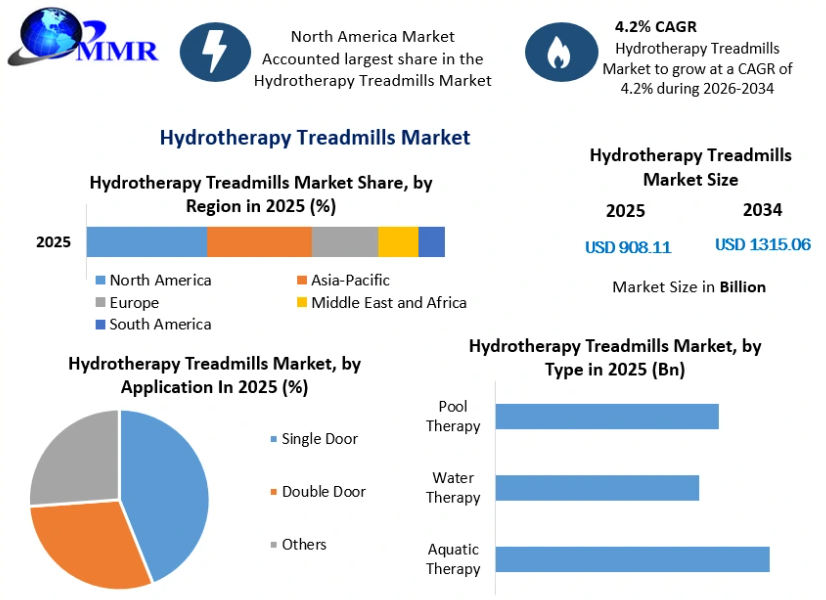
The Global Hydrotherapy Treadmills Market is expected to reach USD 1,315.06 billion by 2034, growing at a compound annual growth rate (CAGR) of 4.2% during the forecast period from 2026 to 2034. The market was valued at USD 908.11 billion in 2025, supported by increasing demand for aquatic rehabilitation equipment, growing awareness of low-impact exercise, and the expanding adoption of water-based therapy in sports medicine, veterinary care, and healthcare facilities.
Dive deeper into market insights, trends, segmentation, and competitive landscape here: https://www.maximizemarketresearch.com/request-sample/69952/
Hydrotherapy treadmills are specialized fitness and rehabilitation devices designed to enable walking, running, and therapeutic exercises in water. By combining the natural buoyancy of water with adjustable resistance, these systems help reduce stress on joints while supporting muscle strengthening, cardiovascular conditioning, balance improvement, and mobility recovery. They are increasingly used by professional athletes, physical therapy patients, senior citizens, and individuals recovering from orthopedic injuries or surgical procedures.
The growing emphasis on rehabilitation-focused healthcare and preventive fitness is creating opportunities for manufacturers of underwater treadmill systems. Unlike conventional treadmills, hydrotherapy treadmills allow users to exercise in a controlled aquatic environment, where water buoyancy reduces the effective load on joints and water resistance supports progressive muscle conditioning. These characteristics make the equipment suitable for a wide range of rehabilitation and fitness applications.
Healthcare providers are increasingly incorporating aquatic exercise into treatment programs for patients with mobility limitations, musculoskeletal conditions, and neurological rehabilitation needs. Sports training centers also use underwater treadmills to help athletes maintain conditioning while managing the physical demands associated with land-based exercise. Additionally, veterinary clinics are adopting canine hydrotherapy treadmills to support rehabilitation and mobility management for dogs.
Technological developments, including adjustable water depth, improved filtration systems, digital monitoring, and programmable exercise settings, are further influencing market development. Manufacturers are focusing on equipment durability, energy efficiency, user safety, and treatment customization to meet the needs of hospitals, rehabilitation centers, sports facilities, and private wellness establishments.
Market Drivers and Trends
Increasing Demand for Low-Impact Rehabilitation
One of the primary drivers of the hydrotherapy treadmills market is the growing demand for low-impact rehabilitation and exercise solutions. Water reduces the effective weight borne by the body, making aquatic exercise particularly useful for individuals who have difficulty performing conventional weight-bearing activities.
Dive deeper into market insights, trends, segmentation, and competitive landscape here: https://www.maximizemarketresearch.com/request-sample/69952/
Growing Participation in Sports and Fitness Activities
The increasing focus on athletic performance, injury prevention, and recovery is creating opportunities for hydrotherapy treadmill manufacturers. Professional athletes and sports organizations are exploring aquatic training to maintain cardiovascular conditioning and muscle activity while reducing the impact associated with repetitive movements on hard surfaces.
Expansion of Physiotherapy and Rehabilitation Facilities
Healthcare systems are placing greater emphasis on rehabilitation services that help patients restore mobility, strength, and functional independence. As rehabilitation centers expand their service offerings, aquatic therapy equipment is gaining attention as a complementary option to conventional physiotherapy.
Rising Adoption of Veterinary Hydrotherapy
Veterinary rehabilitation represents another important application area. Underwater treadmills designed for dogs and other suitable animal rehabilitation applications can support controlled exercise, mobility training, and recovery under veterinary supervision.
Technological Advancements in Aquatic Equipment
Manufacturers are incorporating digital controls, improved water management systems, ergonomic designs, and enhanced safety features into hydrotherapy treadmills. Developments in monitoring and equipment customization can help rehabilitation professionals manage treatment sessions more consistently.
Primary Market Constraints
High Initial Investment and Installation Costs
The high upfront cost of hydrotherapy treadmills is a significant barrier to wider adoption. Compared with conventional exercise equipment, aquatic treadmill systems may require specialized motors, water-resistant components, filtration equipment, plumbing, and dedicated installation infrastructure.
Healthcare providers and smaller rehabilitation facilities must also consider the costs associated with maintenance, water treatment, energy consumption, and staff training. These expenses may limit adoption among organizations operating under constrained capital budgets.
Maintenance and Water Management Requirements
Hydrotherapy treadmills require appropriate water quality management, regular equipment inspection, and maintenance of mechanical and filtration components. Inadequate maintenance can affect system performance, user comfort, and the overall reliability of the equipment.
Facilities must establish suitable cleaning procedures and operating protocols to maintain safe and hygienic conditions. Water consumption, filtration requirements, and ongoing service expenses can also influence purchasing decisions, particularly among smaller facilities.
Limited Awareness and Specialized Training Needs
Although aquatic therapy offers several potential benefits, awareness of hydrotherapy treadmills remains uneven across healthcare providers, fitness operators, and consumers. Some facilities may lack the trained personnel or infrastructure necessary to incorporate aquatic exercise into their existing services.
Successful implementation may require staff education, patient assessment procedures, and treatment protocols appropriate to individual needs. These requirements can slow adoption in markets where specialized aquatic rehabilitation services are less established.
Space and Infrastructure Limitations
Hydrotherapy treadmill installations may require dedicated floor space, suitable drainage, water supply systems, electrical connections, and accessibility provisions. These requirements can create challenges for hospitals, clinics, and fitness centers operating in limited spaces.
Manufacturers that develop compact, modular, and easy-to-install systems may be better positioned to address this constraint. However, the availability of suitable facilities and installation budgets will continue to influence purchasing decisions.
Competition from Alternative Rehabilitation Methods
Conventional physiotherapy, land-based treadmills, stationary cycling, resistance exercises, and other rehabilitation technologies compete for healthcare and fitness budgets. Depending on the patient’s needs and the treatment objective, these alternatives may be less expensive or easier to integrate into existing facilities.
Hydrotherapy treadmill providers must demonstrate the practical value of aquatic rehabilitation, equipment reliability, and the suitability of their systems for specific applications to strengthen their competitive position.
Key Market Segments
The Global Hydrotherapy Treadmills Market can be analyzed through application, end-user, and distribution channel categories, along with product characteristics and regional demand. The report’s supplied segmentation framework also includes aquatic therapy, water therapy, and pool therapy; single-door and double-door configurations; and glass and stainless-steel materials. These categories should be interpreted according to the product definitions used in the underlying market study.
By Application
Aquatic Therapy: Aquatic therapy is an important application segment, covering water-based exercises intended to support rehabilitation, mobility, and physical conditioning. Hydrotherapy treadmills allow users to undertake controlled walking or running activities while benefiting from water buoyancy and resistance.
Water Therapy: Water therapy applications include supervised aquatic exercise and rehabilitation programs designed around individual physical requirements. Hydrotherapy treadmills may be used to support progressive exercise in clinical and wellness settings.
Pool Therapy: Pool-based rehabilitation facilities can incorporate underwater treadmill systems into broader aquatic treatment programs. This segment is relevant to specialist physiotherapy centers, rehabilitation hospitals, and aquatic wellness establishments.
By End User
Athletes: Athletes represent a key customer group because underwater treadmills can support conditioning, controlled movement training, and rehabilitation after sports-related injuries.
Veterinary Facilities: Veterinary hospitals and animal rehabilitation centers use suitable underwater treadmill systems to support supervised mobility exercises and recovery programs for dogs and other animals where appropriate.
Hospitals and Rehabilitation Centers: These facilities may incorporate hydrotherapy treadmills into physiotherapy and rehabilitation services, particularly where controlled aquatic exercise is suitable for the treatment plan.
Senior Citizens: Older adults may benefit from supervised, low-impact exercise designed to support mobility, balance, and physical activity. Equipment selection and treatment intensity must be adapted to individual health and functional status.
Military and Other Specialized Users: Military rehabilitation programs, sports medicine facilities, and specialized training centers may consider aquatic treadmill equipment for conditioning and recovery applications.
Homeowners: Residential hydrotherapy treadmill installations represent a specialized opportunity, particularly for customers seeking private rehabilitation or fitness facilities. High installation and maintenance costs may limit adoption in this segment.
By Distribution Channel
Online: Online channels provide access to product specifications, manufacturer information, demonstrations, and purchasing inquiries. Digital platforms can help buyers compare available systems, identify suitable configurations, and contact suppliers. Because hydrotherapy treadmills are specialized capital equipment, online research is often complemented by consultations, demonstrations, and installation assessments.
Offline: Offline distribution includes direct manufacturer sales, authorized distributors, specialist equipment suppliers, and professional demonstrations. This channel remains important for complex purchases that require technical evaluation, installation planning, after-sales service, and maintenance support.
By Region
The market is studied across North America, Europe, Asia Pacific, the Middle East and Africa, and South America.
North America benefits from established healthcare infrastructure, sports medicine services, and specialist rehabilitation facilities. Europe represents an important market for aquatic fitness and rehabilitation equipment, supported by healthcare services and established aquatic therapy providers.
Asia Pacific offers potential growth opportunities as healthcare infrastructure, rehabilitation services, sports participation, and awareness of specialized fitness equipment develop. Market expansion will depend on investment capacity, product availability, and access to trained professionals.
The Middle East and Africa and South America present opportunities associated with healthcare modernization, specialist wellness facilities, and rehabilitation service development. However, adoption may vary considerably between countries depending on purchasing power, infrastructure, and the availability of specialized equipment providers.
Dive deeper into market insights, trends, segmentation, and competitive landscape here: https://www.maximizemarketresearch.com/request-sample/69952/
Major Industry Players
The Global Hydrotherapy Treadmills Market includes manufacturers and suppliers offering aquatic fitness, rehabilitation, and underwater treadmill solutions. Competition is influenced by product design, durability, customization, distribution coverage, technical support, and after-sales service.
Key industry participants identified for the market include:
- Hydrowox
- Dynamika
- Hydro Physio
- PHYSIO-TECH
- Aqquatix
- Poolstar
- SwimEx
- H2O For Fitness
- Hydrorider
- Waterflex
- Biotech
- EWAC Medical
- Tudor Treadmills
- DWS
Market participants pursue opportunities through product innovation, equipment upgrades, distribution partnerships, and the development of solutions for specialized customer groups. Companies may also differentiate themselves through installation support, water treatment technology, customization options, and service availability.
Hydro Physio and H2O For Fitness are associated with aquatic treadmill offerings for human fitness and rehabilitation, while the broader competitive landscape includes providers of aquatic exercise equipment and pool-based training systems. Product availability and company portfolios can vary by market, so buyers should confirm current specifications, regulatory requirements, and service coverage directly with manufacturers.
Recent Industry Developments
The supplied market information identifies several developments during 2025 and early 2026 involving aquatic treadmill innovation, water management, and clinical rehabilitation applications. These include reported initiatives related to smart monitoring, modular equipment deployment, water filtration efficiency, hydrodynamic controls, and clinical-grade treadmill systems.
These developments illustrate the types of innovation that may influence the market. However, the specific company announcements, dates, performance figures, and regulatory claims should be independently verified against official company releases and relevant regulatory records before publication.
Frequently Asked Questions
1. What is the projected size of the Global Hydrotherapy Treadmills Market by 2034?
The market overview supplied for this report projects that the Global Hydrotherapy Treadmills Market will reach USD 1,315.06 billion by 2034.
2. What is the expected CAGR of the Hydrotherapy Treadmills Market?
The market is projected to grow at a CAGR of 4.2% during the forecast period from 2026 to 2034, according to the supplied market estimates.
3. What are the major factors driving the Hydrotherapy Treadmills Market?
Key growth factors include increasing demand for low-impact rehabilitation, rising participation in sports and fitness activities, expansion of physiotherapy facilities, growing interest in veterinary rehabilitation, and improvements in aquatic exercise technology.
4. What are the primary challenges facing the market?
Major challenges include high initial equipment and installation costs, ongoing maintenance requirements, water management expenses, limited awareness, infrastructure constraints, and competition from alternative rehabilitation technologies.
5. Which are the major companies operating in the Hydrotherapy Treadmills Market?
Key companies identified in the supplied market overview include Hydrowox, Dynamika, Hydro Physio, PHYSIO-TECH, Aqquatix, Poolstar, SwimEx, H2O For Fitness, Hydrorider, Waterflex, Biotech, EWAC Medical, Tudor Treadmills, and DWS.
Connect With Us:
MAXIMIZE MARKET RESEARCH PVT. LTD.
2nd Floor, Navale IT park Phase 3,
Pune Banglore Highway, Narhe
Pune, Maharashtra 411041, India.
+91 9607365656
sales@maximizemarketresearch.com
About Maximize Market Research:
Maximize Market Research is one of the fastest-growing market research and business consulting firms serving clients globally. Our revenue impact and focused growth-driven research initiatives make us a proud partner of majority of the Fortune 500 companies. We have a diversified portfolio and serve a variety of industries such as IT & telecom, chemical, food & beverage, aerospace & defense, healthcare and others.