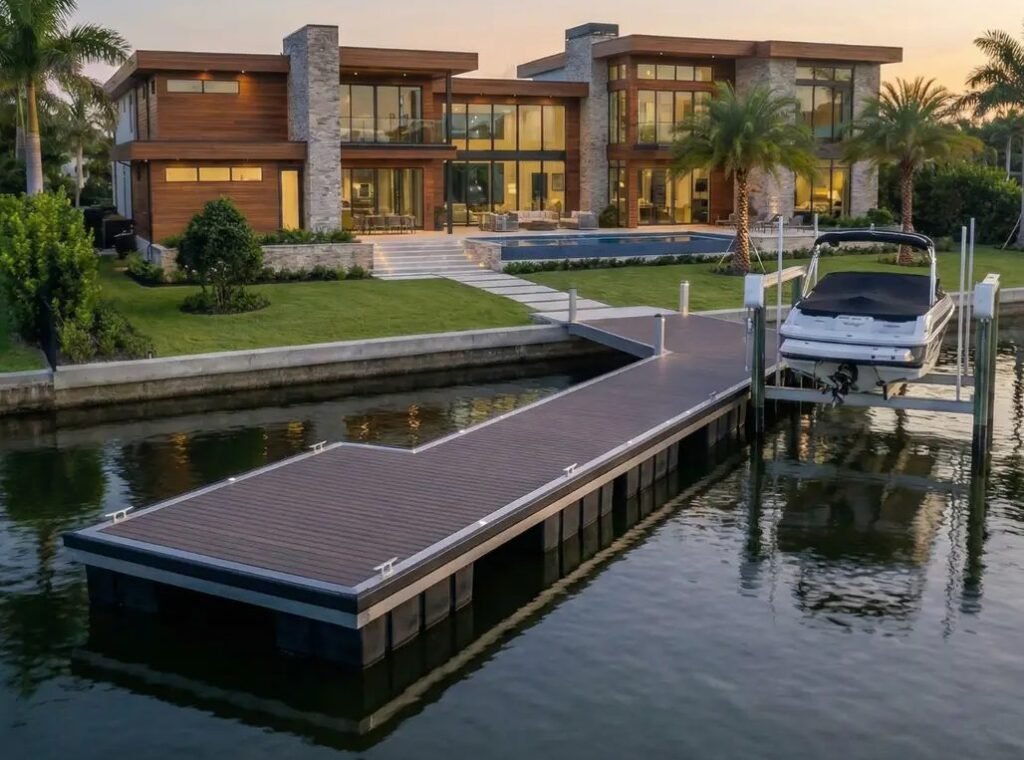
Access to the water can make a waterfront property more functional, convenient, and enjoyable. Whether the setting is a quiet lake, a flowing river, or an exposed coastal shoreline, the right dock provides a stable connection between land and water. Prefab Boat Docks offer one practical approach, combining modular construction with durable materials and a streamlined installation process.
Unlike traditional docks that may require extensive on-site construction, prefabricated systems are designed and manufactured before reaching the property. This can simplify transportation, assembly, and customization while providing homeowners with a structured solution for boating access.
What Are Prefab Boat Docks?
Prefab Boat Docks are dock systems manufactured in sections or components at a factory and then transported to the installation site. The components are typically designed to fit together according to a specific layout, reducing the amount of fabrication required at the waterfront.
For residential properties, prefabricated aluminum docks can be configured for different waterfront conditions. Options may include floating docks, fixed docks, gangways, and different structural frame designs. This flexibility allows a dock to be selected based on water depth, wave conditions, boat size, and how the waterfront is used.
One important consideration is the material. Express Docks uses 6061-T6 aluminum for its residential dock systems, a marine-grade alloy known for strength and corrosion resistance. This makes aluminum suitable for both freshwater and saltwater environments when the overall dock system is appropriately designed for the conditions.
Choosing a Dock for Different Waterfront Conditions
Not every waterfront presents the same challenges. Water movement, seasonal changes, tides, and exposure to waves can all influence dock design.
Lakefront Properties
Calm or moderately protected lakes generally have fewer structural demands than exposed coastal environments. A single-frame aluminum dock can provide a practical option for private lake homes where water conditions are relatively stable.
A floating design can also accommodate changes in water level while maintaining access to the boat. The appropriate configuration will depend on shoreline conditions and the required dock dimensions.
River and Tidal Properties
Riverfront and tidal properties can experience changing water levels and elevation differences between the shoreline and dock. In these situations, a gangway can provide a gradual transition between land and the floating structure.
Both single-frame and reinforced configurations may be suitable depending on current, water movement, expected loads, and local conditions. Proper engineering is important when water levels or currents change significantly.
Saltwater and Exposed Waterfronts
Coastal properties may experience stronger waves, greater water movement, and exposure to saltwater. These conditions can place additional demands on the dock structure and its connections.
For such applications, a reinforced double-truss configuration can provide additional structural support. Express Docks describes its Double Truss system as being designed for rougher water, larger boats, heavier loads, and exposed conditions.
Floating or Fixed: Which Design Makes Sense?
One of the first decisions when selecting a dock is whether a floating or fixed structure is appropriate.
Floating docks move with changing water levels and can be useful where seasonal fluctuations or tidal changes are common. They can also be configured with gangways to connect the dock to the shoreline.
Fixed docks, by comparison, are supported by permanent piles and are generally suited to waterfronts where water depth and conditions remain relatively consistent throughout the year.
Neither design is universally suitable. Local water conditions, regulations, shoreline characteristics, and intended use should all be considered before choosing a system.
Key Features to Consider in Prefab Boat Docks
When comparing Prefab Boat Docks, look beyond the initial purchase price. The structural material, connection hardware, decking, warranty, and installation requirements can all influence long-term value.
For example, Express Docks residential systems use 6061-T6 aluminum frames with WPC composite decking. The company offers six decking colors—Teak, Walnut, Charcoal, Driftwood, Espresso, and Gray—with Trex® decking available upon request.
The company’s residential systems also include factory engineering and photo-documented assembly instructions. Components are palletized for freight shipping, and the systems are designed to be assembled at the waterfront using basic tools.
The stated residential aluminum-frame warranty is 50 years. However, buyers should review the specific warranty terms, installation requirements, and applicable exclusions before purchasing.
How the Prefabricated Process Works
A major advantage of prefabricated construction is that much of the design and preparation happens before the dock arrives.
The process can begin with a sketch, photograph, or description of the waterfront. The dock is then designed according to the property’s requirements. Express Docks states that its residential designs can be engineered within 48 hours, followed by factory construction and quality checks.
After assembly and inspection at the factory, the dock is disassembled, palletized, and shipped to the customer’s location. The final assembly takes place at the waterfront.
This approach can reduce the amount of fabrication required on-site and give homeowners an opportunity to review the design before manufacturing begins.
What About Installation and Permits?
Prefab construction does not necessarily eliminate every installation requirement. Most residential systems still need an appropriate anchoring method, and installation labor may vary according to the size and complexity of the dock.
Permits are another important consideration. Waterfront regulations differ between states, municipalities, and individual water bodies. Some locations may require permits or approvals before construction or installation begins.
Homeowners should confirm local requirements with the appropriate authorities before ordering a dock.
FAQs About Prefab Boat Docks
How long does it take to receive a prefab dock?
According to Express Docks, design engineering can take approximately 48 hours, while production and shipping typically take 6–10 weeks depending on location and configuration.
Do Prefab Boat Docks require professional installation?
Not necessarily. Some residential systems are designed for assembly by a small crew using basic hand tools. Larger or more complex installations may benefit from professional assistance.
Are aluminum prefab docks suitable for saltwater?
6061-T6 aluminum is corrosion-resistant and can be used in marine environments. For exposed coastal applications, the structural configuration should be selected according to wave action, loads, and local conditions.
Can a gangway be added to a prefab dock?
Yes. Gangways can be incorporated into or added to suitable dock configurations. They are particularly useful where the shoreline has an elevation difference or water levels fluctuate.
How should I choose between a single-frame and double-truss dock?
A single-frame system may be appropriate for calm or moderately protected waterfronts, while a double-truss design can provide additional structural support for heavier loads, larger boats, saltwater, and exposed conditions.
Final Considerations
Prefab Boat Docks can provide a practical combination of factory-controlled construction, modular design, durable materials, and simplified waterfront assembly. The best configuration depends on the property’s water conditions, intended use, boat size, shoreline elevation, and local regulations.
For homeowners considering an aluminum residential dock, Express Docks offers custom design options, floating and fixed configurations, gangways, and different structural tiers to accommodate a range of waterfront environments.