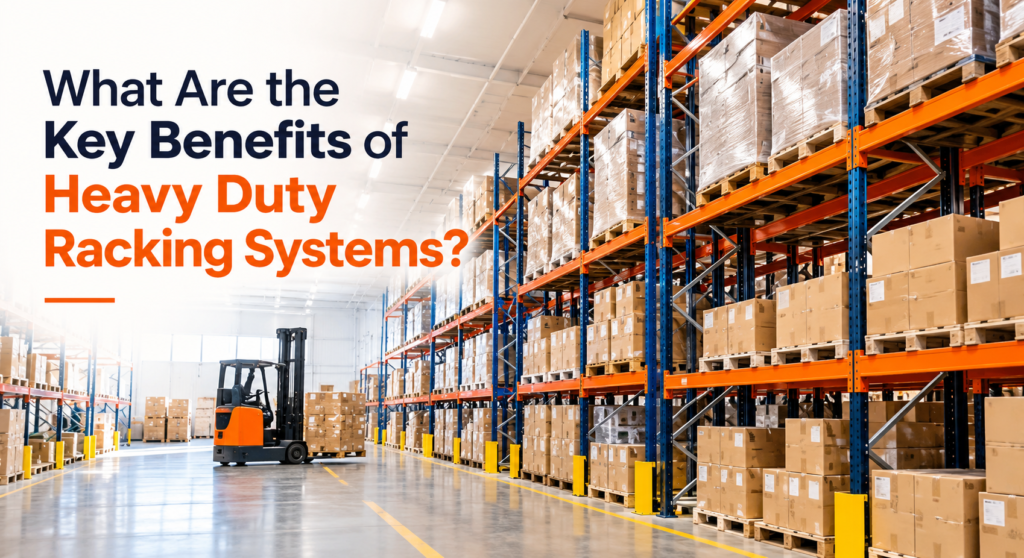
Efficient storage is essential for businesses that handle large quantities of inventory, raw materials, equipment, or finished products. As warehouses become more demanding, traditional storage methods may not provide the strength, organization, and accessibility required for daily operations. Heavy duty racking systems offer a practical solution by providing strong, structured, and scalable storage for heavy and bulky items.
These systems are designed to withstand substantial loads while making better use of available warehouse space. From improving inventory organization to supporting safer material handling, heavy duty racking can play an important role in warehouse efficiency. Understanding its key benefits can help businesses choose a storage solution that matches their operational requirements.
Maximizes Warehouse Storage Capacity
One of the primary advantages of heavy duty racking systems is their ability to maximize available storage space. Instead of storing products across large areas of the warehouse floor, racking uses vertical space to create multiple storage levels.
This approach allows businesses to increase their storage capacity without necessarily expanding their existing premises. Properly planned racking layouts can make use of both floor and vertical space, helping warehouses accommodate more inventory within a limited footprint.
For businesses experiencing inventory growth, this can be particularly valuable. Additional rack levels can often be incorporated into the layout, providing flexibility as storage requirements change.
Provides Strong and Reliable Storage
Heavy duty racking systems are manufactured to support substantial loads and demanding warehouse environments. They typically use durable steel components and reinforced structural designs to provide stability and strength.
The load-bearing capacity of a racking system depends on factors such as its design, beam configuration, frame construction, and installation. When correctly specified and installed, these systems can provide reliable support for heavy pallets, industrial materials, machinery components, and other large items.
Using a suitable system also helps reduce the risk associated with overloading storage structures. Businesses can select configurations based on the weight, dimensions, and type of products they need to store.
Improves Inventory Organization
A well-organized warehouse makes it easier for employees to locate, move, and manage inventory. Heavy duty racking systems create defined storage locations, allowing products to be arranged according to categories, product codes, sizes, turnover rates, or other operational requirements.
Clear storage locations can reduce unnecessary movement within the warehouse and make stock identification more straightforward. When combined with inventory management software or barcode systems, racking can also support more systematic stock control.
Better organization is particularly important for warehouses handling a wide range of products, where inefficient storage can lead to misplaced inventory and longer retrieval times.
Enhances Accessibility and Material Handling
Warehouse productivity depends heavily on how quickly and safely employees can access stored goods. Heavy duty racking systems can be configured to provide appropriate access for forklifts, pallet trucks, and other material-handling equipment.
Depending on the warehouse layout and storage strategy, businesses can select different rack configurations to balance storage density and accessibility. For example, pallet racking can provide direct access to individual pallet positions, which may be useful for operations requiring frequent stock movement.
A properly designed aisle layout can also improve movement throughout the facility and help reduce unnecessary handling.
Supports Better Workplace Safety
Safety is a critical consideration when storing heavy materials. A professionally designed heavy duty racking system can provide stable and clearly defined storage locations, reducing the need to place heavy products randomly on warehouse floors.
However, the safety of a racking system depends on more than the rack itself. Correct installation, appropriate load limits, regular inspections, proper pallet placement, and employee training are all important.
Load capacities should be clearly communicated, and damaged components should be inspected and addressed promptly. Maintaining clear aisles and avoiding overloading can further contribute to a safer warehouse environment.
Offers Flexible Storage Configurations
Warehouse requirements can change as businesses introduce new products, increase inventory, or modify their operations. Heavy duty racking systems can often be configured or expanded to accommodate these changes.
Rack dimensions, beam levels, aisle arrangements, and storage configurations can be selected according to the available warehouse space and inventory characteristics. Some systems can also be adjusted to accommodate products of different sizes.
This flexibility makes heavy duty racking suitable for a variety of industries, including manufacturing, logistics, automotive, retail distribution, and industrial supply.
Improves Operational Efficiency
An organized storage system can contribute directly to warehouse productivity. When products have designated locations and workers can identify inventory quickly, picking and replenishment activities can become more systematic.
Efficient storage can also reduce unnecessary travel distances for warehouse personnel and material-handling equipment. Over time, these improvements can contribute to smoother workflows and better utilization of labor and warehouse resources.
The overall efficiency gained depends on factors such as rack design, warehouse layout, inventory turnover, and the processes used by the business.
Provides Long Term Value
Although the initial investment in heavy duty racking can vary depending on the system and installation requirements, durable storage infrastructure can provide long-term value when properly maintained.
A well-designed system can support changing storage needs and reduce the need for frequent replacement. Businesses can also potentially expand or reconfigure their storage arrangements as their operations develop.
The long-term value is greatest when the racking system is selected according to actual load requirements and warehouse conditions rather than simply choosing the highest-capacity option available.
Helps Businesses Make Better Use of Available Space
Heavy duty racking is more than a method of storing heavy products. It is an important component of modern warehouse planning. By combining vertical storage, structured organization, accessibility, and load-bearing capability, these systems can help businesses make better use of their facilities.
Before selecting a system, businesses should evaluate product dimensions, pallet sizes, load weights, available ceiling height, material-handling equipment, aisle requirements, and future storage needs. Professional design and installation are also important to ensure the system is appropriate for its intended application.
Conclusion
Heavy duty racking systems provide several important benefits for warehouses that need to store large, heavy, or high-volume inventory. They can increase storage capacity, improve organization, support safer handling, enhance accessibility, and provide flexibility for future growth.
The right racking solution should be based on the warehouse’s specific operational requirements rather than storage capacity alone. With proper planning, installation, inspection, and maintenance, heavy duty racking can become a reliable foundation for efficient and organized warehouse operations.
For More Insightful Articles Related To This Topic, Feel Free To Visit: https://xuzpost.com/