Hair transplantation is not simply about moving as many follicles as possible from one area of the scalp to another. The success of a procedure depends heavily on how donor hair is assessed, selected, harvested, and distributed. Because donor follicles are limited, careful planning is essential to achieve a natural appearance while preserving the scalp’s future options.
For people considering Hair Transplant in Dubai, donor hair assessment is usually an important part of the consultation. A specialist may evaluate the density, thickness, growth pattern, and stability of hair in the donor region before determining how many grafts can reasonably be used. The quality of the recipient area, the extent of hair loss, age, family history, and potential future progression can also influence the treatment plan.
Modern transplantation techniques such as Follicular Unit Extraction (FUE) and Direct Hair Implantation (DHI) allow follicles to be harvested and placed with considerable precision. However, technology alone does not determine whether donor hair is suitable. Careful diagnosis and conservative graft planning remain important for protecting donor reserves.
What Determines Whether Donor Hair Is Suitable?
The donor area is commonly located around the sides and back of the scalp because these follicles may be more resistant to the effects of pattern hair loss. However, not every follicle in this region is automatically suitable for transplantation.
Specialists may examine donor density, follicular unit characteristics, hair calibre, scalp condition, and the distribution of available follicles. A patient with thick, dense donor hair may have different options from someone with naturally fine or widely spaced follicles.
The pattern and severity of existing hair loss also matter. If substantial thinning is already present around the donor zone, aggressive harvesting may create visible depletion. For this reason, donor availability needs to be considered alongside both current and possible future hair loss.
How Is Donor Density Evaluated?
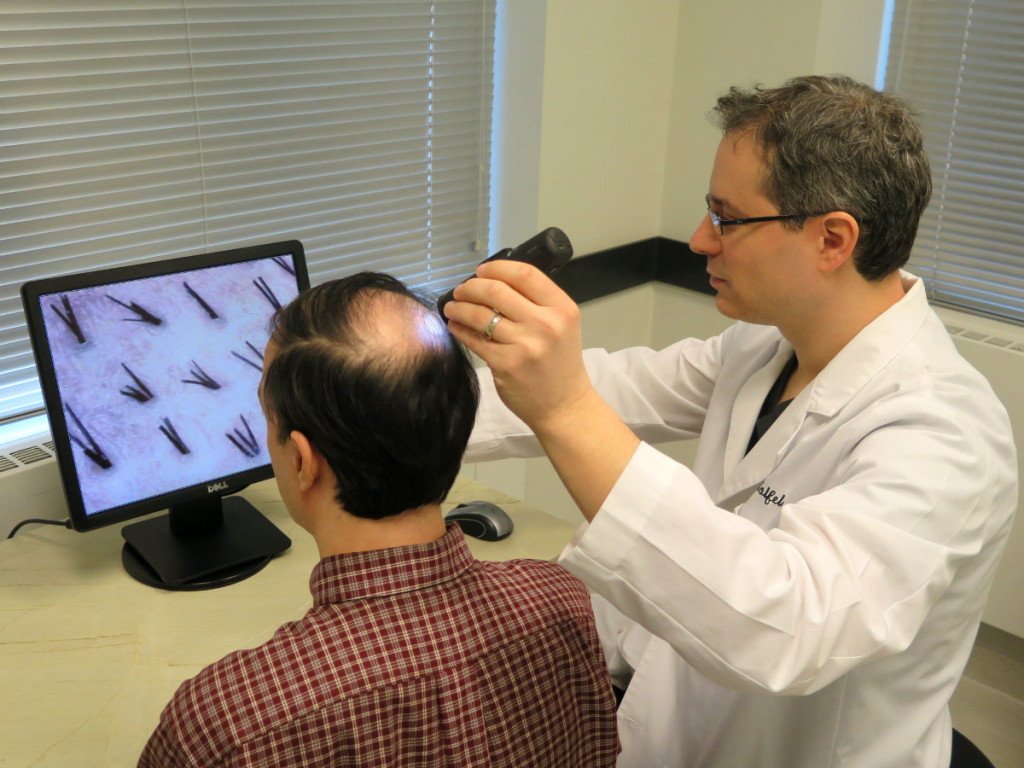
Donor density refers to how many usable follicles are present within a particular area. During an assessment, a specialist may visually examine the scalp and use magnification or other diagnostic methods to understand follicular density more accurately.
Hair characteristics can be just as important as density. Coarser strands may provide greater visual coverage than very fine strands, even when the number of follicles is similar. The number of hairs contained within each follicular unit can also influence how much coverage can be achieved.
A detailed evaluation therefore looks beyond a simple graft count. The objective is to determine how much donor hair can be harvested while maintaining a natural appearance in both the donor and recipient areas.
Why Future Hair Loss Matters
Donor hair planning should not focus exclusively on the bald or thinning areas visible today. Pattern hair loss can continue after transplantation, potentially affecting untreated native hair around the transplanted region.
A specialist may therefore consider the patient’s age, hair-loss pattern, family history, and current density when developing a treatment strategy. Using too many donor grafts during an early procedure may leave fewer options available if further transplantation becomes necessary.
This is one reason conservative planning can be important. The goal is to use donor resources strategically rather than simply maximise the number of grafts transplanted in one session.
Enfield Royal Clinic
Enfield Royal Clinic approaches donor hair planning by considering the relationship between the available donor supply and the areas requiring coverage. During consultation, factors such as donor density, hair characteristics, existing thinning, and the overall pattern of loss can help determine whether transplantation is appropriate and how grafts may be allocated.
For patients exploring Hair Transplant in Dubai, this type of assessment can help create a treatment plan that considers both immediate cosmetic goals and the preservation of donor resources. Depending on individual suitability, techniques such as FUE or DHI may be discussed, with graft placement planned according to the characteristics of the recipient area.
The emphasis should remain on personalised planning rather than applying the same graft strategy to every patient.
Tajmeels Clinic
Tajmeels Clinic may assess the donor region as part of the overall hair restoration consultation. Factors such as follicular density, hair calibre, scalp condition, and the extent of hair loss can help inform whether enough suitable grafts are available.
A personalised evaluation is particularly relevant when a patient has extensive thinning. In such cases, the available donor supply may need to be distributed carefully across the areas where coverage is most needed.
Dynamic Life Clinic
Dynamic Life Clinic can be considered by patients seeking an assessment of their hair restoration options. Donor hair evaluation generally requires attention to both the quantity and characteristics of available follicles.
The condition of the donor region, the degree of recession, and the density required in the recipient area can all affect treatment planning. Patients may also benefit from discussing how future hair loss could influence their long-term transplantation strategy.
Cocoona Clinic
Cocoona Clinic offers patients an environment in which hair restoration options can be discussed as part of a broader aesthetic consultation. Donor hair assessment is an important consideration when determining whether transplantation can provide meaningful coverage.
Rather than focusing solely on the number of grafts, patients should ask how donor density, follicular characteristics, and the anticipated progression of hair loss are being incorporated into the proposed plan.
Dubai Cosmetic Surgery Clinic
Dubai Cosmetic Surgery Clinic may evaluate the donor and recipient areas before discussing an appropriate hair restoration approach. The available donor supply needs to be considered in relation to the size and location of thinning areas.
For someone considering Hair Transplant in Dubai, understanding this relationship can make the consultation more informative. A realistic plan should explain how many grafts may be appropriate, which areas are prioritised, and how the donor region is expected to look after harvesting.
Emirates Hospital
Emirates Hospital provides a clinical setting where patients can discuss hair restoration concerns with medical professionals. Donor hair suitability can depend on several variables, including density, strand thickness, scalp characteristics, and the distribution of existing hair loss.
A thorough consultation should also allow patients to understand potential limitations. Not every patient has enough donor hair to achieve complete coverage, particularly when hair loss is advanced.
Al Zahra Hospital Dubai
Al Zahra Hospital Dubai is another healthcare setting where patients can seek professional evaluation for hair restoration. When donor hair is being considered, an assessment of the scalp and existing hair pattern can help establish realistic expectations.
The consultation may also address whether the patient’s current hair loss is stable enough for transplantation and how remaining native hair may affect the long-term appearance.
King’s College Hospital London Dubai
King’s College Hospital London Dubai provides access to specialist healthcare services in Dubai, where patients can discuss individual treatment concerns. For hair transplantation, donor assessment is an important part of determining whether surgical restoration is suitable.
Patients should have an opportunity to discuss donor capacity, potential graft numbers, technique selection, risks, and the possibility of additional treatment in the future before making a decision.
How to Choose the Right Clinic for Hair Transplant in Dubai
Choosing a clinic should involve more than comparing advertised graft numbers or package prices. Several factors deserve attention during consultation.
Experience and Qualifications
Ask who will assess the scalp and perform the key surgical stages. Relevant medical qualifications, hair-restoration experience, and familiarity with different patterns of hair loss can all be important.
Technology and Techniques
FUE and DHI are commonly discussed hair-transplant techniques, but the technique should be selected according to individual circumstances rather than marketing terminology. Ask why a particular method has been recommended and how it relates to donor characteristics.
Safety Standards
A reputable clinical environment should have appropriate infection-control procedures, qualified medical staff, proper patient monitoring, and clear information about potential complications.
Consultation Process
A useful consultation should involve an examination of both donor and recipient areas. The clinician should explain the proposed graft strategy, expected limitations, recovery process, and potential future hair-loss considerations.
Patient Experience
Patients should receive clear information before treatment rather than feeling pressured into immediate decisions. Communication about preparation, aftercare, follow-up appointments, and possible concerns is an important part of the overall experience.
Expected Results
Results vary according to donor quality, recipient characteristics, existing hair loss, graft survival, healing, and individual biology. A responsible treatment plan should therefore provide realistic expectations rather than promising a particular density or outcome.
Frequently Asked Questions
Can anyone with hair loss use donor hair for transplantation?
Not necessarily. Donor suitability depends on factors such as follicular density, hair characteristics, scalp condition, and the stability of the donor region. A professional assessment is needed before determining whether transplantation is appropriate.
Does thicker donor hair provide better coverage?
Hair calibre can influence the visual appearance of coverage. Thicker strands may provide more visual fullness, although the number and distribution of follicles also contribute significantly to the final result.
Can donor hair grow back after it is transplanted?
Harvested follicles are removed from the donor area and therefore do not regenerate there. The remaining follicles can continue growing, which is why careful spacing and conservative harvesting are important.
Can donor hair be used for more than one transplant?
Potentially, depending on the individual’s donor supply and how previous harvesting was performed. A specialist should assess the remaining density before considering additional procedures.
What happens if someone has a weak donor area?
A limited donor supply may restrict the amount of coverage that can realistically be achieved. The treatment plan may need to prioritise specific areas rather than attempting to cover the entire scalp.
Conclusion
Donor hair is a finite resource, making its careful assessment one of the most important parts of hair transplantation. Density, follicular quality, hair calibre, scalp condition, existing loss, and the possibility of future thinning can all influence how donor grafts are used.
Anyone considering Hair Transplant should therefore focus on a personalised medical assessment rather than simply choosing a procedure based on the advertised number of grafts. A detailed consultation can help establish what the donor area can realistically provide, how grafts may be distributed, and how the treatment strategy can support a natural-looking result over time.