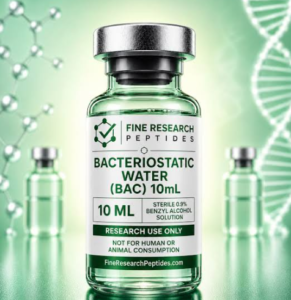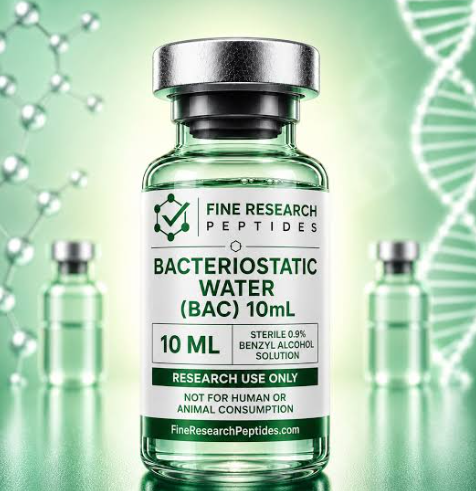
When working with lyophilized research compounds, selecting an appropriate solvent is an important part of laboratory preparation. 10ml bacteriostatic water is a commonly discussed option for research environments because its formulation includes a bacteriostatic preservative designed to help inhibit bacterial growth.
For researchers handling peptide materials, understanding the purpose, characteristics, storage considerations, and quality factors associated with bacteriostatic water can help support consistent laboratory workflows.
What Is 10ml Bacteriostatic Water?
Bacteriostatic water is sterile water containing a preservative, commonly benzyl alcohol. Unlike preservative-free sterile water, the bacteriostatic formulation is designed for controlled multi-dose laboratory applications.
The 10ml designation refers to the volume contained in the vial. For research workflows, the appropriate amount of solvent depends on the compound, experimental requirements, and established laboratory procedures.
Researchers should always consult the documentation associated with the particular compound before selecting a solvent or preparing a research sample.
Why Use 10ml Bacteriostatic Water in Research?
Lyophilized peptides are often supplied as freeze-dried materials. In laboratory research, these compounds may require reconstitution before being incorporated into an experimental workflow.
A 10ml bacteriostatic water format can provide researchers with a convenient quantity of solvent for appropriate laboratory applications. The presence of a bacteriostatic preservative can also be useful when a solvent is intended for controlled multi-use laboratory procedures.
The exact solvent required, however, can vary between research compounds. Researchers should therefore follow the applicable product documentation and institutional protocols rather than applying one preparation method universally.
10ml Bacteriostatic Water vs. Sterile Water
Bacteriostatic water and preservative-free sterile water serve different purposes.
Bacteriostatic water contains a preservative intended to inhibit bacterial growth, while sterile water without preservative does not contain that additional antimicrobial component.
This distinction matters when researchers are developing laboratory protocols because solvent selection can influence sample preparation and handling procedures.
Before using either type of water, researchers should review the compound-specific documentation and their laboratory’s requirements.
What Should Researchers Look for in 10ml Bacteriostatic Water?
Quality and documentation are important considerations when selecting laboratory materials. Researchers may evaluate:
-
Volume: A clearly identified 10ml volume makes it easier to plan laboratory requirements.
-
Formulation: Check the stated ingredients and preservative concentration.
-
Packaging: The container should be appropriately sealed and intact.
-
Quality information: Product specifications and available documentation can support laboratory recordkeeping.
-
Storage guidance: Always follow the manufacturer’s recommended storage conditions.
-
Research-use designation: Verify that the product is appropriate for the intended laboratory application.
For researchers searching for 10ml bacteriostatic water, Fine Research Peptides offers bacteriostatic water intended for laboratory peptide research and provides quality information alongside its research product catalog.
Storage and Handling
Proper storage and handling can help maintain the integrity of laboratory materials. Researchers should follow the manufacturer’s instructions regarding temperature, light exposure, and handling.
Before use, inspect the container and solution. Material that appears cloudy, discolored, damaged, or potentially contaminated should not be incorporated into a research workflow.
After opening, researchers should follow the applicable laboratory protocol and manufacturer guidance regarding the period of use. Sterility should always be treated as an important consideration when handling laboratory solvents.
Using Bacteriostatic Water in Peptide Research
The way bacteriostatic water is used depends on the particular research compound. Different peptides can have different characteristics, including differences in solubility and stability.
For that reason, researchers should not assume that one solvent volume, mixing technique, concentration, or storage period is appropriate for every peptide.
Instead, researchers should review:
-
The specific peptide’s documentation.
-
Recommended solvent information.
-
Laboratory safety procedures.
-
Storage requirements.
-
Institutional research protocols.
This approach helps create a more consistent and documented experimental process.
Why Product Documentation Matters
Laboratory research depends heavily on traceability and consistency. Documentation can help researchers identify what material was used, when it was received, and which quality information applies to a particular batch.
Fine Research Peptides states that its research materials undergo independent testing, with HPLC and LC-MS analysis used where applicable to evaluate identity and purity. The company also describes its manufacturing and quality processes as GMP-aligned and supplies its products strictly for laboratory research use.
Frequently Asked Questions
What does 10ml mean in bacteriostatic water?
10ml refers to the volume of bacteriostatic water contained in the vial. The appropriate quantity required for a research procedure depends on the specific experimental protocol.
What makes bacteriostatic water different from sterile water?
Bacteriostatic water contains a preservative intended to inhibit bacterial growth, while preservative-free sterile water does not contain that preservative.
Is 10ml bacteriostatic water suitable for every peptide?
Not necessarily. Solvent compatibility and preparation requirements can vary between research compounds. Researchers should follow compound-specific documentation and laboratory protocols.
How should bacteriostatic water be stored?
Storage should follow the manufacturer’s instructions. Researchers should also protect laboratory materials from inappropriate temperature, contamination, and unnecessary exposure during handling.
Is bacteriostatic water intended for human use?
The product discussed here is presented for laboratory and research applications. Research materials from the referenced supplier are explicitly designated as not for human or animal consumption.
Conclusion
10ml bacteriostatic water can be a useful laboratory solvent option for appropriate peptide research workflows. Its defined volume, bacteriostatic formulation, and suitability for controlled laboratory handling make it a relevant material for researchers working with lyophilized compounds.
As with any research material, solvent selection should be based on the specific compound, available documentation, laboratory requirements, and established research protocols. Careful handling, appropriate storage, and reliable product documentation can all contribute to a more consistent research environment.