Solar panels are designed to capture sunlight and convert it into usable energy, but their performance depends on keeping the panel surface reasonably clear. Dust, pollen, leaves, bird residue, water spots, and other outdoor debris can accumulate over time and interfere with the amount of sunlight reaching the panels. For homeowners and businesses that have invested in solar technology, routine maintenance is therefore an important part of responsible system care. Solar panel cleaning services provide a professional way to remove surface buildup while reducing the need for property owners to climb onto roofs or attempt potentially unsafe cleaning methods themselves.
Regular solar maintenance is especially relevant in areas where environmental dust, seasonal pollen, limited rainfall, or nearby vegetation contribute to faster accumulation. However, cleaning solar panels is not simply a matter of spraying them with a hose or using ordinary household cleaning products. Panels can be sensitive to abrasive materials, harsh chemicals, excessive pressure, and improper handling. Professional cleaning can provide a more controlled approach, helping property owners keep the panels visibly clean while taking the equipment and surrounding roof structure into consideration.
Why Solar Panel Cleaning Matters
Solar panels need access to sunlight to operate effectively, which means anything covering their surface can potentially reduce the amount of light available to the photovoltaic cells. The effect of dirt accumulation varies according to the type and thickness of the buildup, panel angle, weather conditions, and local environment. A light layer of dust may have a limited effect, while heavier contamination can create more noticeable performance concerns. Regular inspection and cleaning can help prevent debris from becoming a persistent maintenance issue. It also gives homeowners an opportunity to visually check for obvious problems such as damaged panels, loose components, heavy staining, or other conditions that may warrant professional solar-system attention.
Common Causes of Solar Panel Dirt and Buildup
Solar panels are continuously exposed to outdoor conditions, making them vulnerable to several forms of contamination. Dust can settle on horizontal or gently sloped panels, while pollen may become particularly noticeable during seasonal changes. Leaves and small branches can accumulate around panel edges, especially on properties surrounded by trees. Bird droppings can create localized areas of heavier residue that rainfall may not completely remove. Water can also leave mineral deposits when it evaporates from the surface, particularly when the water contains significant mineral content. The surrounding environment plays an important role in determining how quickly panels become dirty. Homes near construction activity, agricultural areas, unpaved roads, or dense vegetation may require more frequent inspections than properties in cleaner environments.
How Professional Solar Panel Cleaning Works
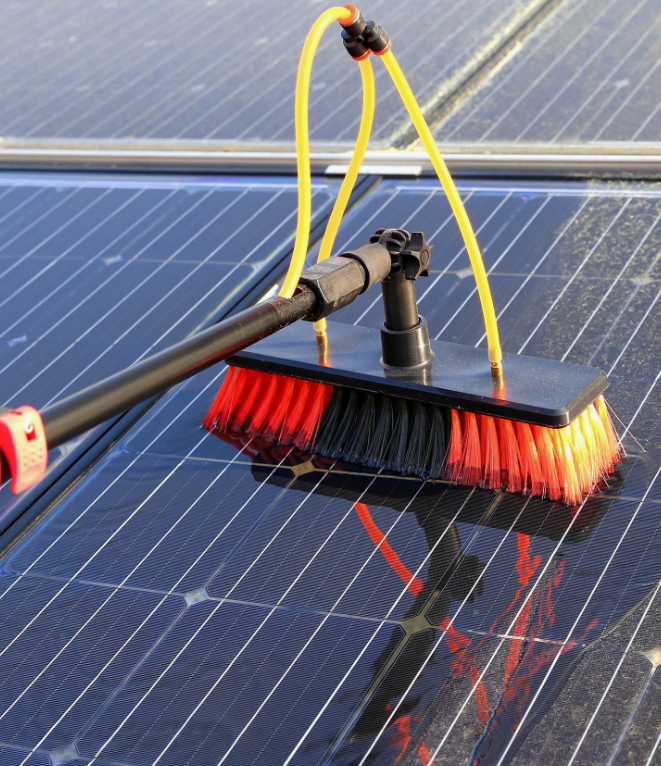
A professional cleaning process should begin with an assessment of the panels and their surroundings. The technician can identify visible dirt, organic debris, water spots, and other contaminants while considering roof access and the condition of the installation. Cleaning should be performed using equipment and techniques suitable for solar panels rather than relying on aggressive pressure or abrasive materials. Water quality can also matter because some cleaning methods may leave mineral deposits behind if the water is not suitable for the task. Technicians should work carefully around wiring, mounting hardware, roof surfaces, and other components of the installation. The objective is to remove contamination without creating unnecessary risk to the panels or the property. Proper procedures are particularly important when panels are installed on steep or elevated roofs where access itself presents a safety challenge.
When Should Solar Panels Be Cleaned?
The ideal cleaning frequency depends on local weather, panel angle, surrounding vegetation, and the type of debris commonly found on the property. Areas with frequent rain may naturally remove some loose dust, while dry environments can allow particles to remain on the panels for longer periods. Similarly, properties surrounded by trees may experience more leaves and pollen than homes with limited vegetation nearby. Rather than relying on an identical schedule for every installation, homeowners can monitor visible buildup and consider professional inspection when the panels appear noticeably dirty. Seasonal maintenance can also be useful because pollen, storms, dry weather, and falling leaves may create different cleaning requirements throughout the year. A consistent inspection routine allows property owners to address buildup before it becomes a neglected maintenance issue.
Why DIY Solar Panel Cleaning Can Be Challenging
Cleaning solar panels independently may appear straightforward, but roof access can make the task significantly more complicated. Climbing onto a roof introduces fall hazards, particularly when the surface is steep, wet, or difficult to navigate. Improper cleaning equipment can also scratch panel surfaces or leave behind residue. Using excessive pressure or unsuitable chemicals may create additional problems, while walking directly on panels can cause physical damage. Homeowners who do choose to inspect their panels should prioritize personal safety and follow the equipment manufacturer’s maintenance guidance. For installations that are difficult to access, professional cleaning can eliminate the need for homeowners to take unnecessary risks. The cost of professional maintenance should therefore be considered alongside the safety and equipment concerns involved in doing the work independently.
Choosing Solar Panel Cleaning Services
When selecting a solar panel cleaning provider, homeowners should consider whether the company has experience working around solar installations and understands the difference between general exterior cleaning and panel-specific maintenance. Customers should ask what cleaning methods are used, whether the company evaluates the panels before starting, and how the surrounding roof and equipment are protected during service. It is also useful to clarify what is included in the appointment, particularly if leaves, heavy residue, or other debris require additional attention. A professional provider should communicate clearly about access requirements and any visible conditions that fall outside ordinary cleaning. Bright & Shiny offers solar panel cleaning as part of its exterior property maintenance services, giving homeowners an option for keeping solar installations cleaner without taking on the physical challenges of roof-level cleaning themselves.
Solar Panel Cleaning as Part of Property Maintenance
Solar panels should not be treated as completely maintenance-free simply because they do not contain many moving parts. Their outdoor location exposes them to the same environmental conditions that affect other exterior components of a property. Combining panel cleaning with broader maintenance activities can make it easier to keep the entire property in good condition. For example, homeowners may schedule solar panel cleaning alongside window cleaning, gutter maintenance, soft washing, or other exterior services when appropriate. Coordinating maintenance can reduce the number of separate appointments and help property owners keep track of important exterior tasks. However, cleaning should never replace professional electrical or solar-system inspections when there are concerns about wiring, system faults, damaged components, or unusual energy-production behavior.
Protecting Your Solar Investment
Solar panels represent a significant investment for many homeowners, so responsible maintenance is an important consideration throughout their useful life. Keeping the surface reasonably free of excessive dirt and debris can support proper exposure to sunlight while allowing property owners to monitor the visible condition of the installation. Maintenance should always be performed with the panel manufacturer’s requirements in mind, since different systems can have specific care recommendations. Homeowners should also recognize the difference between cleaning and repair. A cleaner panel cannot resolve electrical faults, physical damage, inverter problems, or installation defects. When a cleaning professional identifies an obvious issue during service, the appropriate response is to have the relevant solar or electrical professional evaluate it rather than attempting an unauthorized repair.
Conclusion
Solar panels are built for outdoor use, but regular exposure to dust, pollen, leaves, bird residue, and weather can gradually affect their cleanliness and appearance. Proper maintenance helps property owners keep their solar installation in better condition while providing an opportunity to identify visible concerns before they are overlooked. Professional cleaning can be particularly valuable when panels are installed on elevated or difficult-to-access roofs, where DIY maintenance may create unnecessary safety risks. When comparing solar panel cleaning services, homeowners should look for a provider that uses appropriate cleaning methods, understands solar equipment, communicates clearly, and treats both the panels and surrounding property with care. A sensible maintenance routine, combined with professional attention when needed, can help homeowners protect their solar investment and keep their renewable energy system properly maintained over time.